Thursday, February 27, 2014

L'ITALIE DOIT LIBÉRER BAHAR KIMYONGÜR !


100 JOURS
Malgré un dossier vide,
le 1er mars, cela fera 100 jours que
le citoyen belge est toujours séquestré en Italie. Et reste à la merci de l’État turc...

L'ITALIE DOIT LIBÉRER BAHAR KIMYONGÜR !
La Belgique doit le protéger !

RASSEMBLEMENT
SAMEDI 1er MARS à 15 HEURES DEVANT L'AMBASSADE D’ITALIE


28, rue Emile Claus, à 1050 Bruxelles
La rue Emile Claus relie l’avenue Louise
à la chaussée de Waterloo (à la hauteur de la Bascule)
Editeur responsable: Jean FLINKER, 21 rue du Ruisseau, 1080 Bruxelles 

Wednesday, February 26, 2014

Putsch in der Ukraine und neuen Waffenlieferungen für syrische Contras, aber die positiven Gegenkräfte formieren sich!

Es gibt keinen Grund zur Panik oder zur Resignation. Die dunkle Vision vom dritten Weltkrieg ist sehr wenig hilfreich.Sie lähmt nur unsere Widerstandspotenial. Unsere begründete Hoffnung ruht auf den Völkern des globalen Südens. Dazu zählen alle voran auch China und Russland.

Die Völker schlafen nicht. Große Nationen schließen sich in Anbetracht sich zuspitzender Bedrohungen enger zusammen auf der Grundlage gemeinsamer Interessen.
Der Imperialismus röchelt in seinem langanhaltenden Todeskampf, aber das macht ihn nicht weniger gefährlich. Es ist an der Zeit für Friedenskräfte auch in unserem Lande , die weiterhin bestehende, ja äußerst bedrohliche  Gefährlichkeit  des Imperialismus wieder neu zu entdecken. Die Gegenkräfte gegen dieses menscheitsbedrohende Ungeheuer müssen sich auch und gerade bei  uns zu Hause dringend zusammenfinden! Allerdings auf kompromisslos  anti-imperialistischer Grundlage.
siehe
http://www.globalresearch.ca/the-road-to-moscow-goes-through-kiev-how-the-protests-in-ukraine-transformed-into-a-coup-that-could-target-russia/5370479
Mehr dazu bald.

Russia, China move closer to enhance bilateral cooperation


News | 26.02.2014 | 12:28
 
Russia and China "should not only develop strategic cooperation in the bilateral format and promote interaction in the practical sphere" but also "cooperate in ensuring peace, stability and creation of a multipolar world," Chinese Deputy Foreign Minister Cheng Guoping said on Tuesday.
He said in May 2014 Russian President Vladimir Putin was due to attend the Conference on Interaction and Confidence Building Measures in Asia (CICA) in Shanghai and to visit Beijing.
"On the sidelines of the CICA summit and further at the APEC (Asia-Pacific Economic Cooperation) summit, scheduled for the fourth quarter of this year, China and Russia will continue strengthening bilateral cooperation, also in the issues of forming a new security concept in Asia and a new international economic system," Cheng said.
"A little less than six months have passed, and we are already looking forward to our second meeting at the summit level," he said. "This once again illustrates a high level and a special character of Sino-Russian strategic partnership."
"It was just recently that Chinese President Xi Jinping visited the Russian city of Sochi to attend the opening ceremony of the Winter Olympics,” Cheng recalled. "In Sochi, the head of state also exchanged views with President Vladimir Putin on bilateral issues as well as regional and global matters of mutual concern."
"President Xi Jinping was received at the highest possible level," he added. "The two leaders established good working relations and a deep personal friendship," the dilpomat concluded.

The Road to Moscow Goes Through Kiev: A Coup d’Etat That Threatens Russia

The Euro-Atlantic Drive into Eurasia: Using Kiev to Target Russia and Beyond…  (Excerpt)
The US and EU support for the Ukrainian opposition, even if in part, is aimed at bringing Ukraine into their orbit and to encircle, isolate, and eventual subvert the Russian Federation. Resurgent Orangists and a new coalition of opposition figures have formed a new front, which can be called a neo-Orangist front, which is intensely intent on shifting Ukraine into the Euro-Atlantic orbit of Washington and the European Commission through eventual membership in such institutions and supranational structures as NATO and the European Union.
These opposition politicians made a mess of things after the Orange Revolution when they ran Ukraine earlier. It remains to be seen if they can re-orient Ukraine into the Euro-Atlantic zone (the word “Euro-Atlantic” camouflages the role that the US plays in Europe; more properly it should be called the Euro-American zone). When mainstream opposition leaders were ruling Ukraine, they were too busy embezzling and fighting one another to further the goals of the US and the EU. Yulia Tymoshenko, when she was in the position of prime minister, and the Orangist President Viktor Yushchenko were even busy accusing one another of corruption and betrayal.
There is a simultaneous campaign to erase Ukraine’s history and its deep and historic ties to Russia from the Soviet and pre-Soviet eras. Not only has the Russian Federation been demonized and the Russian language discriminated against in Ukraine by the mainstream opposition and the ultra-nationalist elements inside its ranks, but Ukrainian citizens with ethnic Russian background or favourable views towards Russia and Eurasian integration have also been portrayed as traitors, foreigners, or the enemies of Ukraine. Any reminders of a common history with Russia have been attacked, including monuments to the fallen soldiers that defended Ukraine and the Soviet Union from the Germans during the Second World War or, as it is called in Ukraine and Russia, the Great Patriot War.
Concerning Syria and Iran, it has been repeatedly stated many times that the road to Tehran goes through Damascus and that the US and its allies have targeted Syria as a means of going after Iran. In regards to Ukraine and Russia, a very similar axiom is also applicable. The road to Moscow goes through Kiev. The takeover of Ukraine is part and parcel of a geo-strategic campaign against the Russians, as is the regime change campaign against Damascus to a lesser degree.
Regime change in Ukraine is part of a covert and overt war against the Russian Federation. The installment of a puppet government in Ukraine will remove one of the most important partners that Moscow has. If Ukraine joins the EU and NATO, it will be a direct threat to the western borders of Russia and the security of one of the most important Russian naval bases, which is the home of the Russian Black Sea Fleet and located at Sevastopol in the Crimean Peninsula.
If they escalate, the events in Ukraine will disrupt the security and diplomatic ties between all the regional countries in Eastern Europe. Poland is already being watched with distrust from Belarus and Russia. The Polish government, in its interaction with Ukraine, has acted just like the Turkish government has acted towards Syria. With the backing of the governments of the US, Britain, Germany, and France, Warsaw has supported Ukrainian anti-government forces in multiple ways, just as Ankara has supported anti-government forces and regime change operations inside Syria in multiple ways.
Russia is not alone. The Russian Federation is not the only country concerned about what has happened in Ukraine. The estrangement of Ukraine from Russia additionally aims to isolate Russia from Europe and to reduce the Eurasian Union being formed by Russia, Kazakhstan, and Belarus into a predominately Asiatic project instead of a dually European and Asian project. Both the Belarusian and Kazakhstani government are worried too. Countries like Armenia, Kyrgyzstan, Iran, and China are watching the events in Kiev with concern as well. Ukraine has been a partner to these countries and they all view the conflict in Syria and the anti-government riots in Ukraine and Venezuela as part of a multi-front global war that the US has waged against them and their allies.
The views of the Iranians are not much different from that of the Russians. Iran has voiced its concerns that what has been set in motion in Kiev will result in the eventual disintegration of Ukraine with far-reaching consequences that will destabilize the flanking Caucasus region, which shares the Black Sea with Ukraine, and will eventually reach Iran. The head of the Iranian military has even commented on the coup as a “move from independence to dependence.”
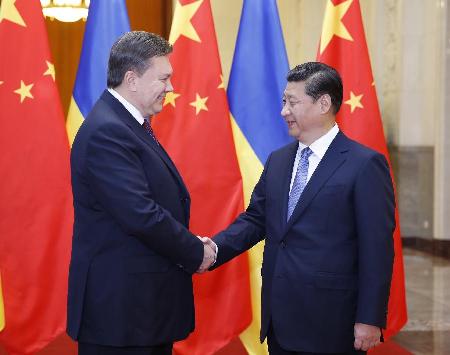
Just to give an idea on the importance of the value that this group of countries put on Ukraine, it should be noted that the Chinese signed a December 5, 2013 bilateral agreement announcing that Ukraine was Beijing’s strategic partner. Included in the agreement was a Chinese pledge to provide Kiev with the military protection of a Chinese nuclear umbrella. The governments of Ukraine, China, and Russia had also discussed admitting Ukraine into the Shanghai Cooperation Agreement (SCO).
There is no question that the Ukrainian government is corrupt, but the opposition is no better and equally as corrupt. It cannot be denied, however, that when it comes to the question of popular backing by the Ukrainian people, the Party of Regions and its political allies have greater support from Ukrainians than the opposition parties that have taken over the country through the use of force and intimidation. Nor does the pandering of fearful Party of Regions officials towards the empowered opposition justify or hide the coup that has taken place in Kiev; these officials are now trying to either save their own skins or salvage the situation.
Even if it is denied that the opposition originally planned a coup, only when democratic means are exhausted can such a use of force be legitimate. The mainstream opposition leadership in Ukraine galvanized all their supporters and mobilized them into pouring into Kiev and pushed for a violent escalation, while the pro-government half of the country remained mostly immobilized. As mentioned and alluded to earlier, the show of numbers in the streets of Kiev by the opposition also has an equally large or possibly even larger number of Ukrainians opposing it. What about their opinions about the future of Ukraine?
full article here
Global Research, February 25, 2014

About the author:

An award-winning author and geopolitical analyst, Mahdi Darius Nazemroaya is the author of The Globalization of NATO (Clarity Press) and a forthcoming book The War on Libya and the Re-Colonization of Africa. He has also contributed to several other books ranging from cultural critique to international relations. He is a Sociologist and Research Associate at the Centre for Research on Globalization (CRG), a contributor at the Strategic Culture Foundation (SCF), Moscow, and a member of the Scientific Committee of Geopolitica, Italy.
SHOP GLOBAL RESEARCH

Tuesday, February 25, 2014

SYRYA: Mass Rallies in Support of Army and National Principles

Mass rallies in support of Army and national principles

Feb 25, 2014

Provinces, (SANA) - Thousands of Banias residents on Tuesday took to streets in a mass rally to express support to the Syrian Army.
The participants, marching in the marine Corniche, voiced support of the Syrian Arab Army in itsconfrontation of terrorism, as they also stressed support to the firm national principles.
Citizens in al-Qurdaha city voice support to Syrian Army
Citizens in al-Qurdaha city in Lattakia countryside took to the streets in support of the Syrian Arab Army in facing the armed terrorist groups and the conspiracy targeting Syria’s unity and integrity.
The participants in the march also voiced support to the firm national principles.
Huge mass march in Qaryatin town, Homs countryside
Citizens in al-Qaryatin town and the neighboring villages in Homs countryside took to the streets in support of the Syrian Arab army in confronting the takfiri armed terrorist groups and the firm national principles.
Massive March in al-Jibbeh square, Damascus in support of Syrian Army
The citizens in al-Jibbeh square in Damascus city staged a  massive march in support of the Syrian Arab Army in repelling the armed terrorist groups.
Holding posters of President Bashar al-Assad and waving Syrian flags, the participants in the march expressed appreciation for the sacrifices of the martyrs and chanted slogans in which they stressed adherence to national unity.
They highlighted that terrorism will never dissuade the Syrians from supporting their country and its army, adding that their area was immune to all attempts to ignite sedition and spawn terrorism.
They stressed that Syria will emerge from the crisis stronger thanks to the will of its people and the sacrifices of its army. They also expressed support to the reconciliation process in the Syrian lands and rejection of foreign intervention attempts and the so-called “coalition”, which doesn’t represent the Syrian people at all.
March in Masaken Barzeh in Damascus in support of Army
Residents of Masaken Barzeh, for displaced persons from the occupied Syrian Golan, took to the streets in a massive march in which they hailed the sacrifices made by the Syrian Arab Army to restore security and stability to all areas and enable displaced families to return to their houses.
In a statement, the participants vowed to confront terrorism until security and peace prevail again in Syria, adding that the march proves that the people of the occupied Syrian Golan will not abandon their country or its leadership or army.
They highlighted the importance of supporting the army as the way to overcome the plot and restore security.
Massive march in Hama in rejection of terrorism, support of army
In Hama, locals of the area of Kirnaz and the surrounding towns poured to the streets in a massive march in which they expressed support to the Syria Arab Army and rejection of the acts of the armed terrorist groups.
They expressed their loyalty to the homeland and readiness to defend in at all costs, adding that the marches across the country have unmasked the fakeness of the allegations made by the terrorists, adding that the terrorists aim at undermining the culture of the Syrian people and the Syrian original heritage.
Send this story to someone

"Military Humanitarian Intervention: the Shock Doctrine Applied to Syria" by Rob Prince

What's needed in Syria is not military intervention, but a global peace offensive.

., .,
(Note: Rob Prince teaches at the Korbel School of International Studies. Although tangentially, he has been associated with the University of Denver's Center for Middle East Studies and has participated in a number of its public forums, including on the Syrian crisis. Compelled to respond to the February 11, 2014 op-ed in the New York Times by colleagues, Nader Hashemi and Danny Postel, he critiques their arguments and makes alternative suggestions for ending the Syrian impasse.)
At a moment when the only viable path open to resolving the Syrian conflict lies in a negotiated settlement between the Assad government and the legitimate opposition, two colleagues at the University of Denver's Korbel School of International Studies, Nader Hashemi and Danny Postel of the Center for Middle East Studies, have put forth an emotional and poorly conceived call for military intervention to resolve the escalating humanitarian crisis there.
Using logic tinted with Cold War reasoning (blaming the Russians is bit out of fashion) and poor examples (Somalia - 1993?) to bolster their arguments, they put forth their ideas on the subject in an op-ed, in theNew York Times on February 11 titled "Use Force To Save Starving Syrians." In a one-sided appeal, they place the blame for the Syrian human debacle almost entirely at the feet of the Assad government for virtually all of the violence.
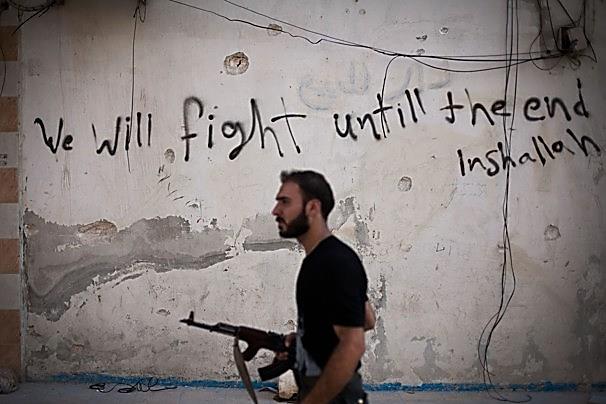
At the same time, the role of Salafist Islamic militants (trained and funded by the Saudis, Qatar, Turkey, and ultimately supported and manipulated by Washington) is minimized if not denied. Yet it is these elements who have, to a great degree, essentially hijacked a legitimate Syrian opposition movement, internationalized the struggle and continue to wreak havoc and death in their goal to establish Shari'a law in Syria and beyond.
Russia is criticized for failing to restrain the Syrian government's military actions but no similar demands - none at all - are made of the United States and the Saudis to rein in "allies" fighting in the field. Nor is any weight given to the extensive human, infrastructural and cultural damage these Islamic fundamentalist elements have done or to their utter viciousness, cruelty and politically retrograde nature.
Calling for military intervention as a way to end or at least reduce the bloodshed in Syria does pull at certain ethical heartstrings. But it is, at best, a desperate appeal, and at worst, quite frankly, a cynical move meant to give cover to a not especially humane long-term geopolitical considerations.  
Indeed, perhaps the sorriest assumption of their argument is that the United States can save the day and end the humanitarian tragedy in Syria by riding in on its white heavenly horse laden with cruise missiles and drones. Are they forgetting Washington's long record of supporting totalitarian regimes in exchange for oil in the Middle East and elsewhere, and whose involvement in the Syrian tragedy is, incidentally, far from innocent?
One must make a distinction between "humanitarian intervention" in times of war, and military intervention using humanitarian pretexts. The latter actually has a very long and sordid history going back several hundred years and has been used by virtually every colonial and neocolonial military intervention and massacre. It is nothing new, although lately, through the thinking of certain American intellectuals (Samantha Powers and others) it has been given a new intellectual gloss.
Pulling out the "humanitarian" pretext has become more in fashion in this post-Cold War era when the United States can no longer argue that countering the "Soviet threat" is a pretext for political and military intervention. Even during the Cold War, the United States would frequently invoke a humanitarian pretext (intermingled with anti-communism) for its Third World interventions, C.I.A. coups, whatever. The bodies of hundreds of thousands of Chileans, Argentinians, Brazilians, Guatamaltecos, Nicaraguans, Salvadoreans, litter the fields and oceans as evidence of the results of that policy.
Of late the swan song of "saving the natives from humanitarian disaster" has been cultivated into a fine art by the French in Africa in their attempt to re-position themselves to insure their share of that continent's strategic assets, most recently in Mali and now in the Central African Republic. Washington is learning from Paris how to refine the argument. What is usually omitted or denied is the degree to which (in the case of the French in Mali or the U.S. in Syria) French or American behind-the-scene machinations contributed to the crises exploding in the first place. This is certainly the case for U.S. political activities in Syria - publicly calling for a negotiated solution - less openly training, arming, and financing some of the most dastardly elements in the Middle East to bring down the Assad Regime (or getting regional allies to do so).
Naomi Klein's Shock Doctrine aptly applies to what the United States did in Libya (it was Washington pulling the strings even if the French took the lead in the bombing campaign) and what it has tried to do less successfully in Syria: use the pretext of humanitarian intervention to garner public support for a military-initiated regime change. Follow that up with U.N. Security Council support for limited military actions to give the cover of international law to the operation. Immediately violate the U.N. mandate by unilaterally extending the scope of the approved mission. Get as many "allies" on board to do the fighting to extend the weight of the "coalition of the willing."
Once the regime change has been accomplished, the societies are restructured along neoliberal lines making for easier economic penetration and exploitation, their formerly more centralized governments fractured in one way or another. Once the fighting is over, offer World Bank and/or IMF structural adjustment aid to restructure the battered economies and infrastructure along neoliberal lines.
In calling for military intervention in Syria - something not even the U.S. military itself is particularly enthusiastic about - Hashemi and Postel cozy up, as they have before on Iran in 2009 and Libya in 2011, with the likes of AIPAC, along with this country's band of intrepid and misdirected neoconservatives. These are the same elements that pushed this country into invading Iraq and continue to push the Obama Administration to intervene militarily in Syria.
What would be worse at the moment than a U.S.-led military intervention in Syria which has the possibility of aggravating an already destabilized region that much more and probably drawing in other players including Iraq, Iran and possibly Russia. The military situation on the ground over the past year has shifted dramatically in favor of the Assad government and its allies reducing Washington's goal of regime change in Syria considerably.
The inner workings of the Obama Administration's decision not to attack Syria last September remain hazy. Perhaps someday the deeper logic of the decision to pull away from the abyss will come to light. They seem to include both regional considerations as well as Washington's desire, not to be exaggerated, to shift American strategic attention to Asia. The concern that military operations in Syria could result in Iraq or Afghanistan-like debacles for US policy probably figured into the decision. U.S. (or U.S.-led) military intervention is not likely to improve the humanitarian tragedy unfolding in Syria but to worsen the already bleak reality that much more. There are no assurances - none - that it would in any way resolve the conflict.
Along with near global opposition to such a plan of action, the futility and probable negative results of an attack is figured large in the Obama administration's decision not to initiate military action last September to the relief of much of the world. Whatever, that decision not to pull the military lever against Syria, followed by Washington's opening for negotiations with both Syria and Iran, are some of the (few) wiser decisions that Obama had made on Middle East policy since coming to office in 2008.
Rather than ratcheting up the dangers of the Syrian explosion, is it not the time to do just the opposite? Should we not, instead, press for a negotiated political solution to a conflict that has proven it will have no military solution? Admittedly, the Geneva negotiations over Syria to date have been little more than a charade, but then are we - the world - not in a better place wrangling over how to settle the Syrian crisis politically rather than fighting over which targets U.S. drones and Cruise missiles might be targeting?
The failure of this round (Geneva II as it is called) cannot be blamed, as the authors do, on Russian machinations. To the contrary, Russia and most particularly its foreign minister, Sergei Lavrov, are looking more like the peacemakers in the Syria crisis than is Washington. Global public opinion recognizes very clearly that the Russians have played a positive,if not decisive, role in moving the Syrian crisis from big power military confrontation to negotiations while the Obama Administration's approach is more confused and contradictory.
In a sharp U-turn away from military confrontation, having agreed to multi-party negotiations on Syria, the Obama Administration has gotten cold feet about pursuing the Geneva process seriously. The fact of the matter is that there is no way, none, that Washington can "resolve" the Syrian crisis independently on its own or to its liking. The Obama Administration plan for "regime change" in Syria - what it has been working for now for several years - is dead in the water.
What is the alternative vision to ending the humanitarian crisis in Syria...What can be done to stop the bleeding? The following are some steps I would recommend that might just make considerably more impact than bombing Damascus or sending U.S. troops to die in yet another senseless Middle East war. It is a global peace offensive that is needed, not military intervention.
1. That the international community could and should call on all parties to initiate an immediate multi-sided ceasefire. Of course pressure from outside allies would be key. If it would expected that the Russians and Iranians would hold the Syrians to task, it would also be expected that the United States and the Saudis would hold their allies on the ground to the same standard.
2. The recruiting, training, arming of all foreign mercenaries should end.
3. Assuming that the ceasefire could be established, then a massive humanitarian aid program, directed by the United Nations, supported by a Security Council resolution should be implemented as soon as possible.
4. The Geneva Peace Process has to be actively supported. Frankly, as Ibrahim Kazerooni and I have stated on our radio program, in our op-eds for the past three years, in public forums and elsewhere, there can be no military solution to the Syrian crisis. It can only be resolved politically and diplomatically.
5. The Geneva negotiations should center on talks between the Assad government and the legitimate Syrian opposition. By the latter is meant, those domestic opponents to the regime, whose grievances against the government are long-standing (and genuine) and whose roots in Syrian society are organic and undisputed. Such negotiations need to be pursued without preconditions beyond maintaining the ceasefire.
6. The Obama Administration has to be more engaged in the multilateral Geneva peace negotiations. While Washington made an important decision by not going to war last September, it seems to be essentially paralyzed in moving the negotiating process. Once again, it is time for Obama to once again show the political courage he showed the world in September by pressing the United States to negotiate seriously in Geneva and not let his domestic political opponents Syrian policy (neo-conservatives, AIPAC) once again gain the upper hand.
[Rob Prince, whose teaching title has changed five times in the past 20 years, although the job is the same, is Teaching Professor at the University of Denver's Korbel School of International Studies. In recent years, he has written extensively on North Africa. He is also the publisher of the Colorado Progressive Jewish News.]
Rob Prince
February 14, 2014
Foreign Policy in Focus


PORTSIDE AIMS TO PROVIDE MATERIAL OF INTEREST TO PEOPLE ON THE LEFT THAT WILL HELP THEM TO INTERPRET THE WORLD AND TO CHANGE IT.

Monday, February 24, 2014

Une Vision Caricaturale de la Syrie par Bahar Kimyongür


Dans un article publié ce dimanche 23 février sur le site du quotidien libanais francophone "L'Orient-Le Jour"  sous le titre "Que reste-t-il du printemps arabe?", le professeur franco-libanais  de gauche Gilbert Achcar a une nouvelle fois surpris par la pauvreté de son analyse du printemps arabe et du conflit syrien.

Les aberrations défendues par l'intellectuel trotskiste dans son article d'opinion étant trop multiples, nous nous limiterons à critiquer un seul passage, celui où il présente la Syrie dans les termes suivants : "(…) la transformation des forces armées par Hafez el-Assad en garde prétorienne du régime, fondée sur un facteur confessionnel minoritaire, était de nature à alimenter des rancœurs confessionnelles au sein de la majorité. Imaginons que le président égyptien soit copte, que sa famille domine l'économie du pays, que les trois-quarts des officiers de l'armée égyptienne soient également coptes et que les corps d'élite de l'armée égyptienne le soient intégralement. S'étonnerait-on de voir « l'extrémisme musulman » prospérer en Égypte ?"

Notons d'abord comme le professeur Gilbert Achcar parle pudiquement "d'extrémisme musulman" dans le cas de la Syrie. 

Pour le spécialiste des révoltes arabes, il est compréhensible voire normal que des djihadistes décapitent des prisonniers puis jouent au football avec leur tête.

Il est justifié que les djihadistes jettent leurs victimes dans des fours, alignent des têtes détachées de leurs corps sur des barbecues, plantent des têtes au bout de piques ou sur les barreaux d'un mur d'école, exhortent des enfants à décapiter des prisonniers, éviscèrent leurs victimes et font mine de manger leurs entrailles.

Si tous ces crimes sont commis en Syrie, pour M. Achcar, c'est de toute façon la faute à la dictature qui a "alimenté" le djihadisme.

Et c'est d'autant plus la faute à la dictature syrienne que celle-ci est confessionnelle ajoute-t-il.

En fait, d'après Achcar, les alaouites contrôlent tout en Syrie ou presque. Soulignons au passage que c'est l'argument principal des groupes djihadistes pour justifier leur politique génocidaire en Syrie.

L'intellectuel franco-libanais n'a donc pas peur de ressortir la vieille théorie du complot alaouite à la tête de l'Etat syrien.

Il se garde au passage de citer les apparatchiks du régime syrien comme le sunnite Abdel Halim Khaddam, l'un des premiers à avoir quitté le navire baassiste sous le mandat présidentiel de Bachar el Assad.

Abdel Halim Khaddam n'avait rien d'un sunnite opprimé puisqu'il a été président du pays par intérim pendant plus d'un mois.

Qui plus est, durant sa carrière, Khaddam a amassé une fortune qui lui a permis de collectionner les villas et les voitures de luxe, ce qui le rendait détestable aux yeux de la plupart des Syriens. 
M. Achcar oublie aussi de dire qu'à la tête du renseignement, de l'armée et du parti Baas, précisément les trois piliers du dispositif répressif syrien, les sunnites sont autant représentés que les alaouites.

A l'instar de l'armée égyptienne, les musulmans sunnites forment l'ossature de l'armée arabe syrienne qui se bat inlassablement contre le terrorisme.

Toujours en Syrie, il y a plus de ministres sunnites que de ministres alaouites.

M. Achcar omet également de préciser que le sunnisme est à proprement parler la religion d'Etat en Syrie alors que les alaouites n'ont aucune existence légale ni ne disposent du moindre privilège sur le plan religieux. 

Leurs lieux de culte de dimensions modestes sont entretenus par les descendants du défunt cheikh de la communauté qui, à sa mort, est honoré comme un saint.

M. Achcar feint donc d'ignorer que les alaouites de Syrie n'ont jamais formé de caste privilégiée en Syrie. 

En réalité, seuls quelques membres de la famille du président Assad ont bénéficié de largesses économiques. 

Mais cette situation n'est hélas pas exceptionnelle: les parvenus d'autres communautés du pays ont également favorisé l'ascension sociale de leurs familles ou de leurs amis.

Un ministre chrétien, sunnite ou druze fera appel à un ami d'enfance, à une nièce ou à un cousin pour travailler dans son ministère. Cette pratique est critiquable mais est loin d'être l'exclusivité des alaouites.

Par conséquent, la corruption n'est pas un phénomène strictement confessionnel en Syrie. 

De la même manière, dans leur écrasante majorité, les alaouites partagent les mêmes conditions de vie, de travail ou de précarité que leurs frères sunnites. La plupart des alaouites vivotent autour du seuil de pauvreté.

D'autre part, les grandes familles bourgeoises de Damas ou Alep sont majoritairement sunnites et chrétiennes et non alaouites.

Enfin, le mode de vie d'un Hafez et d'un Bachar el Assad n'a rien à voir avec celui de l'ex-président tunisien Ben Ali ou de l'ex-président égyptien Moubarak.

Hafez el Assad a vécu dans un appartement modeste pour ne pas dire vétuste du centre de Damas. Bachar el Assad vit, lui aussi, dans un appartement de la ville et non dans un palais, un château, une villa, un yacht ou un ranch comme les autres dictateurs arabes.

Tout cela, Monsieur Achcar doit le savoir. Mais il dissimule délibérément ces éléments pour mieux caricaturer la Syrie en la comparant à une Egypte imaginaire dominée par les Coptes.

L'intellectuel trotskiste n'a nullement besoin d'inventer une Egypte confessionnelle pour nous illustrer ce à quoi la Syrie ne ressemble pas.

Prenons les monarchies wahhabites affiliées au Conseil de coopération du Golfe.

Le Bahreïn par exemple.

La population de ce petit pays est chiite à 70%.

Mais la dynastie régnante est totalement sunnite et qui plus est, d'obédience wahhabite. 

Tous les ministres, les chefs de l'armée, du renseignement et les principaux magistrats font partie d'une seule et même famille et à fortiori, d'une seule et même confession.

A la tête de l'Etat, de la justice, de l'armée et des médias, tout le monde s'appelle Al Khalifa.

Alors qu'un sunnite en Syrie peut devenir président de la République, un chiite au Bahrein ne peut même pas devenir un agent de la circulation.

Les chiites du Bahreïn sont soumis à une discrimination à l'embauche et au logement au seul motif qu'ils sont chiites, une situation impensable en Syrie. 

Détestés par la dynastie des Al Khalifa, les chiites sont soumis à la misère, à la marginalisation sociale et culturelle, aux tortures, à la terreur et à l'humiliation.

Pourtant, malgré leurs souffrances, ces masses opprimées ne se livrent pas à des pogromes anti-sunnites ni à toutes ces orgies de violence et de barbarie contre leurs concitoyens sunnites comme nous ont habitués les djihadistes en Syrie.

Contrairement aux djihadistes syriens gavés de haine anti-chiite et anti-alaouite, les misérables de Bahreïn n'appellent pas à mener un génocide anti-sunnite.

La barbarie des groupes combattants actifs en Syrie n'est donc pas une fatalité. 

Une simple frustration et une "rancoeur" à caractère confessionnel ne suffisent pas non plus à expliquer la sauvagerie des djihadistes syriens.

En Syrie, la guerre contre les "hérésies" et les groupes minoritaires à une histoire et une tradition millénaire. Elle se fonde sur une dogme, un projet politique, une propagande et des fatwas popularisées à la fois par la tradition orale et par les moyens de communication modernes.

Comme Gilbert Achcar s'échine à faire de l'extrémisme religieux le contre-coup inéluctable de la violence et de la corruption des dictatures arabes, sa conclusion nie l'évidence suivante: en Tunisie, en Libye, en Egypte ou en Syrie, dans l'état actuel de la rue arabe, les progressistes arabes n'avaient dès le début de la révolte aucune chance de vaincre une dictature sans se faire doubler par des forces réactionnaires disposant de moyens financiers, humains et logistiques quasi infinis.

Le professeur Achcar a raison sur un point: les directions des mouvements de révolte arabes doivent incarner "les aspirations progressistes des millions de jeunes qui sont entrés en révolte en 2011." 

Mais en exprimant ce voeux pieux, sans le vouloir, il pointe les raisons de l'échec de ces révoltes : en fait, l'incapacité des forces progressistes arabes à être plus convaincantes, efficaces et séduisantes que les groupes religieux dont le dogmatisme et la démagogie ont constitué le fonds de commerce.

Conscients de leurs faiblesses, plusieurs groupes progressistes tels que le Courant populaire égyptien (CPE) de Hamdeen Sabahi se sont rangés du côté de l'armée égyptienne contre les groupes religieux et le terrorisme djihadiste.

Avant de proposer un remède, les intellectuels comme le professeur Achcar rendraient un grand service au lecteur profane s'ils commençaient par établir un diagnostic précis de l'état des lieux dans la société arabe et dans ses luttes populaires.

Dans le cas de la Syrie, quand les intellectuels comme Achcar cesseront d'insinuer que les alaouites se font génocider par leur propre faute, quand ils verront que des millions de sunnites, de chrétiens et de druzes voient un intérêt vital à défendre leur gouvernement et leur armée et quand ils traiteront à leur juste mesure les horreurs commises par les groupes djihadistes, peut-être que nous verrons des foules de citoyens loyalistes réclamer des réformes démocratiques en choeur avec les citoyens de l'opposition.

Mais pour l'heure, les Syriens ont une priorité : mettre un terme à la guerre dans leur pays. Fatigués de patauger dans les chaudrons de l'enfer, les Syriens de tous bords sont de plus en plus nombreux à défendre l'Etat contre le terrorisme comme on l'a vu dans les manifestations de ces derniers jours à Damas, Alep, Homs, Hama, Lattaquieh, Deir ez-Zor, Hassakeh et Deraa.

Même si ce constat pragmatique est dur à admettre, pour des millions de Syriens parmi lesquels des contestataires de la première heure, la survie de la Syrie telle qu'ils l'ont connue, avec son esprit de convivialité légendaire, ses lieux saints, ses écoles, ses hôpitaux, son industrie, ses terres agricoles, sa créativité artistique et son patrimoine archéologique passe avant le rêve de glisser un bulletin de vote dans une urne pour le candidat politique de leur choix.

Le dilemme ne se situe plus entre dictature et démocratie depuis belle lurette mais entre Madaniya, la civilisation et Mad Max, le chaos post-apocalyptique.

Disons-le de manière plus prosaïque: soit la Syrie loyaliste gagne la guerre contre le terrorisme comme l'Algérie. Soit la Syrie loyaliste perd la guerre contre le terrorisme comme l'Afghanistan.

Une solution à l'algérienne ou une dissolution à l'afghane. 

Rien de moins.

Il ne faut pas être un professeur émérite pour le voir. Un ou deux yeux suffisent.