Monday, April 17, 2017

India on Afghan bombing


India says 500 Pakistani nationals protecting ISIS were killed in US Afghan bombing

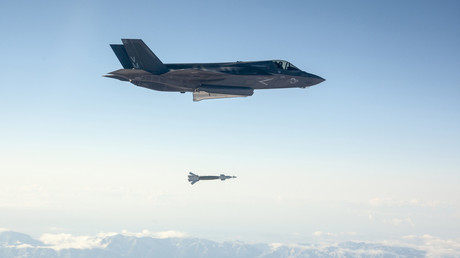
At least 500 Pakistani nationals have been killed in the US bombing that took place at Nangarhar province in Afghanistan. 

Indian authorities are claiming that at least 500 Pakistani nationals protecting ISIS operatives in Afghanistan, were killed in the US MOAB bombing in Nangarhar province.


One India reports on the claim from sources in India…
The operation that was jointly coordinated by the 201 Selab Corps of the Afghanistan army targeted the caves and tunnels that were used as hiding places by the IS. It is now clear that the Pakistan army was backing these IS operatives in Afghanistan, official sources also confirmed.
Indian agencies who are coordinating withe counterparts in Afghanistan have learnt that there are no civilians living in the area. There were a large number of stooges of the Inter-Services intelligence who have been protecting the IS operatives in this area.
The US action comes at a time when there was a huge build-up of IS forces in Afghanistan. Indian agencies say that the Pakistan army and the ISI were nurturing these operatives. The entire area that was bombed was under the control of the ISI officials backing the IS, sources also said. The impact of the bomb was so huge that it blew up at least 500 Pakistanis and an equal number of IS operatives.
Zerohedge reports that while India seems pleased with the result of the US bombing, not everyone else is.
Former Afghan president Hamid Karzai accused his successor on Saturday of committing treason by allowing the U.S. military to drop the largest conventional bomb ever used in combat during an operation against Islamic State militants in Afghanistan.
Karzai, who also vowed to “stand against America”, retains considerable influence within Afghanistan’s majority Pashtun ethnic group, to which President Ashraf Ghani also belongs. His strong words could signal a broader political backlash that may endanger the U.S. military mission in Afghanistan.
“How could you permit Americans to bomb your country with a device equal to an atom bomb?” Karzai said at a public event in Kabul, questioning Ghani’s decision. “If the government has permitted them to do this, that was wrong and it has committed a national treason.”
“I decided to get America off my soil,” he said. “This bomb wasn’t only a violation of our sovereignty and a disrespect to our soil and environment, but will have bad effects for years.”
Ghani’s office said the strike had been closely coordinated between Afghan and U.S. forces and replied to Karzai’s charges with a statement saying:
“Every Afghan has the right to speak their mind. This is a country of free speech.“
Public reaction to Thursday’s strike has been mixed, with some residents near the blast praising Afghan and U.S. troops for pushing back the Islamic State militants.

Nordkorea – RT-Deutsch Interview zum drohenden Krieg

 “Das trojanische Pferd der Amerikaner gegen Nordkorea"

https://deutsch.rt.com/asien/49319-trojanische-pferd-amerikaner-gegen-nordkorea/

“Das trojanische Pferd der Amerikaner gegen Nordkorea“ – RT-Deutsch Interview zum drohenden Krieg
“Kim Jong-un ist ein verrückter Hund, und nur Gott allein hat die Antwort aus der Krise“ - angesichts der Spannungen auf der koreanischen Halbinsel führte RT-Deutsch ein Interview mit dem Nordkorea-Experten Dr. Seong Hyon Lee. Ein Plan B mit einem trojanischen Pferd könnte einen Krieg verhindern. 
Südkorea kommt nicht zur Ruhe. Kim Jong-un drohte vergangene Woche mit einer undefinierten “großen Überraschung“. Die Welt hält den Atem an, und die Amerikaner verlegen weiterhin Militärs und Kriegsgerät auf die koreanische Halbinsel. Ein erneuter nordkoreanischer Raketentest am Sonntag misslang, bestätigte aber die Befürworter einer Militärintervention, dass Krieg die einzige Lösung sei, um sich des unkalkulierbaren Risikos Nordkorea zu entledigen. Der amerikanische Präsident Trump buhlte, wie sein Vorgänger, um die Unterstützung der Chinesen gegen Nordkorea. Er lud den chinesischen Präsidenten Xi Jinping in die USA ein, um ihn zu einem Alliierten gegen den Feind Nordkorea zu machen. Die US-Regierung sieht, alle Karten auf dem Tisch liegend, auch eine militärische Intervention.
Aber China kann und will den Konflikt mit seinem Nachbarn nicht riskieren. Der südkoreanische Nordkorea-Experte Dr. Seong Hyon Lee sieht noch einen anderen Weg: ein trojanisches Pferd - aus der Hand der Amerikaner - ohne Involvierung der Chinesen. Denn die Nordkoreaner wissen, dass sie nicht das gleiche Schicksal wie die Libyer teilen wollen, wenn auf eine Abkehr vom Atomprogramm amerikanische Bomben folgen.
Der amerikanische Flugzeugträger USS Carl Vinson im Pazifischen Ozean, 30. Januar 2017.
RT-Deutsch: Bitte stellen Sie sich unseren Lesern vor.
Lee: Mein Name ist Dr. Seong Hyon Lee, ich bin wissenschaftlicher Mitarbeiter am Sejong-Institut, einem Think-Tanks in Südkorea, welches auf nationale Sicherheit und Außenpolitik spezialisiert ist.
RT-Deutsch: Wie ist die derzeitige Stimmungslage in Südkorea? Haben die Menschen Angst vor einem möglichen Krieg?
Lee: Gemeinhin ist es “Business as usual.“ Dies mag viele Menschen im Ausland überraschen, aber es ist hier die Realität. Südkorea ist seit 60 Jahren in einem faktischen Kriegszustand mit Nordkorea. Es ist in einem Kriegszustand, weil der Koreakrieg von 1950 bis 1953 nicht mit einem Friedensabkommen endete, sondern mit einem Waffenstillstand. Über die Jahre haben sich die Menschen an diese angespannte Situation gewöhnt.
RT-Deutsch: Ist ein Krieg zwischen Nord- und Südkorea möglich?
Lee: Nichts ist auszuschließen. Aber ich komme gerade aus den Vereinigten Staaten zurück. Meiner Ansicht nach findet dort ein amerikanischer Präventivschlag auf Nordkorea wenig Zuspruch, obwohl diese Option auf dem Tisch liegt. Es verbleibt eine Genauigkeit, wie dies anhand der Beobachter zu interpretieren ist. Aber ich denke, dass die Ambiguität teilweise strategisch ist. Es wäre keine gute Strategie, Nordkorea nicht mitzuteilen, dass man es nicht angreifen wird, wie schlecht auch immer es sich benimmt.
RT-Deutsch: Die koreanischen Nachrichten “The Korean Herald“ nannten vier herausfordernde Fragen für die Präsidentschaftskandidaten. Hier ging es erstens um die Wiedereröffnung des Kaesŏng- Industriekomplexes (hier arbeiteten Süd- und Nordkoreaner Seite an Seite), zweitens um das amerikanische THAAD-System, welches zu Repressalien Chinas geführt hat, drittens ob amerikanische Nuklearwaffen in Südkorea stationiert werden sollten und viertens um die Beilegung des Streits um die Trostfrauen zwischen Japan und Südkorea. Was sind ihre Ansichten zu THAAD, Kaesŏng und amerikanischen Nuklearwaffen?
Lee: Es gibt zwei Kandidaten, Moon Jae-in und Ahn Cheol-soo, die nun Kopf an Kopf um die Präsidentschaft im Wettbewerb stehen. Wer auch immer Präsident wird, sie werden wahrscheinlich die Aufstellung des THAAD-Systems unterstützen. Aber der Druck der Chinesen THAAD abzusagen, war ein Schuss in den Ofen. Kaesŏng, nicht THAAD, wird das sensibelste Thema zwischen Südkorea und den USA sein. Wenn die USA die Sanktionen gegen Nordkorea verschärfen wollen, und Südkorea den gemeinsamen Industriekomplex, der innerhalb von Nordkorea liegt, wiederöffnen will, dann werden die beiden Methoden miteinander kollidieren. Also sollten Seoul und Washington eine stabile Kommunikation erhalten, um diese Angelegenheit zu verfolgen. Eine Option für Südkorea wäre, sich während des ersten Jahres der neuen Präsidentschaft mit der Wiedereröffnung von Kaesŏng nicht zu beeilen, sondern die Zeit zu nutzen, um gemeinsam mit Washington und anderen Ländern eine Strategie zu entwickeln. Das Ziel sollte sein, Nordkorea zu einer Rückkehr an den Verhandlungstisch zu locken, während der konstruktiven Involvierung Nordkoreas, mit dem Ziel, ihnen zu helfen, wieder mit der Außenwelt zu interagieren. In Bezug auf die amerikanischen Nuklearwaffen, denke ich nicht, dass es irgendeine Chance für die Amerikaner gibt, diese wieder nach Südkorea einzuführen, obwohl die Medien diese Idee unterhaltsam finden, weil es eine interessante Geschichte abgibt.
RT-Deutsch: Die Entscheidung für die Aufstellung des THAAD-Systems kam sehr abrupt, nachdem die Nordkoreaner einen erneuten Raketentest durchgeführt hatten. Südkorea war und ist unter der Führung einer Übergangsregierung. Wurde ein Machtvakuum missbraucht, um die nachfolgende Regierung vor vollendete Tatsachen zu stellen?
Lee: Es war eine schlechte Idee im Hinblick darauf, dass die vorherige Regierung unter Park Geun-hye nicht nach der öffentlichen Meinung in einer national wichtigen Sache gefragt hat. Also, viele Menschen waren verärgert darüber, wie die Entscheidung getroffen worden ist. Demokratie ist, die Menschen zu fragen und ihre Ansichten zu reflektieren. Es geht aber mehr darum, “wie sie etwas getan hat“, als “was sie getan hat“. Die Entscheidung wurde auch mit der US-Regierung getroffen. Das heißt, es gibt zwei Parteien. Auf eine Art ist es ein internationales Abkommen. Deshalb denke ich, dass die nächste südkoreanische Regierung dieses respektieren wird. Darüber hinaus haben die wirtschaftlichen Vergeltungen der Chinesen als Reaktion auf THAAD die Südkoreaner sehr verärgert. Sie denken, dass China Einfluss auf die Geschicke eines souveränen Staates nimmt. Derzeit unterstützen 51 Prozent der Südkoreaner THAAD, 38 Prozent sind dagegen. Also hat der chinesische Druck nicht funktioniert. Drittens, gegen den steigenden Druck aus Nordkorea ist THAAD auch mehr und mehr zu einem Symbol einer robusten Allianz zwischen Südkorea und den USA geworden. Wenn man all dies bedenkt, wird THAAD wahrscheinlich weiterhin in Südkorea aufgestellt.
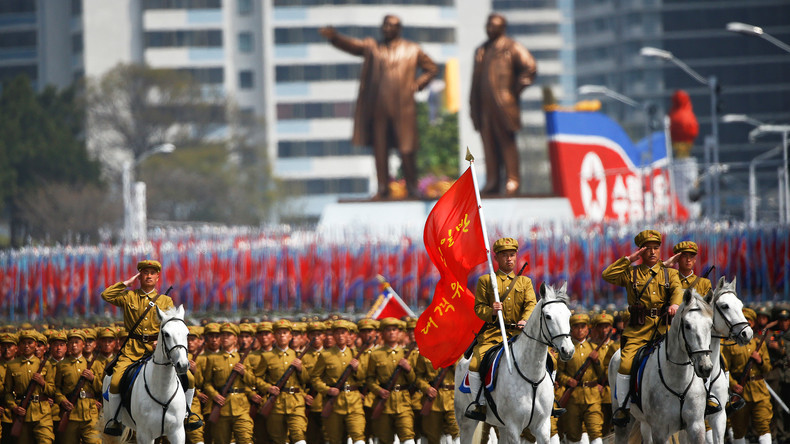
Ein nordkoreanischer Soldat nimmt die Flaggen in Inspektion, die zur Feier der Eröffnung eines neuen Wohnkomplexes wehen sollen; Nordkorea, Pjöngjang, 13. April 2017.
RT-Deutsch: Hat THAAD aber nicht mehr Schaden als Nutzen gebracht?
Lee: China versucht, Südkorea eine Lektion zu erteilen, wie viel ökonomischen Stress man als Konsequenz aushalten muss, wenn man den chinesischen Rat nicht befolgt. Es ist teilweise auch eine psychologische Taktik, um Einfluss auf südkoreanisches Verhalten zu nehmen. Der Schaden wird in Südkorea sicherlich gefühlt. Aber China hat bei den Südkoreanern an Respekt verloren.
RT-Deutsch: In ihrem letzten Artikel in den “Korea Times“-Nachrichten beschreiben sie einen Plan B der USA und machen auch einen Brückenschlag zu Deutschland. Kann Korea von der Deutschen Wiedervereinigung lernen?
Lee: Der Plan B ist der am wenigsten destruktive friedliche Weg, um die nordkoreanische Angelegenheit ohne Krieg zu lösen. Der deutsche Fall kann sicherlich mit einigen Modifikationen helfen.
In seinem Artikel “Trumps ohne China Annäherung gegenüber Nordkorea“ beschreibt Herr Lee einen neuen Plan B zum Zerfall des Systems Nordkorea. In diesem wird China von seiner Rolle gegenüber Nordkorea entmachtet, bis hin zu seiner “Irrelevanz“. Die Einbeziehung Nordkoreas würde sich wie ein trojanisches Pferd auswirken. Nordkorea würde von innen heraus zerfallen. Pjöngjang würde mit den USA übereinkommen, sich von seinem Atomprogramm abzuwenden, und die USA würde eine Botschaft in Pjöngjang eröffnen. "Dies wäre aber kein Gewinn für die Nordkoreaner", schreibt Herr Lee, "sondern die Botschaft würde dann zum trojanischen Pferd." Die USA würden Nordkorea den Handel ermöglichen, China wäre auch hier entmachtet, und der Kapitalismus hielte Einzug in Nordkorea. Hier vergleicht der Nordkorea-Experte den prognostizierten Zusammenbruch mit dem der DDR. Dann würden in Nordkorea letztendlich die Bedürfnisse der Menschen nach ökonomischen Reichtum siegen.
RT-Deutsch: Das erste Treffen zwischen Xi Jinping und Trump wurde von dessen Entscheidung überschattet, Bomben auf eine syrische Militärbasis abzuwerfen. Jinping lud Trump nach China ein. Aber gab es ein wirkliches Resultat? Was ist die chinesische Rolle im Konflikt? Wird Xi Jinping Kompromisse schließen, um einem Handelskrieg zwischen China und den USA zu umgehen, und sich weitere fünf Jahre im Amt zu sichern?
Lee: Es ist wichtig für das chinesische Regierungsoberhaupt seinen Bürgern zu zeigen, dass er stabile China-USA-Verbindungen schaffen kann. Also sind erfolgreiche US-China-Gipfeltreffen sehr wichtig für die regionale Politik Chinas. Es ist wichtig für Xi Jinping, ein lächelndes Bild mit Trump zu machen, nicht einem verärgerten Trump. Xi hat dieses Ziel erreicht. China hat auch Unsicherheiten vermieden, die Trump in der Vergangenheit darstellte. China ist sehr gut darin, seinen Anschein der Kooperation mit den USA zu wahren. Aber die chinesische Hilfe im Bezug auf Nordkorea ist mehr Schein als Inhalt.
RT-Deutsch: Was ist ihre Meinung zum Mord an Kim Jong-nam in Malaysia? Zeigt dies das Fehlen von chinesischem Einfluss auf Nordkorea? Hat China noch einen diplomatischen Einfluss auf Nordkorea, abseits der Macht durch den Handel?
Lee: Dies ist eine interessante Frage. China hat die Macht Nordkorea ökonomisch in die Knie zu zwingen. Aber wenn China dies tut, wird Nordkorea wahrscheinlich eine Atombombe Richtung China entsenden, nicht in Richtung der USA, bevor es zusammenbricht. China denkt, Nordkorea ist ein “verrückter Hund“ (feng gou), dass jeden beißen könnte, selbst seinen Besitzer. Also ist der Besitzer sehr vorsichtig.
Ehemaliger US-General:
RT-Deutsch: Wie lange noch kann Nordkorea weiterexistieren? Ein Überläufer, der vormals als Botschafter Nordkoreas in London tätig war prognostizierte dem System Nordkorea einen baldigen Kollaps. Ist Nordkorea noch immer ein Land, in dem seine Bürger, wie eine Herde Schafe bereitwillig Kim Jong-un gehorchen?
Lee: Kim Jong-uns Griff an der Macht scheint stabil. Kim wird weiterhin an Nuklearwaffen festhalten, als Mittel zum Überleben. Er sah was in Lybien passierte, als es sich von seinem Nuklearwaffenprogramm verabschiedete – es wurde von den USA angegriffen. Kim denkt, dass solange er an den Nuklearwaffen festhält, werden die USA nicht in der Lage sein Nordkorea anzugreifen.
RT-Deutsch: Was erwarten Sie von dem kommenden Präsidenten im Blauen Haus (Name des südkoreanischen Parlaments)? Braucht Südkorea eine enge Verbindung zu den USA? Wird die südkoreanische Führung zwischen China und den Staaten wählen?
Lee: Im Anbetracht dessen, was China wegen THAAD getan hat und die steigende nordkoreanische Bedrohung, will die kommende südkoreanische Regierung engere Beziehungen mit den USA, um eine bessere nationale Sicherheit zu gewähren, unabhängig davon, wer Präsident wird - auch ein liberaler Kandidat.
RT-Deutsch: Wie wird es möglich sein wieder Harmonie in der Region zu etablieren?
Lee: Das weiß nur Gott allein.
RT-Deutsch: Wir bedanken uns für das Gespräch und wünschen Ihnen und Ihrem Land eine friedvolle Zukunft. 
Das trojanische Pferd in Nordkorea müsste laut Lee 30 bis 40 Jahre agieren, um einen friedvollen Zusammenbruch zu erwirken. Lee widerspricht Tillerson zum Ende seines Artikels. Dieser hatte gesagt, dass die amerikanische Politik im Bezug auf Nordkorea der letzten 20 Jahre versagt hätte. Eine US-Strategie ohne China wäre bisher nicht verfolgt worden. 
Das Interview führte RT-Deutsch Redakteurin Olga Banach. 

Sunday, April 16, 2017

USA: Did Al Qaeda Fool the White House Again? by Robert PARRY


Did Al Qaeda Fool the White House Again?
EDITOR'S CHOICE | 16.04.2017

In Official Washington, words rarely mean what they say. For instance, if a U.S. government official voices “high confidence” in a supposed “intelligence assessment,” that usually means “we don’t have any real evidence, but we figure that if we say ‘high confidence’ enough that no one will dare challenge us.”


Donald Trump speaking with the media at a hangar at Mesa Gateway Airport in Mesa, Arizona. December 16, 2015. (Flickr Gage Skidmore)
It’s also true that after a U.S. President or another senior official jumps to a conclusion that is not supported by evidence, the ranks of government careerists will close around him or her, making any serious or objective investigation almost impossible. Plus, if the dubious allegations are directed at some “enemy” state, then the mainstream media also will suppress skepticism. Prestigious “news” outlets will run “fact checks” filled with words in capital letters: “MISLEADING”; “FALSE”; or maybe “FAKE NEWS.”
Which is where things stand regarding President Trump’s rush to judgment within hours about an apparent chemical weapons incident in Syria’s Idlib province on April 4. Despite the fact that much of the information was coming from Al Qaeda and its propaganda-savvy allies, the mainstream U.S. media rushed emotional images onto what Trump calls “the shows” – upon which he says he bases his foreign policy judgments – and he blamed Syrian President Bashar al-Assad for the scores of deaths, including “beautiful little babies,” as Trump declared.
Given the neocon/liberal-interventionist domination of Official Washington’s foreign policy – and the professional Western propaganda shops working for Assad’s overthrow – there was virtually no pushback against the quick formulation of this new groupthink. All the predictable players played their predictable parts, from The New York Times to CNN to the Atlantic Council-related Bellingcat and its “citizen journalists.”
All the Important People who appeared on the TV shows or who were quoted in the mainstream media trusted the images provided by Al Qaeda-related propagandists and ignored documented prior cases in which the Syrian rebels staged chemical weapons incidents to implicate the Assad government.
‘We All Know’
One smug CNN commentator pontificated, “we all know what happened in 2013,” a reference to the enduring conventional wisdom that an Aug. 21, 2013 sarin attack outside Damascus was carried out by the Assad government and that President Obama then failed to enforce his “red line” against chemical weapons use. This beloved groupthink survives even though evidence later showed the operation was carried out by rebels, most likely by Al Qaeda’s Nusra Front with help from Turkish intelligence, as investigative journalist Seymour Hersh reported and brave Turkish officials later confirmed.
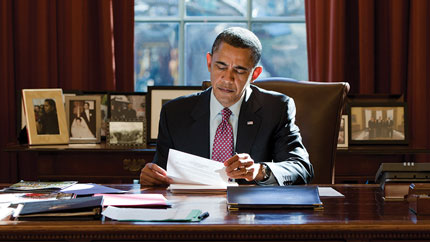
President Obama in the Oval Office
But Official Washington’s resistance to reality was perhaps best demonstrated one year ago when The Atlantic’s Jeffrey Goldberg published a detailed article about Obama’s foreign policy that repeated the groupthink about Obama shrinking from his “red line” but included the disclosure that Director of National Intelligence James Clapper had informed the President that U.S. intelligence lacked any “slam dunk” evidence that Assad’s military was guilty.
One might normally think that such a warning from DNI Clapper would have spared Obama from the media’s judgment that he had chickened out, especially given the later evidence pointing the finger of blame at the rebels. After all, why should Obama have attacked the Syrian military and killed large numbers of soldiers and possibly civilians in retaliation for a crime that they had nothing to do with – and indeed an offense for which the Assad government was being framed? But Official Washington’s propaganda bubble is impervious to inconvenient reality.
Nor does anyone seem to know that a United Nations report disclosed testimonies from eyewitnesses about how rebels and their allied “rescue workers” had staged one “chlorine attack” so it would be blamed on the Assad government. Besides these Syrians coming forward to expose the fraud, the evidence that had been advanced to “prove” Assad’s guilt included bizarre claims from the rebels and their friends that they could tell that chlorine was inside a “barrel bomb” because of the special sound that it made while it was descending.
Despite the exposure of that one frame-up, the U.N. investigators – under intense pressure from Western governments to give them something to pin on the Assad regime – accepted rebel claims about two other alleged chlorine attacks, an implausible finding that is now repeatedly cited by the Western media even as it ignores the case of the debunked “chlorine attack.” Again, one might think that proof of two staged chemical weapons attacks – one involving sarin and the other chlorine – would inject some skepticism about the April 4 case, but apparently not.
All that was left was for President Trump to “act presidential” and fire off 59 Tomahawk missiles at some Syrian airbase on April 6, reportedly killing several Syrian soldiers and nine civilians, including four children, collateral damage that the mainstream U.S. media knows not to mention in its hosannas of praise for Trump’s decisiveness.
Home-Free Groupthink
There might be some pockets of resistance to the groupthink among professional analysts at the CIA, but their findings – if they contradict what the President has already done – will be locked away probably for generations if not forever.
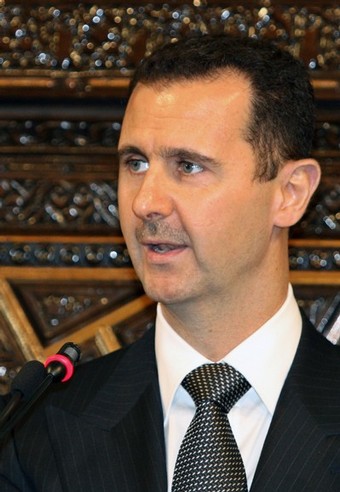
Syrian President Bashar al-Assad
In other words, the new Assad-did-it groupthink appeared to be home free, a certainty that The New York Times could now publish without having to add annoying words like “alleged” or “possibly,” simply stating Assad’s guilt as flat-fact.
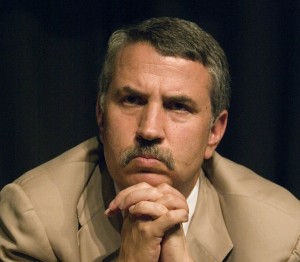
Thomas L. Friedman, the Times’ star foreign policy columnist, did that and then extrapolated from his certainty to propose that the U.S. should ally itself with the jihadists fighting to overthrow Assad, a position long favored by U.S. “allies,” Saudi Arabia and Israel.
“Why should our goal right now be to defeat the Islamic State in Syria?” Friedman asked before proposing outright support for the jihadists: “We could dramatically increase our military aid to anti-Assad rebels, giving them sufficient anti-tank and antiaircraft missiles to threaten Russian, Iranian, Hezbollah and Syrian helicopters and fighter jets and make them bleed, maybe enough to want to open negotiations. Fine with me.”
So, not only have the mainstream U.S. media stars decided that they know what happen on April 4 in a remote Al Qaeda-controlled section of Idlib province (without seeing any real evidence) but they are now building off their groupthink to propose that the Trump administration hand out antiaircraft missiles to the “anti-Assad rebels” who, in reality, are under the command of Al Qaeda and/or the Islamic State.
In other words, Friedman and other deep thinkers are advocating material support for terrorists who would get sophisticated American ground-to-air missiles that could shoot down Russian planes thus exacerbating already dangerous U.S.-Russian tensions or take down some civilian airliner as Al Qaeda has done in the past. If someone named Abdul had made such a suggestion, he could expect a knock on his door from the FBI.
Expert Skepticism
Yet, before President Trump takes Friedman’s advice – arming up Al Qaeda and entering into a de facto alliance with Islamic State – we might want to make sure that we aren’t being taken in again by a clever Al Qaeda psychological operation, another staged chemical weapons attack.
New York Times columnist Thomas L. Friedman
With the U.S. intelligence community effectively silenced by the fact that the President has already acted, Theodore Postol, a technology and national security expert at Massachusetts Institute of Technology, undertook his own review of the supposed evidence cited by Trump’s White House to issue a four-page “intelligence assessment” on April 11 asserting with “high confidence” that Assad’s military delivered a bomb filled with sarin on the town of Khan Sheikdoun on the morning of April 4.
Postol, whose analytical work helped debunk Official Washington’s groupthink regarding the 2013 sarin attack outside Damascus, expressed new shock at the shoddiness of the latest White House report (or WHR). Postol produced “a quick turnaround assessment” of the April 11 report that night and went into greater detail in an addendum on April 13, writing:
“This addendum provides data that unambiguously shows that the assumption in the WHR that there was no tampering with the alleged site of the sarin release is not correct. This egregious error raises questions about every other claim in the WHR… The implication of this observation is clear – the WHR was not reviewed and released by any competent intelligence expert unless they were motivated by factors other than concerns about the accuracy of the report.
Photograph of men in Khan Sheikdoun in Syria, allegedly inside a crater where a sarin-gas bomb landed
“The WHR also makes claims about ‘communications intercepts’ which supposedly provide high confidence that the Syrian government was the source of the attack. There is no reason to believe that the veracity of this claim is any different from the now verified false claim that there was unambiguous evidence of a sarin release at the cited crater… The evidence that unambiguously shows that the assumption that the sarin release crater was tampered with is contained in six photographs at the end of this document.”
Postol notes that one key photo “shows a man standing in the alleged sarin-release crater. He is wearing a honeycomb facemask that is designed to filter small particles from the air. Other apparel on him is an open necked cloth shirt and what appear to be medical exam gloves. Two other men are standing in front of him (on the left in the photograph) also wearing honeycomb facemask’s and medical exam gloves.
“If there were any sarin present at this location when this photograph was taken everybody in the photograph would have received a lethal or debilitating dose of sarin. The fact that these people were dressed so inadequately either suggests a complete ignorance of the basic measures needed to protect an individual from sarin poisoning, or that they knew that the site was not seriously contaminated.
“This is the crater that is the centerpiece evidence provided in the WHR for a sarin attack delivered by a Syrian aircraft.”
No ‘Competent’ Analyst
After reviewing other discrepancies in photos of the crater, Postol wrote: “It is hard for me to believe that anybody competent could have been involved in producing the WHR report and the implications of such an obviously predetermined result strongly suggests that this report was not motivated by a serious analysis of any kind.
Another photo of the crater containing the alleged canister that supposedly disbursed sarin in Khan Sheikdoun, Syria, on April 4, 2017
“This finding is disturbing. It indicates that the WHR was probably a report purely aimed at justifying actions that were not supported by any legitimate intelligence. This is not a unique situation. President George W. Bush has argued that he was misinformed about unambiguous evidence that Iraq was hiding a substantial amount of weapons of mass destruction. This false intelligence led to a US attack on Iraq that started a process that ultimately led to a political disintegration in the Middle East, which through a series of unpredicted events then led to the rise of the Islamic State.”
Postol continued: “On August 30, 2013, the White House [under President Obama] produced a similarly false report about the nerve agent attack on August 21, 2013 in Damascus. This report also contained numerous intelligence claims that could not be true. An interview with President Obama published in The Atlantic in April 2016 indicates that Obama was initially told that there was solid intelligence that the Syrian government was responsible for the nerve agent attack of August 21, 2013 in Ghouta, Syria. Obama reported that he was later told that the intelligence was not solid by the then Director of National Intelligence, James Clapper.
“Equally serious questions are raised about the abuse of intelligence findings by the incident in 2013. Questions that have not been answered about that incident is how the White House produced a false intelligence report with false claims that could obviously be identified by experts outside the White House and without access to classified information. There also needs to be an explanation of why this 2013 false report was not corrected. …
“It is now obvious that a second incident similar to what happened in the Obama administration has now occurred in the Trump administration. In this case, the president, supported by his staff, made a decision to launch 59 cruise missiles at a Syrian air base. This action was accompanied by serious risks of creating a confrontation with Russia, and also undermining cooperative efforts to win the war against the Islamic State…
“I therefore conclude that there needs to be a comprehensive investigation of these events that have either misled people in the White House, or worse yet, been perpetrated by people seeking to force decisions that were not justified by the cited intelligence. This is a serious matter and should not be allowed to continue.”
While Postol’s appeal for urgent attention to this pattern of the White House making false intelligence claims – now implicating three successive administrations – makes sense, the likelihood of such an undertaking is virtually nil. The embarrassment and loss of “credibility” for not only the U.S. political leadership but the major U.S. news outlets would be so severe, especially in the wake of the WMD fiasco in Iraq, that no establishment figure or organization would undertake such a review.
Instead, Official Washington’s propaganda bubble will stay firmly in place allowing its inhabitants to go happily about their business believing that they are the caretakers of “truth.”


Philippines President Rodrigo Duterte (still) likes Donald Trump

His remarks came during a speech where he told his audience, "I really think it over before I curse at you". 
While many prominent global politicians have expressed their disappointment in Donald Trump’s many recent policy shifts, one world leader is still singing his praises.
Philippines President Rodrigo Duterte has been in Qatar where he spoke of his continued admiration for the US President.
Duterte called Trump a ‘realist’ and ‘pragmatic thinker’
He went on to say,
“Trump is profound even if he does not seem to be one. Just like me, I am not that bright but I am very deliberate.
I really think it over before I curse at you”.
Duterte then spoke of a phone call he had with Trump shortly after the US election in which Trump told the firebrand Philippines President that he was ‘doing right’.
In spite of Duterte’s deescalation of tensions with China over the China China Sea territorial dispute, a move which the US finds troubling, Duterte seems to still avidly support The Donald even as many of his former supporters desert him.

Österliche Erwägungen


ostermarsch 

Berlin am 16. 04. 17 (Ostersontag) Der  Text von Graham Vanbergen (Monday, April 3, 2017, 13:16 Beijing/ original source „True Publica“) ist äußerst bedeutsam aus folgenden Gründen:
  • Erscheinungsort
  • ursprüngliche Quelle
  • realistische Skizze der aktuellen Weltentwicklungstrends!
  • Problematik der „No Borders“-Politik, die US-seitig gesteuert wird und sowohl Staatszerfall als auch Staatenneugründung unter US-Siegel impliziert (ursächlicher Hintergrund der Nahost-’Krise’, die sich ja vor allem um die Beherrschung der Energie – Resourcen dreht, siehe neueste ZEIT-FRAGEN Analyse von Jürgen Rose, 11. April 2017 http://www.zeit-fragen.ch)
  • Zerstörung der völkerrechtlichen Ordnung/ Basis UN-Charta
  • Erklärung für das Aufkommen populistischer, protektionistischer Strömungen als Antwort auf das Versagen des Neoliberalismus
  • Die Kennzeichnung der tektonischen Verschiebungen, ebenfalls als Antwort auf das Versagen der neoliberalen Institutionen IWF etc., der Aufstieg Chinas, Asiens (Projekte wie Neue Seidenstraße, AIIB werden benannt)
  • Das Scheitern der US-Politik, sich mittels Gewaltanwendung eine hegemoniale Weltgeltung zu sichern(ein perspektivisches Plus für den Weltfrieden!).
  • Einflussverlust des Petrodollar, umstrittenene Bedeutung der NATO, Neudefinition von Handelsabkommen! Der Bedeutungsanstieg der BRICS-Staaten…
  • Der Hinweis auf den zunehmenden Einfluss des „Tiefen Staates“ auf die politischen Entscheidungen des Westens und damit die Unterminierung des liberalen Rechtsstaates
  • Der Hinweis auf die zunehmende Dysfunktionalität des kapitalistischen Wirtschaftssystem und seiner Gefahre

All das sind Entwicklungen die friedenspolitisch genutzt werden müssen. 
Ich danke den Freunden  also , dass Sie mich  dazu veranlasst haben, den so wichtigen Text von Graham Vanbergen noch einmal durchzugehen!!! Ich halte ihn für sehr bedeutsam, wie gesagt  und meine, wir sollten mit seinen Aussagen arbeiten, die notwendigen Schlüsse für friedenspolitische Forderungen daraus ziehen. Der US-Imperialismus ist in seiner Schwäche zu erkennen und für seine aggressiven Schandtaten anzuprangern und endlich zur Rechenschaft zu ziehen .
Die kümmerlichen Reste der „Friedensbewegung“ werden ihrer Aufgabe solches zu wenigstens zu fordern, leider längst nicht mehr gerecht. Der Fokus auf die Abschaffung der Atomwaffen ist, abgesehen davon, dass er völlig illusionär und Schnee von gestern ist, ein Nebengleis. Genauso wenig hilfreich ist Ostermarsch-Forderung: „Abrüsten“! Unsere Forderungen müssen stattdessen zugespitzt und aktuell sein, Wir müssen den Kampf gegen die brandgefährliche Russlandphobie ins Zentrum rücken, Aufklärung leisten über die immer wieder und aufs Neue  hervorgezauberten haarsträubenden ‘False Flag-Operations’. Wir dürfen nicht fraglos hinnehmen, dass der neuerliche Giftgasangriff bei Idlib wieder einmal Assad in die Schuhe geschoben wird, sondern müssen vielmehr  aufklärende Stimmen darüber verbreiten. Wir müssen sagen, warum die Russen im Sicherheitsrat die Resolution für eine Untersuchungskommission blockiert haben, weil der resolutionsentwurf nämlich bereits von der Schuldzuschreibung an  die syrische Regierung als gegeben ausging. Wir müssen Partei ergreifen für den Frieden.
In diesem Sinne ist es besonders bedeutsam, dem Frieden entgegenarbeitenden Kräfte zu benennen, unsere objektiven Bündnispartner zu erkennen, jene Staaten nämlich , die gegen Krieg und Terror kämpfen und das sind nun mal Russland und seine Verbündeten in Nahost, Syrien, Iran, Hezbollah und natürlich auch China und die fortschrittlichen lateinamerikanischen Länder. Bolivien etwa hat sich in den letzten Tagen großartig platziert im Sicherheitsrat.
Wir haben als Friedenskräfte die Aufgabe Gegenaufklärung zu leisten und  dürfen uns nicht immer wieder auf Nebenschauplätze ablenken lassen.
Leider leisten uns einst ehrwürdige Organisationen wie IPPNW und IALANA und all die anderen keine Unterstützung mehr. Wir müssen selber denken und Flagge zeigen. Die Unterstützung von Individuen, die das Richtige tun, wie etwa  Matthias Platzeck, Ute Finkh-Kärmer,  Ken Jebsen, Willi Wimmers, Gerhard Wischnewski und viele Ungenannte, die den Mut haben auch  öffentlich gegen den Strom zu schwimmen, ist heutzutage von größerer Wichtigkeit als die Zusammenarbeit mit zahnlos gewordenen Organen.
In diese Richtung wollten wir  mit der Publikation  des Artikel von Graham Vanbergen argumentieren .Für den AKF Irene Eckert