Saturday, December 2, 2017

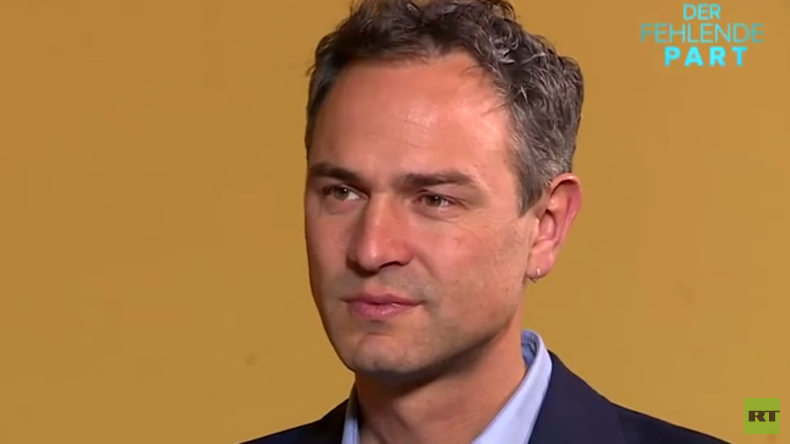
Auf den Spuren des WTC7 - Dr. Daniele Ganser im Gespräch

Auf den Spuren des WTC7 - Dr. Daniele Ganser im Gespräch
Der Leiter des Swiss Institute for Peace and Energy Research (SIPER), Dr. Daniele Ganser, gilt als einer der unnachgiebigen Forscher der Terroranschläge vom 11. September 2001. Der Schweizer Historiker hinterfragt die offiziellen Erklärungen zum Einsturz der Gebäude.


Dabei legt Dr. Ganser ein besonderes Augenmerk auf die Analyse des Einsturzes vom sogenannten „dritten Turm“, das WTC7. Dieses dritte Gebäude im World Trade Center-Komplex, das ebenfalls an diesem Tag einstürzte, sei der Hauptstreitpunkt, so Ganser.
Im Gespräch erläutert Dr. Daniele Ganser, Energie- und Friedensforscher, die enormen Diskrepanzen in der Berichterstattung und in den bisherigen offiziellen Ermittlungen. Er plädiert für eine neue, unabhängige und internationale Ermittlungskommission in der Causa 9/11. Außerdem warnt er vor der Gewaltspirale, die anhand der Formel „Krieg gegen den Terrorismus“ seit 2001 eine sich stetig überschlagende Beschleunigung erlebt.
Am Tag des Interviews hielt Dr. Ganser im Berliner Kino „Babylon“ einen Vortrag zum Thema, mit dem Titel „WTC7 – Feuer oder Sprengung?“.

Friday, December 1, 2017

The Sun that Never Sets: Why was Mugabe forced to resign?

We take a closer look at the facts behind the Zimbabwe coup, and here’s what we found.

Republished with permission from Regional Rapport

“We cling to our own point of view, as though everything depended on it. Yet our opinions have no permanence; like autumn and winter, they gradually pass away.” Chuang Tsu
93-year old former Zimbabwe African National Union-Patriotic Front (ZANU-PF) party leader and President Robert Mugabe finally met his maker, at least politically, after a nearly 40-year reign.
After foolishly sacking Vice President Emmanuel Mnangagwa to pass the Mugabe dynasty to his wife, “Gucci” Grace Mugabe, the Zimbabwe National National Army swiftly retaliated in what “seemed like a coup” at his posh Harare residence.
The military elite, many from the defunct Zimbabwe African National Liberation Army (ZANLA) that fought alongside both officials during the Rhodesian Bush War, seized control of the government.
Watching nervously from afar, African Union Commission Chair Moussa Faki Mahamat meeped that the shocking events should be “resolved in a manner that promotes democracy and human rights, as well as the socio-economic development of Zimbabwe.”
Surprisingly, the military did just that. Nobody was injured and Mugabe was forcedto resign, and  Mnangagwa was reappointed to office shortly afterwards.
Zimbabwe now has the real possibility of a political restructuring, following imminent purges to remove political deadwood, to clear the way for a rapid industrialisation of the country.
The country can now assume a more moderate position seamless with its Asia-centric “Look East” foreign policy, the Forum on China-Africa Cooperation (FOCAC) Johannesburg Action Plan, the Southern African Development Community (SADC), and African Union’s Agenda 2063 plan.
Theoretical Analyses of the Zimbabwean Coup
Mugabe actions violated his sacred contract with the nation’s military top brass—the backbone of Zimbabwean government—which has guaranteed his longevity until now.
Revisiting Niccolò Machiavelli’s “The Prince” he explains in Chapter XIV that, 
[…] it is seen that when princes have thought more of ease than of arms they have lost their states. And the first cause of your losing it is to neglect this art; and what enables you to acquire a state is to be master of the art.
Going further, Machiavelli notes in Chapter XIX that rulers are,
[…] contemptible to be considered fickle, frivolous, effeminate, mean-spirited, irresolute […]
This is precisely what Mugabe’s leadership had become, as he depended too heavily on his military to retain power, whilst neglecting his ‘princely duties’. Conversely, Mnangagwa, known as “the Crocodile” for his formidable military expertise, fully kept the confidence of his armed forces.
In reality, Zimbabwe’s battle is not with ‘imperialists’, but with Mugabe’s own counterproductive policies, international sanctions regimes, massive hyperinflation, health crises, capital and power shortages, and its pariah reputation abroad.
On the surface, the country has longed to eradicate these problems, but has continuously vacillated between Chinese and Western financial support, and its pseudo-socialist foundations have now achieved the same results as the Former Yugoslavia, Brazil and Argentina.
Consequentially, Mugabe’s controversial 2000 ‘land reform’ policy (known as the ‘Third Chimurenga’) aggravated his relationship with Western benefactors.
A SAIIA report offers incredible insights,
[While] Mugabe wanted to ‘free’ Zimbabwe from its traditional Western partners, the country received substantial aid from them in the 1980s, including $417 million from the World Bank, $204 million from the US, and $156 million from the European Economic Community. In the early 2000s, most of Zimbabwe’s trade, investments and loans were with or came from its neighbours and the West.
It continues,
After the US’ promulgation of the Zimbabwe Democracy and Economic Recovery Act (ZDERA) in December 2001, Zimbabwe reeled under tightened targeted sanctions, [which] were exacerbated by the prohibition of budgetary assistance by the [IMF] and the World Bank. 
Therefore, Mugabe’s post-millennium career of anti-Western twaddling wholly contradict the primary source of his capital wealth prior to 2000.
The ZANU-PF’s Look East policy and 2013-2018 Zimbabwe Agenda for Sustainable Socio-Economic Transformation (ZIM-ASSET) programme were merely reactions to this painful transition from West to East, as the country capitalised on the 2000 Forum on Chinese-Africa Cooperation (FOCAC) to help eliminate the country’s Western debt and restructure its impoverished economy.
Another reason for Mugabe’s economic dithering is that Zimbabwe is strategically positioned amongst two Chinese allies within the SADC portion of the New Silk Road, quite similarly to Turkey as the Eurasian doorway to Europe; both are guilty of using this to their advantage.
The London Telegraph explains,
In the last four years, [China] has provided more than half a billion dollars in direct aid for schools, clinics and transport infrastructure in a bid to stabilise a country that sits at a strategically vital point between [its] two largest investments in Africa – Angola and South Africa.
Certainly, the ZANU-PF’s history of double-dealing is not an isolated case, as it has capitalised on China’s belief in the supremacy of the peasantry over that of the USSR working class (proletariat), especially after losing Soviet backing to the rival ZAPU. 
This has always been Mugabe’s original support base—the peasantry and military—as the proletarian base was under Soviet control until being merged into the ZANU party in 1987.
SAIIA continues,
For ZANU, the China–USSR split presented an opportunity to maximise its gains in its struggle against ZAPU. The ZANU–ZAPU split coincided with the Sino–Soviet split, partially explaining why China and the Soviet Union were so invested in this proxy-like war in Zimbabwe.
The ZANU-PF party inherently rejects Marxist-Leninism and embraces Narodism, a movement based on the peasantry and their blind submission to heroic figures—precisely what Mugabe and Mnangagwa represent. The ZANU-PF use their legacy of ‘anti-colonialism’ and ‘heroic struggles’ as a superstructural mechanism to rule Zimbabwe, with very little material successes.
Bolshevik leader Vladimir Lenin explained in his essay “On Narodnism” that,
The revolution of 1905 finally revealed this social essence of Narodism, this class nature of it. The movement of the masses […] swept aside Narodnik, professedly socialist, phrase mongering like so much dust and revealed the core: a peasant (bourgeois) democratic movement with an immense, still unexhausted store of energy.
He continues,
[…] “popular” socialism is a meaningless phrase serving to evade the question of which class or social stratum is fighting for socialismthroughout the world […] Class-conscious workers [must] ruthlessly ridicule would-be socialist phrases and not allow the only serious question, that of consistent democracy, to be hidden behind them.
Zimbabwe, through its land reform programme, focused its revolutionary struggle on race instead of class, developing the ZANU-PF party along ideological lines and not material; the fundamental difference between the ZANU and ZAPU.
Lenin clearly demonstrates the correct path to take in “From Narodism to Marxism”,
With the bourgeois peasantry against the survivals of serfdom, against the autocracy, the priests, and the landlords; with the urban proletariat against the bourgeoisie in general and against the bourgeois peasantry in particular—this is the only correct slogan for the rural proletarian […]
‘Anti-colonial’ parties such as the ZANU-PF (and to an extent, many African political parties) are fundamentally bourgeois at their cores because they have not addressed the question of consistent democracy, which is establishing a proletarian dictatorship to eliminate class strata, in addition to this financial dillydallying with Western and Eastern financial institutions. 
The Rise of “The Crocodile”
In order to understand the nature of the November coup d’etat, one must look into the support China has poured into Zimbabwe, why this is significant, and why Mnangagwa was seen as the preferred successor to Mugabe.
Firstly, in 2008, political turmoil between the ruling ZANU-PF and Movement for Democratic Change (MDC) parties erupted after Mugabe won a ‘landslide’ victory that year.
Reuters stated, 
The Movement for Democratic Change has refused to recognize Mugabe’s overwhelming victory in a June 27 vote held after MDC candidate Morgan Tsvangirai pulled out, citing violence by ruling party militia […]
Following the chaos, both parties signed the 2008 Inter-party Agreement, brokered by then-South African President Thabo Mbeki and the United Nations, in order to stabilise the country and continue negotiations with China on the SADC and FOCAC.
After doing so, the premise was simple. Either the ZANU-PF party can lead the country’s macroeconomic initiatives, or the MDC will, prompting the party to revive Sino-Zimbabwean relations in 2011, which were previously cooled after Mugabe’s brutal 2008 electoral crackdown.
The London Telegraph continues, citing MDC spokesperson Nelson Chamisa,
It’s not a government-to-government relationship, but a Zanu PF-China relationship […] These relations have consequences considering Zanu PF is a sunset party and the sun shall set on its allies.”
Dr. Martyn Davies, China-Africa relations expert and CEO of Frontier Advisory seconded this,
It’s not in [China’s] interests to do some transaction which in two years or maybe even sooner would have to be restructured if there’s a change in Zimbabwe’s political arrangement […]
To prevent this ‘change’, an important part of Sino-Zimbabwean relations included rebuilding ZANU-PF’s coercive apparatus—the national military. SAIIA reports that since 2003,
The major arms sales include 12 jet fighters and 100 military vehicles valued at $240 million in 2004; six trainer/combat aircraft in 2005; six additional trainer/combat aircraft in 2006; and 20 000 AK-47 rifles, 21 000 pairs of handcuffs and 12–15 military trucks in 2011.
The PRC Embassy to Zimbabwe noted that, shortly after adopting the Look East policy, Sino-Zimbabwean trade skyrocketed, with Harare incurring a massive trade surplus with China.
“The trade volume between the two countries in 2002 was 191 million U.S. dollars. The export of China to Zimbabwe [totalled] 32 million U.S. dollars and import 159 million U.S. dollars,” it stated.
Following the 2003-2006 hyperinflation crisis, China threw the Mugabe administration a lifeline by increasing development projects and investment throughout Zimbabwe to sustain its economy.
Additionally, from 2015-2017, Chinese President Xi Jinping cancelled debts for Zimbabwe, Mozambique, and partially Angola and following the write-offs, Zimbabwe adopted the Chinese Yuan to its basket of currencies.
Zimbabwean Finance Minister Patrick Chinamasa expressed that,
They [China] said they are cancelling our debts that are maturing this year and we are in the process of finalizing the debt instruments and calculating the debts […]
Contrary to public opinion, this was not under Mugabe’s orders, but VP Mnangagwa.
An observant Bloomberg article revealed that,
Mnangagwa, who received military training in China during a war for independence decades ago, proposed in 2015 to have the Chinese yuan as legal tender in inflation-prone Zimbabwe.
It continues, citing Shen Xiaolei, Chinese Acadamy of Social Sciences research fellow,
Mnangagwa has a more open and moderate approach in economic policies and is also a friend of China […] Mugabe’s receding power is just a matter of time, and sooner is better than later because it can help stabilize the domestic situation.
Wang Hongyi, research fellow on Sino-Africa ties continues,
[Mugabe’s] policy was too radical and Chinese companies there stood to suffer […] Mnangagwa is seen as a steady hand, and he will limit or even revoke the indigenization law.
In conclusion, the military coup was an existential concern for the ruling ZANU-PF party, and the new Emmanuel Mnangagwa administration plans to correct the mistakes of Mugabe’s dynasty. This will satisfy everyone, from the Chinese, to the Zimbabweans, to the new ZANU-PF party, which will undergo a severe but necessary transformation via purges.
As this transition period comes to pass, one must not forget the ominous words of the Zimbabwean Ministry of Foreign Affairs (MFA),
[There] is an unwritten understanding that there are no permanent friends or enemies, but permanent interests. Zimbabwe’s Foreign Policy therefore, strives to foster long-standing relationships of mutual co-operation and trust.
Those permanent interests have just been safeguarded. In dialectics, there is no permanence, and prominence is given to that which is developing and rising, not decaying and passing away.
Haneul Na’avi is a regular contributor to The Duran, Global Village Space, and ALLRIOT. His work has been featured in RT News, PressTV, openDemocracy, the Centre for Research on Globalisation, and The Pravda Report. Kindly visit his blog Dialectic Productions for more information.

Thursday, November 30, 2017

Failure to destroy and balkanize Syria by western powers has led to a new Middle East order

The end of the Syrian war is the beginning of a new Middle Eastern order.


With Russia and Iran involved in the Syrian conflict, the defeat of ISIS and consolidation of Assad’s legitimate rule was inevitable.
Now as the Syrian war draws to a close, the start of a new Middle East order is taking form.
In the Middle East and beyond, we are witnessing a series of high-level political meetings between dozens of nations involved directly or indirectly in the Syrian situation. It is crucial to understand all this in order to understand the direction in which the region is going and what the new regional order is.
With the liberation of Abu Kamal on the Iraqi border, the last Syrian town controlled by ISIS, the Syrian Arab Army (SAA) and its allies have completed the task of eliminating the Caliphate and its control over Syrian cities. ISIS returns to its original dimensions of being a terrorist organization without control of any territory or a city-state proclaimed as its capital.
These are important days, with political conferences about the future of the region and Syria itself occurring from Sochi to Cairo and passing through Riyadh. In Sochi, Assad met with Putin to confirm the alliance as well as Moscow’s loyalty to the Syrian State, and to also focus on a political solution. The Russian and Syrian presidents agreed on the need to involve the largest possible number of opposition groups in the reform process. In this regard, the meeting between Rouhani, Erdogan and Putin was also aimed at creating the conditions for an inclusive solution for all those who have agreed to put down arms and engage in talks with the legitimate government in Damascus. Turkey is the country that holds together the ranks of the so-called legitimate opposition, and Erdogan’s moves have confirmed that his strategy in the region is based around pivoting towards Russia through a full-fledged cooperation with Moscow. It is an almost unprecedented diplomatic victory for Russia that in two years it has managed to turn a potential opponent into one of the main guarantors of the peace process in Syria.
Riyadh is in the meantime bringing together the not-so-moderate opposition groups that are very close to Islamic extremism, a sort of spin-off of Al Nusra (Al Qaeda) and Daesh, and attempting to apply on them a makeover in an effort to rebrand them. It is important to note that recent meetings between King Salman and Putin seem to have opened some sort of dialogue with a representative of Moscow present at the Riyadh conference.
Firstly Erdogan, and then King Salman and his son Mohammad bin Salman (MBS), seem to have understood that a military defeat in Syria is now inevitable, and the latest developments have been related to the consequences resulting from the defeat of the terrorists. Turkey has much to gain from a convenient alliance with Moscow, both in terms of energy and transit along the East-West route of the Chinese Belt and Road Initiative (BRI), and along the North-South corridor contained within the agreement between Russia, Iran, Azerbaijan and Turkey. In light of this, Russian planes have been flying over Turkey to reach Syria. A NATO country is letting Russian military aircraft fly over its airspace to reach Syria, something that would have been impossible to imagine not too long ago.
For Saudi Arabia the situation is different. While the meeting between King Salman and Putin represents an absolute novelty, the recent confirmation by MBS of his intentions to oppose the rise of Iran run counter to the possibility of pacifying the region.
The result of the war in Syria has carved out a new Middle East, where the likes of Riyadh, Tel Aviv and Washington, previously regional masters of all they surveyed, appear to have more or less been deliberately cut off from the decision-making process. While it can be argued that Washington has played out its role in the region with the defeat of Daesh, thanks to Trump’s “America first” policies that resists direct involvement in conflicts, Riyadh and Tel Aviv do not seem to have any intention of accepting Tehran’s new role in the region, even as it is supported by Turkish and Russian diplomacy and even military might.
The aggression against the Syrian state initially saw a compact front comprising the United States, Saudi Arabia, Turkey, Qatar, Jordan, Israel, France and the United Kingdom. All were at the forefront of arming, training, financing, assisting and treating the injured of the tens of thousands of terrorists sent to Syria. It was a destabilization operation with few precedents in history. Already in 2014, at the pinnacle Daesh’s power, Assad’s position seemed firm and immovable. According to the intentions of Western terror planners, Assad was to be expelled within the first twelve months of the conflict. The drawback was the impossibility, for a number of reasons, of NATO and its allies directly intervening a la Libya, foremost among which was Syria’s possession of a good level of air defense, as well as America’s inability to deal with the human and financial costs of yet another conflict in the region, with the inevitable escalation that would follow given Iran’s involvement.
After the failure to remove Assad, the next step for Western policymakers was to deploy Daesh to create chaos and destroy the country, this diabolical force having been born as a result of America’s illegal occupation of Iraq.
Russia’s 2015 intervention in Syria, at the invitation of the legitimate government in Damascus, disrupted Western plans, bringing about the inevitable defeat of Daesh and consolidating Assad’s power. There are two events between the Russian intervention and the efforts to Balkanize Syria through use of the Syrian Democratic Forces (SDF) that served to confirm that the Iran-Syria-Russia axis was destined to prevail in the conflict. The first is Donald Trump becoming president of the United States. Leaving aside all the negatives related to his presidency, his victory has ensured that there is no direct intervention in Syria against Assad and against Russia. This is in contrast to what would have happened had Clinton won the election, the former Secretary of State prepared to trigger a regional conflict between the great powers by giving the order to shoot down Russian planes in Syria, thereby potentially kicking off World War Three.
The other event that has upset the balance of power in the region concerns the events that have occurred in Turkey over the last two years. Both the failed coup and the downing of the Russian fighter plane played an important role. The turning point was reached with the reconquering of Aleppo, which indicated a clear military failure by the opposition to overthrow Assad. Erdogan faced an unavoidable choice: support the terrorists and have to deal with a Kurdish enclave on the Syrian border; or reach a peaceful solution with the Russian Federation in order to contain the Kurdish threat and guarantee the integrity of Syria.
Erdogan has been rewarded by his choice to side with Russia and Iran, leaving Turkey in a better position than that of a couple of years ago, with him now able to influence the fate of many events in the Middle East, as well as allowing him to focus on his own national interests, in particular on the Kurds. The failure of the plan to balkanize Syria, involving the extreme attempt to declare Kurdish independence in Iraq, has only led to the end of Barzani’s reign. Hardliners committed to regime change in Damascus, such as the international coalition led by the US military and the military-industrial complex, have tried in every way possible to sabotage the SAA’s fight against Daesh along the Euphrates. Saudi Arabia had even ventured to support Kurdish movements directly within Iraq; and Israel was the only country to openly support the referendum on Kurdish independence.
This strategy foundered on the opposition of Syria, Iraq, Turkey and Iran, which with Russian military support consolidated the front against the Saudi-Israeli-Neocons-Neoliberals. During this series of changes and upheavals, the anti-Assad front managed to alienate even a country like Qatar, which has explicit ties to the Muslim Brotherhood and the neoliberal part of the American establishment. Although anti-Assad propaganda continues on state media such as Al Jazeera, the concrete effects are zero. Moreover, Qatar, following the Saudi crisis, sought to broaden its geopolitical stance, engaging directly with Moscow (there have been many contacts between the Al Thani family and the Kremlin) and Iran, a historic enemy of Riyadh.
The European component of the anti-Assad alliance is in complete disarray, with Macron in France conducting difficult mediation between MBS and Hariri in an attempt to avert further Saudi-Israeli political disasters that risk pushing Lebanon completely into the Iranian sphere of influence. In Germany, Merkel is experiencing a long wave of pervasive challenges between globalist versus national-sovereignty movements, with new elections looming. In England, the consequences and effects of Brexit are still tangible, with an unstable government and a series of difficult negotiations with the European Union. There no longer seems to be any time or resources available to invest in Syria. The falsification of reality continues through the mainstream media that belongs to the neoliberal world-wide elite, such as CNN, Al Jazeera, and the Washington Post. In addition to the usual lies fed through television and newspapers, Europeans and Americans today have no other tool at their disposal.
Trump seems to be contented to have been able to return home from his tour of Asia having secured hundreds of billions of dollars worth of extortion from allies, while not getting embroiled in the type of endless wars that even Saudi Arabia is unable to sustain, as seen with the genocide in Yemen and actions against Qatar. The Trump administration has many flaws as well as a deep aversion towards Iran, but it has no ability or intention to support Israel and Saudi Arabia in their attempt to limit Iranian influence by force. Not even the combined military forces of Israel and Saudi Arabia could pose a threat to Hezbollah let alone the Islamic Republic of Iran.
What we see is a Middle East that is trying to restore a regional order that is practical and functional. Meetings in Sochi between Turkey, Russia and Iran aim precisely to achieve this. In this scenario, Washington’s absence is notable, despite attempts from Staffan de Mistura to revive the now-dead Geneva conference. Russia and its allies, after taking the military initiative, are ready to guide the diplomatic negotiations between the Assad government and opposition forces, to be held under the auspices of the trio gathered in Sochi, with the involvement of the United Nations in a role as guarantor rather than decider. The shots are called by Assad, Putin, Erdogan and Rouhani, even though this new reality will never be accepted by MBS, Netanyahu, the European governments and the US deep state (neocon/ neoliberal).
MBS’s domestic actions, together with Netanyahu’s threats to Iran and Hezbollah, reveal a refusal to acknowledge defeat as well as, in the case of MBS, an extreme attempt to avoid losing control of the country. For Israel, the problem is more complicated. Already in 2006 it was unable to defeat Hezbollah, and now Hezbollah is more developed, better trained, and better able to inflict damage on the Jewish State. Saudi and Israeli military leaders are more than aware that they do not have the ability to defeat Iran or Hezbollah and that only Washington’s direct involvement would be able to change the course of events. This hypothesis, however, must also take into account the reality on the ground, with Moscow now allied to Tehran and Trump more than opposed to any new wars involving the US. In this situation that is chaotic for anti-Assad forces, MBS continues his work of arresting anyone opposed to him and recovering money sunk into wars in the context of the collapse of the oil price.
The new Middle Eastern order coincides with the near-end of the conflict in Syria and the intention to find a political solution to the conflict by pacifying all parties. It is a solution that is increasingly successful, especially in light of Turkey’s abandonment of the anti-Assad front. Moscow is slowly replacing the US as the fulcrum in the region and beyond, solving conflicts and accompanying the progressive withdrawal of US military and economic influence in the region.
Once again, the strategic triangle between Iran, Russia and China finds itself victorious, inheriting and solving one of the most complicated conflicts since the end of World War II. Kudos to Putin, Rouhani and Xi Jinping, the new giants of the 21st century. Source: http://theduran.com/the-failure-to-destroy-and-then-balkanize-syria-by-western-powers-has-lead-to-a-new-middle-east-order/