
|
Thursday, November 24, 2016

Trump’s Possible Path Out of Ukraine Crisis By Jonathan Marshall
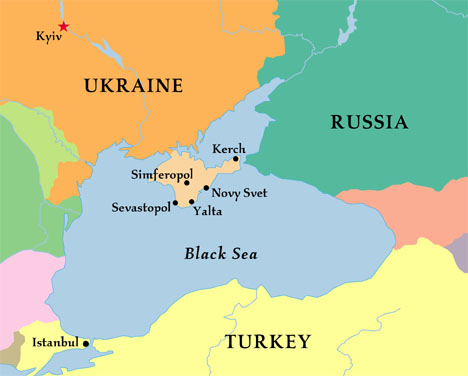
- "Fortunately, President-elect Trump has created an opening for such a settlement by reaching out to Putin during the election campaign and explicitly declining to bash Russia for its annexation of Crimea (which followed a hastily arranged referendum in which the official results showed that 96 percent of the voters favored leaving Ukraine and rejoining Russia)."
- "The best hope for Ukraine — and renewed East-West cooperation — is the Minsk Protocol, signed by Ukrainian, Russian, and European parties in the capital of Belarus on Sept. 5, 2014. The agreement provided for a ceasefire, an exchange of prisoners, and a framework for a political settlement based on giving the Donetsk and Luhansk regions a “special status.”
November 24, 2016 https://consortiumnews.com/2016/11/24/trumps-possible-path-out-of-ukraine-crisis/

Wednesday, November 23, 2016
BerlinerCompagnie DAS BILD VOM FEIND Theaterstück
Die Ukraine, Putin, US-Geopolitik und der geheimnisvolle Gleichklang unserer Medien
DAS BILD VOM FEIND
Wie Kriege entstehen. Ein Theaterstück
Die Zahl der Besucher und ihr minutenlanger Applaus zeigen: Mit seinem Theater trifft das Ensemble den Nerv der Zeit. GOSLARSCHE ZEITUNG
Fr., 2. Dezember 19:30
Sa., 3. Dezember 19:30
So., 4. Dezember 17:00
Di., 6. Dezember 19:30
Mit., 7. Dezember 19:30
Werkraum der Berliner Compagnie
Fabrikgebäude / Hinterhof
Muskauer Straße 20 A
Berlin-Kreuzberg, U-Bhf Görlitzer Bhf
Eintritt: 14 €, ermäßigt 10 €
Kartenvorbestellung:
Die kleine linke Zeitung „Der Fortschritt“ ist vom Milliardär Doppelhaus aufgekauft worden. Der von ihm eingesetzte Chefredakteur soll bei den Redakteuren einen neuen Kurs des Blattes durchsetzen. Erste Aufgabe: eine Sonderbeilage über die Krise in der Ukraine...
Weitere Informationen unter: www.BerlinerCompagnie.de
Tuesday, November 22, 2016
Holt Trump eine Assad-Sturz-Gegnerin in seine Administration?
© AFP 2016/ Louai Beshara
Die US-Kongressabgeordnete Tulsi Gabbard hat gute Chancen auf einen Platz in der Administration des neuen US-Präsidenten Donald Trump, wie eine Quelle aus dessen Team am Dienstag gegenüber dem TV-Sender ABC News sagte. Gabbard ist für ihre Kritik an der aktuellen US-Außenpolitik bezüglich des syrischen Staatschefs Baschar al-Assad bekannt. Trump legt seine Pläne zu Syrien offen Demnach soll die Kandidatur der 35-jährigen Gabbard, die im US-Kongress den Bundesstaat Hawaii vertritt, für einen der Schlüsselposten wie Außen- oder Verteidigungsminister oder gar US-Botschafter bei der Uno „ernsthaft behandelt“ werden. Gabbard soll sich am Montag mit Trump in dessen New Yorker Residenz getroffen. Das Gespräch sei ausgezeichnet verlaufen, hieß es. Zuvor hatte Gabbard die Pläne der aktuellen US-Administration kritisiert, den syrischen Präsidenten Baschar al-Asaad stürzen: „Eine Eskalation des Krieges in Syrien, die unter anderem die Einführung der sogenannten Flugverbotszone oder Sicherheitszone vorsieht, hätte für das syrische Volk, unser Land und die Welt katastrophale Folgen“, sagte sie damals. Putin: USA sollen für Trennung von Opposition und Terroristen in Syrien sorgen Eine Fortsetzung dieser Politik werde auch die Flüchtlingskrise nur weiter zuspitzen, die Positionen der Terroristen stärken sowie die USA und Russland in einen direkten Konflikt führen. Gabbard schlug für die USA vor, sich auf innere Probleme und den Kampf gegen die Terroristen konzentrieren, die eine Bedrohung für das amerikanische Volk darstellten. Am 8. November war der republikanische Präsidentschaftskandidat und US-Milliardär Donald Trump zum 45. Präsidenten der USA gewählt worden. Am 20. Januar 2017 wird Trump offiziell sein Amt antreten und damit Obama im Oval Office ablösen. Die USA streben bislang noch immer eine Entmachtung von Syriens Präsident Baschar al-Assad an und drohten ihm in den vergangenen Jahren mehrmals mit militärischer Gewalt. Am 17. September bombardierte die US-gesteuerte Militärkoalition im Raum Deir ez-Zor die syrischen Regierungstruppen — angeblich aus Versehen — und tötete dabei mehr als 60 Soldaten.
POLITIK 14:37 22.11.2016(aktualisiert 14:50 22.11.2016) Zum Kurzlink Themen: Mehr: https://de.sputniknews.com/politik/20161122313460111-trump-assad-sturz-gegnerin/
Die US-Kongressabgeordnete Tulsi Gabbard hat gute Chancen auf einen Platz in der Administration des neuen US-Präsidenten Donald Trump, wie eine Quelle aus dessen Team am Dienstag gegenüber dem TV-Sender ABC News sagte. Gabbard ist für ihre Kritik an der aktuellen US-Außenpolitik bezüglich des syrischen Staatschefs Baschar al-Assad bekannt. Trump legt seine Pläne zu Syrien offen Demnach soll die Kandidatur der 35-jährigen Gabbard, die im US-Kongress den Bundesstaat Hawaii vertritt, für einen der Schlüsselposten wie Außen- oder Verteidigungsminister oder gar US-Botschafter bei der Uno „ernsthaft behandelt“ werden. Gabbard soll sich am Montag mit Trump in dessen New Yorker Residenz getroffen. Das Gespräch sei ausgezeichnet verlaufen, hieß es. Zuvor hatte Gabbard die Pläne der aktuellen US-Administration kritisiert, den syrischen Präsidenten Baschar al-Asaad stürzen: „Eine Eskalation des Krieges in Syrien, die unter anderem die Einführung der sogenannten Flugverbotszone oder Sicherheitszone vorsieht, hätte für das syrische Volk, unser Land und die Welt katastrophale Folgen“, sagte sie damals. Putin: USA sollen für Trennung von Opposition und Terroristen in Syrien sorgen Eine Fortsetzung dieser Politik werde auch die Flüchtlingskrise nur weiter zuspitzen, die Positionen der Terroristen stärken sowie die USA und Russland in einen direkten Konflikt führen. Gabbard schlug für die USA vor, sich auf innere Probleme und den Kampf gegen die Terroristen konzentrieren, die eine Bedrohung für das amerikanische Volk darstellten. Am 8. November war der republikanische Präsidentschaftskandidat und US-Milliardär Donald Trump zum 45. Präsidenten der USA gewählt worden. Am 20. Januar 2017 wird Trump offiziell sein Amt antreten und damit Obama im Oval Office ablösen. Die USA streben bislang noch immer eine Entmachtung von Syriens Präsident Baschar al-Assad an und drohten ihm in den vergangenen Jahren mehrmals mit militärischer Gewalt. Am 17. September bombardierte die US-gesteuerte Militärkoalition im Raum Deir ez-Zor die syrischen Regierungstruppen — angeblich aus Versehen — und tötete dabei mehr als 60 Soldaten.
POLITIK 14:37 22.11.2016(aktualisiert 14:50 22.11.2016) Zum Kurzlink Themen: Mehr: https://de.sputniknews.com/politik/20161122313460111-trump-assad-sturz-gegnerin/
Die USA haben zuviel Geld in Kriege gesteckt – statt in Bildung und Infrastruktur
https://deutsche-wirtschafts-
Major Foreign Policy Shift: Turkey Abandoning EU for SCO

PETER KORZUN | 22.11.2016 | WORLD
Turkish President Tayyip Erdogan said on November 20 that Turkey did not need to join the European Union «at all costs». Instead, it could become part of the Shanghai Cooperation Organization (SCO), or Shanghai Pact. The Turkish leader said he had already discussed the idea with Russian President Vladimir Putin and his Kazakh counterpart Nursultan Nazarbayev.
The SCO is a Eurasian political, economic, and military organization founded in 2001 in Shanghai. Its members are Russia, China, Kazakhstan, Kyrgyzstan, Tajikistan, and Uzbekistan. Kazakhstan, Kyrgyzstan and Uzbekistan speak Turkic languages.
India and Pakistan are to become full-fledged members by the next meeting at Astana in 2017. Mongolia, India, Iran, Pakistan and Afghanistan are SCO observers. In 2013, Turkey got the status of SCO’s «dialogue partner». The other country with the same status is Belarus. Dialogue partners are entitled to take part in ministerial-level and some other meetings of the SCO, but do not have voting rights.
Turkey formally applied to become a member of the European Union in 1987 and accession talks began in 2005. Its ambition to become part of the bloc dates back to the 1960s. Its prospects of joining look dim after 11 years of negotiations. The human rights are a divisive issue.
The EU has stepped up its criticism of Ankara since the failed July 15 coup d’état, saying the country’s anti-terror laws were being applied too broadly. Luxembourg and Austria, as well as some European lawmakers, called on the bloc to halt membership talks with Turkey or punish it with other sanctions.
For its part, Turkey is frustrated with the long stalemate over EU membership. Ankara has accused the EU of treating the country differently regarding its accession attempt and failing to unlock all the cash it had promised to disburse to Turkey on the back of the refugee deal. Turkey plans to revive the death penalty. The move will make EU accession impossible. President Erdogan plans to call a referendum on the future of Turkey’s EU membership bid.
Turkey’s SCO accession would be a milestone bringing together the organization and the Cooperation Council of Turkic-Speaking States (CCTS) - an international organization of Turkic countries, comprising Azerbaijan, Kazakhstan, Kyrgyzstan and Turkey. The General Secretariat is in İstanbul, Turkey. Turkmenistan and Uzbekistan are possible future members of the council.
The international organization also functions as an umbrella body for all other autonomous collaboration mechanisms like the Parliamentary Assembly of Turkic Speaking Countries (TURKPA), International Organization of Turkic Culture (TURKSOY), and Turkic Academy.
Since its establishment in 2009 the CCTS has made meaningful progress on institutionalizing the interaction. The 6th Summit of the Heads of States of the Turkic Council is expected to take place till the end of the year in Cholpon-Ata (Kyrgyzstan).
President Erdogan’s statement is another sign of Ankara’s moving away from the West to other partners. For instance, Turkey has just announced it is in talks with Russia on purchasing the advanced long-range S-400 air defense systems to protect its skies. It also seeks procurement deals in electronic systems, ammunitions and missile technology. General Hulusi Akar, the head of the Turkish armed forces’ General Staff, visited Russia this month to discuss military cooperation.
During Erdogan’s two-day visit to Pakistan on November 16, the editor of a pro-government newspaper in Turkey said the country needed to develop its own nuclear deterrent. He might have expressed his personal opinion but it confirms the general trend of Turkey’s reorientation away from the NATO’s concept of cooperative security under the US umbrella.
During the August 9 summit in Saint-Petersburg, Russia and Turkey signed a declaration on unprecedented partnership in defense industry. The parties also agreed to form a joint military and intelligence mechanism to coordinate their activities in the Middle East. Russian-Turkish economic cooperation is expected to make further progress with the revival of Turkish Stream gas project.
It should be noted that Russia, not the US or any other NATO member, was the first country to be visited by the Turkish president after the failed coup.
In late October, Turkey and China also held a trade symposium in Istanbul, signing a total of 36 new deals amounting to $300 million in value. Due to its geography, Turkey has a crucial role to play in implementation of China’s One Belt One Road (Silk Road) project. Turkey is again taking the position as a key investment and cooperation partner that will help bridge the East and the West.
It has risen to become the world's 17th largest economy and an increasingly important destination for Chinese companies that want to trade and invest. Currently, China is Ankara’s third-largest trading partner, with trade amounting to $28 billion. Turkey is popular among Chinese tourists, and cultural relations between the two countries are developing.
Turkish Customs Minister Bulent Tüfenkci announced in January that the country now aims to triple trade with Iran, an SCO observer, to $30 billion «as soon as possible».
Turkey’s gradual shift from the West to Eurasia and other partners is part of a broader process as the West gets weakened and divided. The very notion of “Western unity” is fading away. Unsurprisingly, as its relations with the West sour, Turkey is reaching out to other poles of power. Further progress on the way of Ankara’s to integration with the SCO will facilitate the multi-dimensional foreign policy to strengthen Ankara’s standing in the world.
How Trump Knows That Continued Global Warming Will Make Earth Uninhabitable 100 Years from Now
ERIC ZUESSE | 21.11.2016 | WORLD
ERIC ZUESSE | 21.11.2016 | WORLD
He knows it because his chief strategist, Stephen Bannon — a polymath — was personally involved in proving it.
Bannon was brought into a major scientific experiment in 1994 as its «Acting CEO» to find a way that would avoid the experiment’s earlier finding that within a hundred years (i.e., by approximately 2095) this planet will be virtually uninhabitable unless global warming can and will quickly be reversed.
At that time, on 13 January 1995, Bannon was explaining the problem. He wasn’t saying that the experiment’s prior findings had been that death would result, but instead casually discussed those findings, vaguely suggesting that they might have been mere computer simulations, which they weren’t. The lead-in to him was at 2:00 in the video, where Bernd Zabel, Director, Biospheric Operations, speaks: «[This experiment] gives us the power to measure what happens, like air pollution, different CO2; we can measure here, instead of waiting generations, you can measure that over a six-month period».
Bannon’s voice then is heard, explaining:
«What a lot of the scientists who are studying global change, and studying the effects of greenhouse gases, many of them feel that the Earth’s atmosphere in a hundred years is what Biosphere 2’s atmosphere is today [which atmosphere the experiment soon confirmed to be impossible for life to continue, no way to avoid this conclusion]. We have [in a hundred years]extraordinarily high CO2, we have very high nitrous oxide, we have high methane, we have lower oxygen [which gas is, of course, essential for humans] content, and so the power of this place [the hermetically sealed domed-in area] is allowing those scientists who are involved in studying global change, and which in the outside world [outside of their dome] really had to do with computer simulation, this actually allows them to study and monitor the impact of enhanced CO2, and other greenhouse gases, on humans, plants».
What he ultimately found there, in «Biosphere 2», was that no way exists to avoid the conclusion that that assessment he described (planetary death) would be the result of not reversing global warming; so, the entire operation was terminated.
Here’s why it was terminated with no announcement of its devastating finding:
The financier who owned it, Ed Bass, was an oil billionaire and one of the Bass Brothers who soon was (along with his brothers, all of them relatives of the oil tycoon Sid Richardson) to be catapulting George W. Bush into the White House as the #1 global-warming denier (something crucially valuable to the oil-and-gas companies — especially in the U.S. White House).
Ed Bass knew that if he could scientifically establish that global warming would actually not be bad for life on Earth, then his hundred-and-fifty-million-dollar gamble on financing this experiment would return far more than that in PR income from other oil-and-gas companies. Ultimately, he spent $200 million on it before abandoning the experiments. It was a lot of money, even for that billionaire.
Biosphere 2’s calculations from its earlier experimental data had predicted that the plants and animals (including humans) wouldn’t survive without drastic reductions in global-warming gases. Bannon was now the CEO of Biosphere 2, running actually a second and more rigorously controlled round of experiments there, to determine with more certainty what the result would actually be of doing nothing about global warming.
The conditions he described in the video were what the financier was hoping that the new controlled experiment would disprove. (With the lowered oxygen-content, and the far higher nitrous oxide and the high methane, humans could not exist, and fires would rage uncontrollably in global burning, which would lower the planet’s oxygen-content even more.)
The finding of Biosphere 2 turned out to be the contrary to that hope, which was the hope of all the carbon-fuels industries; and, so, the entire Biosphere operation was terminated and nothing was published from it. (That’s similar to what the sugar-industry did with the ‘scientific’ research that they had financed, and what the tobacco-industry did, and what the GMO industry did, and what all industries do: they cherry-pick what they submit for ‘scientific’ publication, and so make ‘science’ a mere handmaiden to propaganda.)
The experiment had been introduced to the public as if it were testing human survival in interplanetary travel. Thus, it was called «Space Biosphere Ventures». This way, if it failed to obtain the desired result — which is what happened — it could simply be described as having been an unsuccessful experiment pertaining to space-travel.
That’s the way the news media reported, and still discuss, it. Even today, Wikipedia, and even ecological sites, give the oil-and-gas industries’ cover-story about it, as if describing it this way were a historical account of the matter; and as if this type of institutional ‘science’ (selective publication and non-publication of scientific studies that are financed by interests which have a financial stake in their outcomes) constitutes real science; the myths thus go on — and so lead us to an «End Times» that will actually result from a denial of science, a mere aping of science. Corrupt ‘science’ is no science at all. It’s just a form of PR. It is a variant of religion (manipulated and faith-based mass-beliefs — mass-propaganda), not of science, at all. Why did even environmental organizations have no curiosity about an oil billionaire’s financing such a costly study of human survival during space-travel? That cover-story they didn’t think to be at all fishy?
In the period 1991-1995, Ed Bass spent 200 million dollars on this, which was the first-ever series of increasingly rigorously controlled experiments employing a hermetically sealed miniature — a miniaturized physical, instead of merely a computerized, model — of Earth’s biological-and-physical ecosystem. He did it in order to find out whether this planet’s ecosystem will improve, decline, or end, if the growth of carbon gases continues on its existing course. Planetary death within a hundred years was found, and therefore the myth continues that these experiments were about space-travel and came to no conclusion; the cover-story prevails, history is suppressed. Myths prevail this way.
The likelihood is practically nil that President-elect Trump hasn’t been informed about the actual fact by his chief strategist, who played the key role in the final round of these experiments. Bannon clearly described there the atmospheric issues that were being examined, and they all pertained to global ‘warming’. He was overseeing the ultimate physical-and-biological test about this matter, which is of such crucial interest to oil-and-gas billionaires.
For a realistic hopeful interpretation of the future Trump Presidency, see this.
At the present moment, I myself am on the fence about Trump’s Presidency. The best sense I can make of the current situation, and my chief worry about it, is actually even shorter-term than global burning, and it’s that the Trumpians don’t understand the war between Sunni Islam, led by Saudi Arabia, versus Shiite Islam, led by Iran, and that they therefore don’t recognize that America is on the wrong side of this — we’re partnered with, and against, the wrong people, in Islam’s global war. Iran isn’t and never was America’s enemy; America, ever since overthrowing Iran’s progressive democratically elected Prime Minister Mohammed Mossadegh in 1953 and replacing him with a fascist dictatorship, has been Iran’s enemy. All the aggression in U.S.-Iranian relations has actually been on America’s side (which ended up producing in 1979 — as «blowback» against America’s Dulles-brothers fascism — the fundamentalist-Shiite takeover of Iran’s government). By contrast, 9/11 was a Saudi operation. Fundamentalist-Sunni aggression against the U.S. is clear. The U.S. under Trump should gradually build toward an official U.S. apology to the Iranian people (but the Sauds and Thanis and Sabahs, and other fundamentalist-Sunni aristocrats, would be outraged against that, because they lead this fascism and rely upon the U.S. aristocracy to protect them and their regimes). This U.S.-fascist 1953 coup was America’s original sin. It still poisons world affairs. Trump’s Presidency will fail if he fails to understand this basic fact of recent history.
The brilliant pseudonymous journalist and news-commentator «Tyler Durden» posted at his «Zero Hedge» site on November 19th «War Breaks Out Between Neo-Cons And Libertarians Over Trump's Foreign Policy», and described in a thoroughly unbiased way the Trumpians’ internal conflict. To boil it down: the «Neo-Cons» want to reduce President Trump’s focus against jihadists, and increase his focus against both Iran and Russia. (Congressional Democrats are, like congressional Republicans, overwhelmingly in the «Neo-Con» camp, though they don’t refer to themselves as being «neoconservatives», nor any other type of «conservatives». Hillary Clinton herself was strongly neoconservative though she never said so publicly.)
Unlike the issue of global burning (euphemistically called ‘warming’), Trump is probably ignorant of the issue of U.S.-Iranian relations, and of the global war between Sunni and Shiite Islam. Whether he will act in accord with either understanding (global burning, and/or our wrong alliances and wars) remains still unclear. But at least in regards to global burning, he almost certainly understands the truth: given that his chief strategist is Stephen Bannon, Trump would have to be an idiot not to. Whatever he might say or do about global burning, he can reasonably be presumed to know the truth about that matter.
Subscribe to:
Posts (Atom)