Thursday, October 22, 2015

Putin Adresses Valdai Club Meeting in Sochi on "War and Peace"

Vladimir Putin took part in the final plenary session of the 12th annual meeting of the Valdai International Discussion Club

EDITOR'S CHOICE | 23.10.2015 | 01:02

This topic of this year’s Valdai conference is Societies Between War and Peace: Overcoming the Logic of Conflict in Tomorrow’s World. In the period between October 19 and 22, experts from 30 countries have been considering various aspects of the perception of war and peace both in the public consciousness and in international relations, religion and economic interaction between states.
* * *
President of Russia Vladimir Putin: Colleagues, ladies and gentlemen,
Allow me to greet you here at this regular meeting of the Valdai International Club.
It is true that for over 10 years now this has been a platform to discuss the most pressing issues and consider the directions and prospects for the development of Russia and the whole world. The participants change, of course, but overall, this discussion platform retains its core, so to speak – we have turned into a kind of mutually understanding environment.
We have an open discussion here; this is an open intellectual platform for an exchange of views, assessments and forecasts that are very important for us here in Russia. I would like to thank all the Russian and foreign politicians, experts, public figures and journalists taking part in the work of this club.
This year the discussion focusses on issues of war and peace. This topic has clearly been the concern of humanity throughout its history. Back in ancient times, in antiquity people argued about the nature, the causes of conflicts, about the fair and unfair use of force, of whether wars would always accompany the development of civilisation, broken only by ceasefires, or would the time come when arguments and conflicts are resolved without war.
I’m sure you recalled our great writer Leo Tolstoy here. In his great novel War and Peace, he wrote that war contradicted human reason and human nature, while peace in his opinion was good for people.
True, peace, a peaceful life have always been humanity’s ideal. State figures, philosophers and lawyers have often come up with models for a peaceful interaction between nations. Various coalitions and alliances declared that their goal was to ensure strong, ‘lasting’ peace as they used to say. However, the problem was that they often turned to war as a way to resolve the accumulated contradictions, while war itself served as a means for establishing new post-war hierarchies in the world.
Meanwhile peace, as a state of world politics, has never been stable and did not come of itself. Periods of peace in both European and world history were always been based on securing and maintaining the existing balance of forces. This happened in the 17thcentury in the times of the se-called Peace of Westphalia, which put an end to the Thirty Years’ War. Then in the 19th century, in the time of the Vienna Congress; and again 70 years ago in Yalta, when the victors over Nazism made the decision to set up the United Nations Organisation and lay down the principles of relations between states.
With the appearance of nuclear weapons, it became clear that there could be no winner in a global conflict. There can be only one end – guaranteed mutual destruction. It so happened that in its attempt to create ever more destructive weapons humanity has made any big war pointless.
Incidentally, the world leaders of the 1950s, 1960s, 1970s and even 1980s did treat the use of armed force as an exceptional measure. In this sense, they behaved responsibly, weighing all the circumstances and possible consequences.
The end of the Cold War put an end to ideological opposition, but the basis for arguments and geopolitical conflicts remained. All states have always had and will continue to have their own diverse interests, while the course of world history has always been accompanied by competition between nations and their alliances. In my view, this is absolutely natural.
The main thing is to ensure that this competition develops within the framework of fixed political, legal and moral norms and rules. Otherwise, competition and conflicts of interest may lead to acute crises and dramatic outbursts.
We have seen this happen many times in the past. Today, unfortunately, we have again come across similar situations. Attempts to promote a model of unilateral domination, as I have said on numerous occasions, have led to an imbalance in the system of international law and global regulation, which means there is a threat, and political, economic or military competition may get out of control.
What, for instance, could such uncontrolled competition mean for international security? A growing number of regional conflicts, especially in ‘border’ areas, where the interests of major nations or blocs meet. This can also lead to the probable downfall of the system of non-proliferation of weapons of mass destruction (which I also consider to be very dangerous), which, in turn, would result in a new spiral of the arms race.
We have already seen the appearance of the concept of the so-called disarming first strike, including one with the use of high-precision long-range non-nuclear weapons comparable in their effect to nuclear weapons.
The use of the threat of a nuclear missile attack from Iran as an excuse, as we know, has destroyed the fundamental basis of modern international security – the Anti-Ballistic Missile Treaty. The United States has unilaterally seceded from the treaty. Incidentally, today we have resolved the Iranian issue and there is no threat from Iran and never has been, just as we said.
The thing that seemed to have led our American partners to build an anti-missile defence system is gone. It would be reasonable to expect work to develop the US anti-missile defence system to come to an end as well. What is actually happening? Nothing of the kind, or actually the opposite – everything continues.
Recently the United States conducted the first test of the anti-missile defence system in Europe. What does this mean? It means we were right when we argued with our American partners. They were simply trying yet again to mislead us and the whole world. To put it plainly, they were lying. It was not about the hypothetical Iranian threat, which never existed. It was about an attempt to destroy the strategic balance, to change the balance of forces in their favour not only to dominate, but to have the opportunity to dictate their will to all: to their geopolitical competition and, I believe, to their allies as well. This is a very dangerous scenario, harmful to all, including, in my opinion, to the United States.
The nuclear deterrent lost its value. Some probably even had the illusion that victory of one party in a world conflict was again possible – without irreversible, unacceptable, as experts say, consequences for the winner, if there ever is one.
In the past 25 years, the threshold for the use of force has gone down noticeably. The anti-war immunity we have acquired after two world wars, which we had on a subconscious, psychological level, has become weaker. The very perception of war has changed: for TV viewers it was becoming and has now become an entertaining media picture, as if nobody dies in combat, as if people do not suffer and cities and entire states are not destroyed.
Unfortunately, military terminology is becoming part of everyday life. Thus, trade and sanctions wars have become today’s global economic reality – this has become a set phrase used by the media. The sanctions, meanwhile, are often used also as an instrument of unfair competition to put pressure on or completely ‘throw’ competition out of the market. As an example, I could take the outright epidemic of fines imposed on companies, including European ones, by the United States. Flimsy pretexts are being used, and all those who dare violate the unilateral American sanctions are severely punished.
You know, this may not be Russia’s business, but this is a discussion club, therefore I will ask: Is that the way one treats allies? No, this is how one treats vassals who dare act as they wish – they are punished for misbehaving.
Last year a fine was imposed on a French bank to a total of almost $9 billion – $8.9 billion, I believe. Toyota paid $1.2 billion, while the German Commerzbank signed an agreement to pay $1.7 billion into the American budget, and so forth.
We also see the development of the process to create non-transparent economic blocs, which is done following practically all the rules of conspiracy. The goal is obvious – to reformat the world economy in a way that would make it possible to extract a greater profit from domination and the spread of economic, trade and technological regulation standards.
The creation of economic blocs by imposing their terms on the strongest players would clearly not make the world safer, but would only create time bombs, conditions for future conflicts.
The World Trade Organisation was once set up. True, the discussion there is not proceeding smoothly, and the Doha round of talks ended in a deadlock, possibly, but we should continue looking for ways out and for compromise, because only compromise can lead to the creation of a long-term system of relations in any sphere, including the economy. Meanwhile, if we dismiss that the concerns of certain countries – participants in economic communication, if we pretend that they can be bypassed, the contradictions will not go away, they will not be resolved, they will remain, which means that one day they will make themselves known.
As you know, our approach is different. While creating the Eurasian Economic Union we tried to develop relations with our partners, including relations within the Chinese Silk Road Economic Belt initiative. We are actively working on the basis of equality in BRICS, APEC and the G20.
The global information space is also shaken by wars today, in a manner of speaking. The ‘only correct’ viewpoint and interpretation of events is aggressively imposed on people, certain facts are either concealed or manipulated. We are all used to labelling and the creation of an enemy image.
The authorities in countries that seemed to have always appealed to such values as freedom of speech and the free dissemination of information – something we have heard about so often in the past – are now trying to prevent the spreading of objective information and any opinion that differs from their own; they declare it hostile propaganda that needs to be combatted, clearly using undemocratic means.
Unfortunately, we hear the words war and conflict ever more frequently when talking about relations between people of different cultures, religions and ethnicity. Today hundreds of thousands of migrants are trying to integrate into a different society without a profession and without any knowledge of the language, traditions and culture of the countries they are moving to. Meanwhile, the residents of those countries – and we should openly speak about this, without trying to polish things up – the residents are irritated by the dominance of strangers, rising crime rate, money spent on refugees from the budgets of their countries.
Many people sympathise with the refugees, of course, and would like to help them. The question is how to do it without infringing on the interests of the residents of the countries where the refugees are moving. Meanwhile, a massive uncontrolled shocking clash of different lifestyles can lead, and already is leading to growing nationalism and intolerance, to the emergence of a permanent conflict in society.
Colleagues, we must be realistic: military power is, of course, and will remain for a long time still an instrument of international politics. Good or bad, this is a fact of life. The question is, will it be used only when all other means have been exhausted? When we have to resist common threats, like, for instance, terrorism, and will it be used in compliance with the known rules laid down in international law. Or will we use force on any pretext, even just to remind the world who is boss here, without giving a thought about the legitimacy of the use of force and its consequences, without solving problems, but only multiplying them.
We see what is happening in the Middle East. For decades, maybe even centuries, inter-ethnic, religious and political conflicts and acute social issues have been accumulating here. In a word, a storm was brewing there, while attempts to forcefully rearrange the region became the match that lead to a real blast, to the destruction of statehood, an outbreak of terrorism and, finally, to growing global risks.
A terrorist organisation, the so-called Islamic State, took huge territories under control. Just think about it: if they occupied Damascus or Baghdad, the terrorist gangs could achieve the status of a practically official power, they would create a stronghold for global expansion. Is anyone considering this? It is time the entire international community realised what we are dealing with – it is, in fact, an enemy of civilisation and world culture that is bringing with it an ideology of hatred and barbarity, trampling upon morals and world religious values, including those of Islam, thereby compromising it.
We do not need wordplay here; we should not break down the terrorists into moderate and immoderate ones. It would be good to know the difference. Probably, in the opinion of certain experts, it is that the so-called moderate militants behead people in limited numbers or in some delicate fashion.
In actual fact, we now see a real mix of terrorist groups. True, at times militants from the Islamic State, Jabhat al-Nusra and other Al-Qaeda heirs and splinters fight each other, but they fight for money, for feeding grounds, this is what they are fighting for. They are not fighting for ideological reasons, while their essence and methods remain the same: terror, murder, turning people into a timid, frightened, obedient mass.
In the past years the situation has been deteriorating, the terrorists’ infrastructure has been growing, along with their numbers, while the weapons provided to the so-called moderate opposition eventually ended up in the hands of terrorist organisations. Moreover, sometimes entire bands would go over to their side, marching in with flying colours, as they say.
Why is it that the efforts of, say, our American partners and their allies in their struggle against the Islamic State has not produced any tangible results? Obviously, this is not about any lack of military equipment or potential. Clearly, the United States has a huge potential, the biggest military potential in the world, only double crossing is never easy. You declare war on terrorists and simultaneously try to use some of them to arrange the figures on the Middle East board in your own interests, as you may think.
It is impossible to combat terrorism in general if some terrorists are used as a battering ram to overthrow the regimes that are not to one’s liking. You cannot get rid of those terrorists, it is only an illusion to think you can get rid of them later, take power away from them or reach some agreement with them. The situation in Libya is the best example here.
Let us hope that the new government will manage to stabilise the situation, though this is not a fact yet. However, we need to assist in this stabilisation.
To be continued.

Europe and Syria

Vladimir NESTEROV | 09.10.2015 | 00:00

The exodus of refugees from Africa and Asia has ripped away the mask from Europe’s humanist face. It turns out that proclaiming and preaching one’s values is not the same thing as living up to them. Unable to resolve the migrant problem, they have begun a hunt for the guilty.
As usual, fingers are pointed toward Russia, as its opponents continue their tradition of mixing the non-obvious with the truly unlikely. Russia is supporting Assad and has allegedly started a war against the «moderate opposition» for lack of anything better to do (the myth of their «moderation» was created by Washington; in Syria there are none who fit that description among those who have taken up arms and are acting against the legitimate government).
Amidst the criticism of Russia’s «unilateral» actions in Syria, not only the crimes of the so-called Islamic State (IS) are being forgotten, but also the West’s own misdeeds. The ones committed against the migrants. In Germany, for example, a refugee camp has been set up at the site of a satellite labor camp of Buchenwald, with the assumption that refugees from Algeria and Eritrea will be unable to grasp where it is they have ended up.
The miserable living conditions of the refugees in the Hungarian camp in Röszke have been captured on video. The footage, shot with a hidden camera, shows hundreds of migrants held in a fenced-in enclosure scrambling to catch sandwiches thrown to them by guards. And all the while the guards are wearing helmets and hygiene masks.
Migrants were at first admitted into Finland. But now the country resorted to «counter-propaganda» in order to frighten them away. Finland’s Yle news website posted a story on September 21 about three Iraqi migrants who claim to be deeply upset about the conditions in their host country and are preparing to return home.
* * *
In 2003, the European Union adopted a neighborhood policy that now applies to 16 countries east and south of the borders of the EU. Within that framework Brussels offers assistance, technical aid, and access to its market. But ultimately, as Carl Bildt puts it http://csis.org/event/europe-surrounded-not-ring-friends-ring-fire, instead of a «ring of friends», Europe finds herself surrounded by a «ring of fire», which has prompted the exodus of refugees into the EU. Why did this happen?
The problem is Europe’s lack of independence. Although it enjoys one of the world’s foremost economies, the European Union, in a military and political sense, is actually a protectorate of the United States. Not only is Europe blanketed by a network of US military bases, it is still the only place outside of the US where American tactical nuclear weapons (TNW) are permanently stationed.
The Americans are currently planning to deploy high-precision B-61-12 guided nuclear bombs in Europe, and these bombs will first be delivered to Germany. It was not so long ago that Germany was partially within the American zone of occupation. And it should not be forgotten that Americans allow the Germans to «steer Europe» as long as it does not interfere with their global geopolitical strategy and does not threaten the dominance of the dollar.
And as the Deutsche Wirtschafts Nachrichten wrote on September 13, it turns out that the majority of those seeking asylum in Europe are refugees from countries that have been caught up in bloody wars in the last 20 years – from the former Yugoslavia, Afghanistan, Iraq, Syria, Ethiopia, and Somalia. And it was the military intervention of the US and its allies that laid the foundation of almost all of these wars. It is they who are responsible for the flood of refugees into Europe.
So in order to limit the influx of refugees, how about nipping reckless military escapades in the bud, instead of building walls along the borders of each European state? Separated from Europe by an ocean, the US is not particularly concerned about the migration crisis that has befallen the Europeans. Deutsche Wirtschafts Nachrichten claims that the American allies in the alliance must now pay for the wars unleashed by the United States.
Or it could be put even more simply: that notorious transatlantic solidarity is creating one-sided benefits for the United States but is detrimental for Europe. Once they began taking part in sanctions against Russia, Europeans became convinced of that. The refugee crisis has to prove it even more.
Thus Europe ought to rejoice that on September 30, the Russian Aerospace Defense Forces began to take decisive action against the terrorists of the so-called Islamic State (IS), an entity that – as we are now discovering – Americans solicitously patronized. But no! Germany and France have agreed with a statement from the Turkish Foreign Ministry, appealing to Moscow on behalf of seven states to halt the air strikes on the Syrian opposition and to «refocus» on the battle against Islamic militants. As if the «moderates» and «immoderates» in Syria were not fighting for the very same thing – to overthrow President Bashar al-Assad.
And incidentally, when US planes attacked a hospital in the Afghan city of Kunduz, burning patients alive, not a single European politician expressed any particular outrage!
Only the utter military defeat of the IS armed gangs and the subsequent pacification of Syria and Iraq can stem the flood of refugees that is swamping Europe. The understanding of this has already begun to take root. Demonstrations and rallies in support of Russia’s actions in Syria have been held at the Russian embassy in Paris and at the Russian consulate in Frankfurt. Russia’s policy toward Syria is supported by Marine Le Pen, the leader of the French National Front, who has argued that France should join Russia in the battle against terrorism.
Even outside Europe one can find sympathy for Russia’s actions. The Xinhua news agency posted an editorial on October 2, maintaining that «Russia is ...taking its cue from the international battle against terrorism». (Here we would like to suggest a correction to the Chinese journalists: not «taking its cue from», but rather «at the forefront of»). What’s more, Xinhua notes that «the path for Russia’s military intervention has been smoothed by the very modest successes[emphasis mine - V. N.] of the US-led international coalition there, as well as the problems the EU is having with the influx of refugees».
Egyptian Foreign Minister Sameh Shoukry also made an important comment. «Russia’s entrance, given its potential and capabilities, is something we see is going to have an effect on limiting terrorism in Syria and eradicating it», stated the Egyptian minister of foreign affairs on October 3, during a televised interview with Saudi Arabia’s Al Arabiya news channel.
Even America’s Newsweek magazine was forced to admit: «...Russia’s new involvement removes some of the pressure from the US to resolve the mess in Syria and Iraq alone. Despite Russia’s support for the Assad regime, Putin’s offer to create an anti-ISIS coalition is probably genuine. A de facto coalition between the US allied coalition and Russian and Iranian-backed regime forces on the ground could well be the most effective way to degrade ISIS in the long run».
* * *
As long as Europe’s elite remains ambivalent about Russia joining the fight against the so-called Islamic State, they are surrendering not only their military victory but also their dignity. Obviously, there can be no turning point here without the arrival of a new generation of European politicians, intent not upon being subordinate to a transatlantic partner, but on being part of a union of equals with Greater Eurasia.
Tags: European Union ISIS Middle East Russia Syria
Source: http://www.strategic-culture.org/news/2015/10/09/europe-and-syria.html

Kundgebung Solidarität mit dem palästinensischen Volk in Frankfurt

'Putin Forces Obama to Capitulate on Syria' by MIKE WHITNEY, counterpunch.org

22.10.2015 | 15:00

The Russian-led military coalition is badly beating Washington’s proxies in Syria which is why John Kerry is calling for a “Time Out”.
On Monday, U.S. Secretary of State John Kerry called for an emergency summit later in the week so that leaders from Russia, Turkey, Saudi Arabia and Jordan could discuss ways to avoid the “total destruction” of Syria. According to Kerry, “Everybody, including the Russians and the Iranians, have said there is no military solution, so we need to make an effort to find a political solution. This is a human catastrophe that now threatens the integrity of a whole group of countries around the region,” Kerry added.
Of course, it was never a “catastrophe” when the terrorists were destroying cities and villages across the country, uprooting half the population and transforming the once-unified and secure nation into an anarchic failed state. It only became a catastrophe when Vladimir Putin synchronized the Russian bombing campaign with allied forces on the ground who started wiping out hundreds of US-backed militants and recapturing critical cities across Western corridor. Now that the Russian airforce is pounding the living daylights out of jihadi ammo dumps, weapons depots and rebel strongholds, and the Syrian Arab Army (SAA) is tightening their grip on Aleppo, and Hezbollah is inflicting heavy casualties on Jabhat al Nusra militants and other Al Qaida-linked vermin; Kerry’s decided it’s a catastrophe. Now that the momentum of the war has shifted in favor of Syrian president Bashar al Assad, Kerry wants a “Time out”.
Keep in mind, that Putin worked tirelessly throughout the summer months to try to bring the warring parties together (including Assad’s political opposition) to see if deal could be worked out to stabilize Syria and fight ISIS. But Washington wanted no part of any Russian-led coalition. Having exhausted all the possibilities for resolving the conflict through a broader consensus, Putin decided to get directly involved by committing the Russian airforce to lead the fight against the Sunni extremists and other anti-government forces that have been tearing the country apart and paving the way for Al Qaida-linked forces to take control of the Capital. Putin’s intervention stopped the emergence of a terrorist Caliphate in Damascus. He turned the tide in the four year-long war, and delivered a body-blow to Washington’s malign strategy Now he’s going to finish the job.
Putin is not gullible enough to fall for Kerry’s stalling tactic. He’s going to kill or capture as many of the terrorists as possible and he’s not going to let Uncle Sam get in the way.
These terrorists–over 2,000 of who are from Chechnya–pose an existential threat to Russia, as does the US plan to use Islamic extremists to advance their foreign policy objectives. Putin takes the threat seriously. He knows that if Washington’s strategy succeeds in Syria, it will be used in Iran and then again in Russia. That’s why he’s decided to dump tons of money and resources into the project. That’s why his Generals have worked out all the details and come up with a rock-solid strategy for annihilating this clatter of juvenile delinquents and for restoring Syria’s sovereign borders. And that’s why he’s not going to be waved-away by the likes of mealy-mouth John Kerry. Putin is going to see this thing through to the bitter end. He’s not going to stop for anyone or anything. Winning in Syria is a matter of national security, Russia’s national security.
Here’s Kerry again: “If Russia is there to help Assad find a way to a political solution as well as to fight Daesh (ISIS) and extremism, then there is the possibility of a very different path.”
Putin has offered solutions from the very onset, it was Washington that rejected those remedies. Putin supported the so called Geneva communique dating back to 2012. In fact, it was then-Secretary of State Hillary Clinton who threw a wrench in the proceedings by demanding that Assad not be part of any transitional governing body. (Note: Now Obama has caved on this demand.) Russia saw her demand as tantamount to regime change, which it was since Assad is the internationally-recognized head of state and fully entitled to be a part of any transitional government. US rejectionism sabotaged efforts for internationally-monitored “free and fair multi-party elections” and ended any chance for a speedy end to the war. Washington was more determined to get its own way (“Assad must go”) then to save the lives of tens of thousands of civilians who have died since Clinton walked away from Geneva.
And now Kerry is extending the olive branch? Now Washington pretends to care about the “total destruction” of Syria?
I’m not buying it. What Kerry cares about is his hoodlum “head-chopper” buddies that are being turned into shredded wheat by Russian Daisy Cutters. That’s what he cares about. Take a look at this from RT:
“Syrian President Bashar Assad “does not have to leave tomorrow or the next day,” the US State Department (spokesman Mark Toner) has stated. Washington allows that Assad may take part in transitional process, but can’t be part of Syria’s next government…
“… this isn’t the US dictating this. This is the feeling of many governments around the world, and frankly, the majority of the Syrian people,” Toner said.
When asked to clarify “how long” the State Department thinks the transition process could take, Toner failed to give an exact time period.
“I can’t put a timeframe on it. I can’t say two weeks, two months, six months,” he said, adding that the US is looking for “a political resolution to the conflict.”…
Toner then admitted that the US is still in the “process to start the process,” stressing that this was “an urgent issue” that “has gone on too long.” (‘Assad doesn’t have to leave tomorrow, can be part of transitional process’ – US State Department”, RT)
“A process to start the process”?? Hello?
Toner is backpeddling so fast he’s not even sure what he’s saying. Clearly, the administration is so flustered by developments on the ground in Syria, and so eager to stop the killing of US-backed jihadis, that they sent poor Toner out to talk to the media before he’d even gotten his talking points figured out. What a joke. The administration has gone from refusing to meet with a high-level Russian delegation just last week (to talk about coordinating airstrikes in Syria), to completely capitulating on their ridiculous “Assad must go” position today. That’s quite a reversal, don’t you think? I’m surprised they didn’t just run a big white Flag up over 1600 Pennsylvania Ave. while the Marine Band played Taps.
But don’t think that this latest humiliation will derail Washington’s plan for destroying Syria as a functioning, sovereign state and carving it into a million powerless statelets that pose no threat to Big Oil’s pipeline corridors, or US military bases, or Israel’s sprawling Zionist Valhalla. Because it won’t. That plan is still right on track despite Putin’s efforts to crush the militants and defend the borders. The latest iteration of the Syria dissolution strategy was articulated by Council on Foreign Relations president Richard Haass who said:
“….the United States and others should pursue a two-track policy. One track would channel steps to improve the balance of power on the ground in Syria. This means doing more to help the Kurds and select Sunni tribes, as well as continuing to attack the Islamic State from the air.
Relatively safe enclaves should emerge from this effort. A Syria of enclaves or cantons may be the best possible outcome for now and the foreseeable future. Neither the US nor anyone else has a vital national interest in restoring a Syrian government that controls all of the country’s territory; what is essential is to roll back the Islamic State and similar groups.
The second track is a political process in which the US and other governments remain open to Russian (and even Iranian) participation. The goal would be to ease Assad out of power and establish a successor government that, at a minimum, enjoyed the support of his Alawite base and, ideally, some Sunnis.” (Testing Putin in Syria, Richard Haass, Project Syndicate)
Topple Assad and partition the country. Destroy Syria once and for all. That is Washington’s operating strategy. It’s a plan that was first proposed by Brooking’s analyst Michael O’Hanlon who recently said:
“…a future Syria could be a confederation of several sectors: one largely Alawite (Assad’s own sect), spread along the Mediterranean coast; another Kurdish, along the north and northeast corridors near the Turkish border; a third primarily Druse, in the southwest; a fourth largely made up of Sunni Muslims; and then a central zone of intermixed groups in the country’s main population belt from Damascus to Aleppo…
Under such an arrangement, Assad would ultimately have to step down from power in Damascus… A weak central government would replace him. But most of the power, as well as most of the armed forces. would reside within the individual autonomous sectors — and belong to the various regional governments…
American and other foreign trainers would need to deploy inside Syria, where the would-be recruits actually live — and must stay, if they are to protect their families. (Syria’s one hope may be as dim as Bosnia’s once was, Michael O’ Hanlon, Reuters)
Once again, the same theme repeated: Topple Assad and partition the country. Of course, the US will have to train “would-be recruits” to police the natives and prevent the buildup of any coalition or militia that might threaten US imperial ambitions in the region. But that goes without saying. (By the way, Hillary Clinton has already thrown her support behind the O’Hanlon plan emphasizing the importance of “safe zones” that could be used to harbor Sunni militants and other enemies of the state.)
John “Wacko” McCain has been the most strident proponent of the plan to break up Syria. Here’s part of what he said on the topic:
“We must act now to defend civilian populations and our opposition partners in Syria….we must establish enclaves in Syria where civilians and the moderate opposition to Syrian leader Bashar al-Assad and ISIS can find greater security. These enclaves must be protected with greater American and coalition airpower and likely foreign troops on the ground. We should not rule out that U.S. forces could play a limited role in this ground contingent…
“We must back up our policy in ways that check Putin’s ambitions and shape his behavior. If Russia attacks our opposition partners, we must impose greater costs on Russia’s interests — for example, by striking significant Syrian leadership or military targets. But we should not confine our response to Syria. We must increase pressure on Russia elsewhere. We should provide defensive weapons and related assistance to Ukrainian forces so they can take a greater toll on Russian forces.” (The Reckless Guns of October, Daniel Lazare, Consortium News)
Sure, let’s Kick-off World War 3. Why not?

The man should be in a straitjacket not fulminating on the floor of the Congress.
The entire US political establishment supports the removal of Assad and the breaking up of Syria. Kerry’s sudden appeal for dialogue does not represent a fundamental change in the strategy. It’s merely an attempt to buy some time for US-backed mercenaries who are feeling the full-brunt of the Russia’s bombing campaign. Putin would be well-advised to ignore Kerry’s braying and continue to prosecute his war on terror until the job is done.
(Note: As this article was going to press, the Turkish Daily Zaman reported that: “….the US and several European and Gulf states…have agreed to a plan under which Syria’s embattled President Bashar al-Assad will remain in power for the next six months during a transition period….Turkey has abandoned its determination [to get rid of Assad] and has agreed on an interim period with Assad in place,” former Foreign Minister Yaşar Yakış told Today’s Zaman on Tuesday….If the Syrian people decide to continue with Assad, then there is not much Turkey can object to.” (Report: Turkey agrees to Syria political transition involving Assad, Today’s Zaman)
This story has not yet appeared in any western media. Obama’s Syrian policy has completely collapsed.
MIKE WHITNEY, counterpunch.org
Source: Strategic-Culture.org
Tags: Russia Syria US Obama Putin

"Die Anstalt" - Beste Satire - 'Sauerei des Völkerrechts'


 | Di., 22.15 Uhr, ZDF
Max Uthoff und Claus von Wagner haben mit ihrer als »Satire« überschriebenen Sendung Stellung bezogen in der Flüchtlings- und Fluchtursachendebatte. Wer hat denn die ganzen Dschihadistentruppen vom Schlage des »Islamischen Staats« und der Al-Nusra-Front erst geschaffen? Im Irak, in Libyen und Syrien hat es ein relativ gutes Gesundheitswesen, ein relativ hohes Bildungsniveau und Frauenrechte gegeben, bis die Amerikaner gekommen sind. Eine Milliarde habe Washington in das Training von »Rebellen« gesteckt – eine Art »Ausbildungsinitiative«. Das russische Eingreifen In Syrien finde in Einklang mit dem Völkerrecht statt, wohingegen das Vorgehen der Amerikaner zum Regime-Change mit Hilfe der Rebellen ein Verstoß gegen selbiges sei – »was ja eine Sauerei des Völkerrechts ist«. »Das Völkerrecht ist eine wichtige Orientierungshilfe für andere Länder«, gibt das Duo das Denken Washingtons wieder. Am Ende veranstaltet das Team, in Anlehnung an die Kuppelshow »Herzblatt«, »Power sucht Sau«. »Uncle Sam« braucht eine passende Dschihadistentruppe zur weiteren Zerlegung des Nahen Ostens. Nach dem Heute-Journal mal wieder Aufklärung vom Feinsten. (rg)

Wednesday, October 21, 2015

Turkey’s may regret border violation claims in Hatay

Wayne MADSEN | 22.10.2015 | 00:01

Turkey has repeatedly charged that Russian military aircraft flying sorties over Syrian airspace against the Islamic State of Iraq and the Levant (ISIL) have violated Turkish airspace over the province of Hatay. 
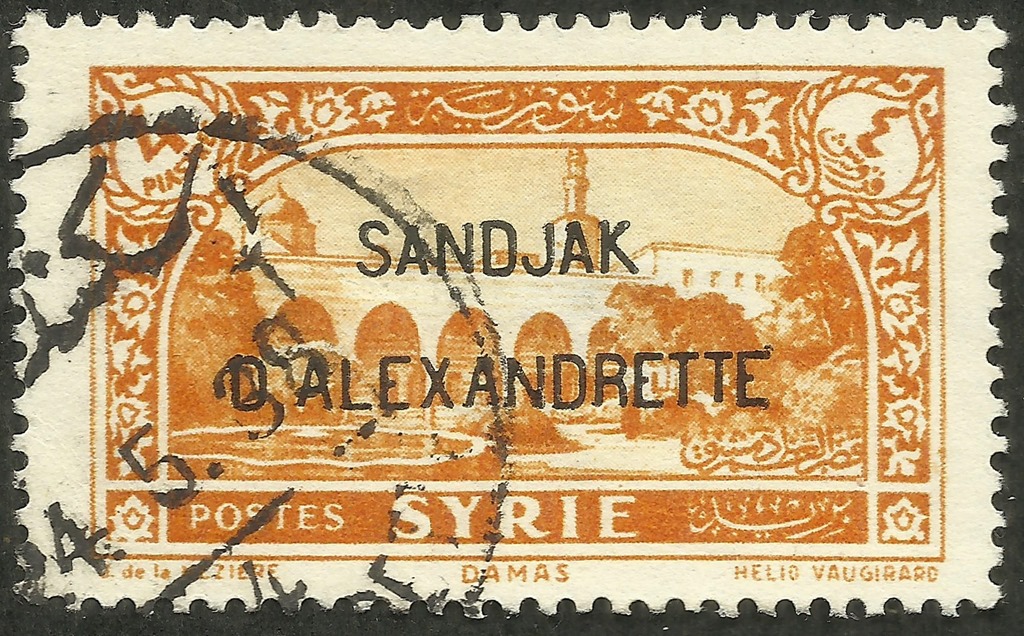
Hatay is the curious geographical outcropping of Turkish territory that juts from Anatolia into the eastern shoreline of the Mediterranean to the west of Syria. If it appears that Hatay should actually be part of Syria, it once was, that is, before the Turkish government annexed the territory in 1939 in a raw deal worked out with France. Hatay was long forgotten, that is, until 1989 when the film «Indian Jones and the Last Crusade» featured, in part, the State of Hatay as it existed in the late 1930s. However, Hollywood mistakenly referred to Hatay as a sultanate and created for it a fake flag.
NATO, without submitting anything in the way of proof, charged that Russian Sukhoi Su-30s and Su-24s violated Hatay’s «sovereign» airspace on at least three occasions from the first week of October to the middle of the month. 
However, many Syrians believe that Turkey has been violating Syrian sovereignty over what the Syrians refer to as Alexandretta since 1939. After the fall of the Ottoman Empire following the First World War, Alexandretta, which was part of the Aleppo Province of the empire, became a separate entity but ruled by Paris as part of the League of Nations’ French mandate of Syria as a result of the Franco-Turkish Treaty of 1921. Known as the autonomous Sanjak of Alexandretta, the area was administratively governed as part of the French-ruled State of Aleppo and in 1925 it became part of the new French state of Syria but, in recognition of its large Alawite, Turkish, and Armenian communities, retained its autonomous status. Alexandretta also had communities of Assyrians, Syriac Orthodox, Greek Orthodox, Maronites, Greeks, Greek Catholics, Kurds, and Jews. There were four other states under the French mandate of Syria: Arab Syria, largely occupied by Sunni Arabs, Kurds, and Turkoman; Latakia, the coastal region dominated by Alawites and Christians; Lebanon, which was then largely Christian; and the southern region largely inhabited by the nomadic Jebel Druze.
The Syrian civil war, instigated by the West, Saudi Arabia and its Gulf allies, Turkey, and Israel, has played upon the old religious and ethnic fracture lines of the old League of Nations mandate to further their own agendas. However, by opening the Syrian can of worms, Turkey has also turned attention toward dormant claims by Alexandretta, now the Hatay province of Turkey, for retrocession to Syria.
Turkish leader Kemal Ataturk never recognized French-Syrian control of what the Turks insisted on calling Hatay. Ataturk made an astounding claim that Alexandretta was a Turkish homeland for 40 centuries even though it was also longtime homeland for a number Syrian Alawites, Arabs, Melkite Christians, Armenians, Kurds, Circassians, and Jews. Moreover, the Seljuk Turks had only occupied Alexandretta in 1096. The Seljuk Turkish occupation of the region ended three years later when Christian crusaders led by European princes conquered Alexandretta. 
Much like Turkish President Recep Tayyip Erdogan’s covert support for ISIL, Ataturj began providing clandestine support for Turkish irredentists in Alexandretta. The Turkish residents of Alexandretta formed pro-Kemalist organizations dedicated to forming a union with Turkey.
The Syrian Arabs of Alexandretta wanted nothing to do with becoming part of Turkey. Syrian nationalist leader Zaki al-Arsuzi, one of the inspirational leaders of the Arab Ba’ath Party, which would later come to rule both Syria under Hafez al-Assad and his son, current president Bashar al-Assad, and Iraq under Saddam Hussein, began to call for Alexandretta’s independence from France and union with Syria. In 1936, the French and Turks concluded an agreement whereby Turkey would recognize the eventual independence of Syria, which would include the Sanjak of Alexandretta. However, Ataturk raised the status of Alexandretta before the League of Nations and claimed that because the majority of its population was Turkish – which, at 39 percent of the population, was another falsehood from Ataturk – the Sanjak should be separate from an independent Syria.
The Armenian community surrounding Alexandretta, fearing the Turks who had already engaged in a wholesale genocide of the Armenian people from 1915 to 1922, declared the Republic of Amanus and asked France for recognition. France ignored the Armenians. The French, Americans, British, and other World War I allies also ignored the plight of the Armenian, Greek, Maronite, and other minority communities of Cilicia, along the Mediterranean coast of Anatolia, who found themselves besieged by the extreme nationalism of Ataturk’s Young Turk movement.
France agreed that Alexandretta would maintain its autonomous status as part of Syria after Syrian independence but rejected Turkish demands that the region be granted separate independence, obviously with the goal of then incorporating the mini-state into Turkey. The League of Nations appointed a special committee, with French and Turkish members, to hammer out an agreement on Alexandretta. 
The committee agreed that Sanjak would retain autonomy over its internal affairs, Syria would have responsibility for the Sanjak’s foreign affairs; the Sanjak and Syria would have the same monetary system; Syria and Alexandretta would appoint commissioners to represent each entity in their respective capitals – Damascus and Antioch; Alexandretta would be completely demilitarized and only a police force would be maintained; the rights of all minorities with respect to race, religion, language, and nationality would be guaranteed; Turkey would have special rights in the port of Alexandretta and a separate customs zone; Arabic and Turkish were recognized as official languages; a unicameral legislature would be established with 40 members who would elect a president and an executive council; and freedom of the press and elementary education were guaranteed.
After the agreement, Christian and Muslim Arabs, as well as Armenians, immediately took to the streets in rioting to protest Turkish being adopted as an official language. In a fashion popular at the time with Nazi Germany with regard to its neighbors with German minorities, Turkish troops were deployed to the northern border of Alexandretta and Turkey began to officially complain about the treatment of Turks in the Sanjak. In 1937, as French authorities were registering voters in Alexandretta for forthcoming elections, Turkey abrogated its 1926 no-aggression treaty with the Syrian mandate. Al-Arsuzi and his Syrian nationalists claimed there was no Turkish majority in Alexandretta, that its numbers were only 85,000 compared to 100,000 Arabs and Armenians. After a French census, it was agreed that Turks would have 22 of the 40 seats in the legislature. 
In what can only be described as a double-cross of the Syrians, the French agreed to permit Turkey to station troops in Alexandretta to maintain «order» and an agreement was signed between Paris and Ankara that recognized Turkey’s special status in Alexandretta. 
After elections were held in 1938, a former member of the Turkish National Assembly was elected President of the Sanjak of Alexandretta, which he immediately changed to the Republic of Hatay in recognition of the Hittite, and thus, Turkish, claim over the territory. The Turkish president declared the capital to be in Antakya (not Antioch as it was known to the majority of the population). The flag of Hatay was proclaimed to be a white crescent and star on a red field, the same as that of Turkey. The official policy of the Hatay government was to be «Kemalism».
A 1939 Franco-Turkish mutual assistance treaty sealed Alexandretta’s fate. In order to ensure that Turkey did not join with the Axis Powers, France ceded sovereignty of Alexandretta to the Turks. The rights of the majority non-Turks in Alexandretta, particularly the Armenians and Kurds, were systematically discarded by the French mandate authorities over Greater Syria. Part of the friction today that exists between the Baathists of Syria and the neo-nationalists of Erdogan stems directly from the abandonment of Alexandretta to the Turks by the French in 1939. Even if Russian planes overflew Hatay, it demonstrates that Syria and its allies have not forgotten the perfidy that led to Alexandretta’s illegal seizure by the Turks. 
Essentially, the Alawites and other minorities who now live in Hatay have good cause to demand retrocession back to Syria. The Turks falsely claim that the Alawites, Circassians, and Kurds who live in Hatay are ethnic Turks, a hyper-nationalist claim rejected by all three groups. Some official Syrian government maps still show Alexandretta as part of Syria. The Turkish-supported Syrian opposition have printed maps showing no separate status for Hatay but showing it as part of Turkey. 
If Syria is divided between a Sunni-dominated interior and a Latakia-based Alawite-Christian coastal entity, Hatay, if joined to Latakia, would give the new country a fighting chance for survival in a dangerous environment of Turkish nationalist adventurism. And a final footnote for a Turkey that has covertly pushed for the Islamic State’s self-proclaimed caliphate. If ancient history is to be revived, Christian claims to Cilicia and Constantinople can also be revived. If there is a place for an Islamic State in the world of Erdogan and his cronies, so too, can there be a place for a revived Byzantium and the reopening of the Hagia Sophia in Istanbul as the holy see for eastern Christianity.
Tags: Middle East Syria Turkey
Source: http://www.strategic-culture.org/news/2015/10/22/turkey-may-regret-border-violation-claims-hatay.html

STOP THE KILLING – Beendet die Besatzung – Petition von Mitgliedern der jüdischen Gemeinden auf der ganzen Welt

ScreenHunter_01 Oct. 22 00.47
..
http://www.ipetitions.com/petition/stop-the-killing-end-the-occupation
Als Mitglieder der jüdischen Gemeinden auf der ganzen Welt, wir sind entsetzt über die Gewalt, auf den Straßen von Palästina und Israel, die allein in den vergangenen zwei Wochen das Leben von über 30 Menschen gekostet hat, sowohl von Palästinensern als auch von Israelis. Ein zwei Jahre altes  Mädchen in Gaza war das jüngste von vier palästinensischen Kinder, die in den vergangenen zwei Wochen getötet wurden. Ein 13-jähriger israelischer Junge befindet sich in kritischem Zustand, nachdem er durch fast ein Dutzend Messerstiche verletzt wurde.
..
Mehr als tausend Menschen wurden in der gleichen Periode verletzt. Es herrscht Angst in den Straßen von Jerusalem, am Zentrum der Gewalt. Israelis schießen auf palästinensische Demonstranten im Gebiet von Ost-Jerusalem. Palästinenser begehen Messerattacken und schiessen auf israelische Zivilisten und Polizisten mitten auf der Straße. Die israelischen Streitkräfte haben verdächtige Palästinenser getötet, selbst wenn diese eindeutig keine Bedrohung darstellten und ohne jegliches Gerichtsverfahren. Palästinenser werfen Steine ​​auf vorbeifahrenden Autos.
..
Ein israelischer Mob verprügelt Palästinenser oder schreit nach der Polizei, die Palästinenser zu erschießen. Erniedrigende Leibesvisitationen von Palästinensern auf den Straßen – all das ist an der Tagesordnung in der Stadt, in der wir aufwuchsen, um für den Frieden zu beten, wie auch aus anderen Orten in Israel, dem Gazastreifen und dem Westjordanland.
..
Während die Gewalt auf den Straßen evident ist, so gilt dies auch in den Köpfen und Herzen der Menschen. Die Angst bringt das Schlechteste der Menschen zum Tragen, und das Verlangen dass noch mehr Blut vergossen werden soll, als ob dies den angerichteten Schaden wiedergutmachen könnte. Angst und rassistische Rhetorik eskalieren die Situation noch weiter. Die israelische Regierung reagiert erneut in einer militarisierten Art und Weise: es gab Hunderte von Festnahmen; Der Zugriff für Palästinenser zur Al-Aksa-Moschee wurde eingeschränkt; Teile der muslimischen Viertel der Altstadt von Jerusalem wurden für Palästinenser gesperrt; Die Vorschriften für den Schusswaffengebrauch wurden geändert, um den Einsatz von Scharfschützen gegen Kinder zu ermöglichen; eine Mindeststrafe für Steinwerfer wurde eingeführt, mehr als 150 Kinder in Ost-Jerusalem wurden bereits auf dieser Grundlage allein in den vergangenen Wochen festgenommen; und jetzt gibt es Gespräche über die Durchsetzung einer Ausgangssperre, und vielleicht sogar über eine Schließung von Ost-Jerusalem.
..
Alle diese Massnahmen bedeuten eine kollektiven Bestrafung der Gesamtbevölkerung von Ost-Jerusalem mit mehr als 300.000 Menschen. In der Vergangenheit haben diese Maßnahmen ihre Unwirksamkeit bei der Beendigung der Gewalt unter Beweis gestellt. Jahrzehnte der Enteignung, der Besetzung und der Diskriminierung sind die Hauptgründe für den palästinensischen Widerstand. Jede weitere israelische Repression durch das Militär und die andauernde Besatzung und Belagerung kann niemals den Wunsch des palästinensischen Volkes nach Freiheit beenden, noch wird es die Ursachen der Gewalt beseitigen. Tatsächlich werden die aktuellen Aktionen der israelischen Regierung und der Armee wahrscheinlich nur weitere Gewalt, Zerstörung schaffen und die Spaltung nur noch weiter vertiefen. Nur Gerechtigkeit und Gleichheit wird Ruhe und Frieden für die Einwohner von Israel und Palästina zu bringen können.
..
Als eine Gruppe von Juden aus der ganzen Welt glauben wir, dass sofortige Kursänderung seitens der israelischen Regierung und dem israelischen Volk kommen ausgehen muss. Es ist die Pflicht aller Juden auf der ganzen Welt, die israelische Regierung unter Druck zu setzen – und diejenigen, die ihr in Worten und Taten folgen und sie unterstützen – damit sie einen anderen Kurs einschlagen.
..
Das militärische Vorgehen muss sofort eingestellt werden, Palästinensern muss völlige Bewegungsfreiheit erlaubt sein. Es ist auch eine Verantwortung der jüdischen Menschen weltweit, auf die Länder, in denen wir leben, einzuwirken  unverzüglich die wirtschaftliche und militärische Unterstützung einzustellen, für die andauernde israelische Besatzung in Palästina und der Belagerung des Gazastreifens.
..
Wir rufen unsere jüdischen Gemeinden und unser gesellschaftlich Umfeld auf, öffentlich darauf zu bestehen, dass  die Gewalt, Besetzung, Belagerung und die militärische Reaktion ein sofortiges Ende findet und verlangen stattdessen  Gleichheit und Freiheit für das palästinensische Volk und Gerechtigkeit für alle.
Shomeret Shalom Rabbinic School & Learning Center
Independent Jewish Voices Canada
Australian Jewish Democratic Society (AJDS)
Women in Black, Melbourne
Jewdas, UK
Tzedek Chicago
South African Jews for a Free Palestine
Jewish Voice for Democracy and Justice in Israel/Palestine (jvjp), Switzerland
Een Andere Joodse Stem, Another Jewish Voice – Belgium
Jewish Socialists’ Group – UK
United Jewish People’s Order – Canada
Beyt Tikkun Synagogue in Berkeley, California
Jewish Voice for Peace Bay Area Chapter
Jewish Voice for Peace Atlanta Chapter
Jewish Voice for Peace, Los Angeles chapter
Jewish Voice for Peace, Tacoma Chapter
Union Juive Française Pour la Paix
Sahar Vardi, Jerusalem
Micha K. Ben David, Jerusalem
Daniel Mackintosh, London
Ilana Sumka, Belgium
Yael Shafritz, London
Rabbi Brant Rosen, Chicago
Rachel Diamond, London
Sivan Barak, Melbourne
Jordy Silverstein, Melbourne
Bianca Neumann, São Paulo
Gabriela Korman, Porto Alegre
Annie Cohen, London
Eran Cohen, London
James Kleinfeld, London
Joseph Finlay, London
Lev Taylor, London
Shajar Goldwaser, São Paulo
Iara Haasz, São Paulo
Lilian Avivia Lubochinski, São Paulo
Elena Judensnaider Knijnik, São Paulo
Yuri Haasz, São Paulo
Juliana Westmann Del Poente, São Paulo
Breno Altman, São Paulo
Igor Fillippe Goldstein, São Paulo
Pedro Haasz Lakatos, São Paulo
Moriel Rothman-Zecher, Jerusalem.
Aryeh Bernstein, Chicago
Micah Hendler, Jerusalem
Rabbi Lynn Gottlieb
Robin Rothfield, Melbourne
Joan Nestle, Melbourne
Jem Light, Melbourne
Sue Leigh, Melbourne
Ben Silverstein, Sydney
Alex Nissen, Melbourne
Margaret Jacobs, Melbourne
Rae Abileah, USA
Shereen Usdin, Johannesburg
Lily Manoim, Cape Town
Merlynn Edelstein, Johannesburg
David Fine, Johannesburg
Dr. Fran Shahar, Atlanta
ilise cohen, Atlanta
Michal Shilor, Jerusalem Raoul Fishman
Judy Favish, Cape Town
Sheila Barsel, Cape Town
David Sanders, Cape Town
Heidi Grunebaum, Cape Town
Anya Topolski, Belgium
Dror Feiler, Sweden, Chair person for EJJP
Free Polazzo, Douglasville, Ga
Tovah Melaver, Decatur
Torii Lang, Decatur, Ga
Dr. Beth-Ann Buitekant, Atlanta, GA
Connie Sosnoff, Atlanta, GA
Tali Feld Gleiser, Dominican Republic
Moira Levy, Cape Town
Esther Mack, Jerusalem
Elizabeth Beck, Atlanta, GA
Shelby Weiner, Tel Aviv
Rabbi Michael Lerner, USA
Rina King, Cape Town
Benjamin Mordecai Ben-Baruch, Ashland
Estee Chandler, Los Angelas
Rachel Ida Buff, Los Angelas
Cat J. Zavis, Executive Director, Network of Spiritual Progressives
Rosa Manoim, Johanesbourg
Kathy Barolsky, South Africa
Free Solomon Polazzo, USA
Randy Aronov, USA
Nina M. Stein, Waterbury Connecticut
Joel Wool, Boston
Sallie Shawl, Lakebay, Washington