Monday, March 6, 2017


7 Russian officials dead since Donald Trump elected President

A mystery in isolation is curious, a series of similar unexplained events is a worrisome pattern.

The sudden death of Vitaly Churkin, Russia’s Ambassador to the UN since 2006, left many shocked, saddened and puzzled. He appeared to be in good health for his age and displayed the energy of a man half his age.This led me to question a strange series of deaths of prominent Russian diplomats and advisers who had died in unclear or unnatural circumstances dating back to 2015.
Before going on I should say this: Some criticised my previous piece as being insensitive to the deceased. This was in no way the intention and I do not believe it to be the aggregate effect either.
Vitaly Churkin’s speeches were part of my daily life. I admired the man, I respected the man, I wept at the news of his death. As a human being I ask God for forgiveness should my words have offended anyone close to him or the other honourable people I mentioned.
But as a journalist, as an inquisitive mind, as someone concerned for the wellbeing of Russia’s best and brightest, I cannot help but ‘question more’.
The strange pattern of unexpected and largely unexplained deaths I catalogued in my previous piece takes on an even more mysterious character when examined in the following way.
Since the 8th of November, when Donald Trump was elected, no fewer than seven Russian officials of prominence have died. 
Here’s who they are: 
(1) 8 November: Sergei Krivov – Russian diplomat found dead in New York. The cause of his yet is not yet known.
(2) 19 December: Petr Polshikov – high-ranking diplomat shot dead in Moscow flat, just hours before the more dramatic killing of Russia’s Turkish Ambassador Andrey Karlov.
(3) 19 December: Andrey Karlov – Russian Ambassador to Turkey who helped restore Russo-Turkish relations assassinated by an un-uniformed  Turkish policeman proclaiming loyalty to the terrorists who had been operating in Aleppo prior to its joint liberation.
(4) 26 December: Oleg Erovinkin – former KGB officer found dead in the back of his car. Western media alleged that Mr. Erovinkin was responsible for passing the strange and incredible so-called ‘Trump Dossier’ either directly to, or to a colleague of former British intelligence officer Christopher Steele.
(5) 9 January: Andrey Malanin – a Senior Russian Diplomat to Greece was found dead in his bathroom. The causes of death remain unknown.
(6)  26 January: Alexander Kadakin – Russia’s Ambassador to Indiaan always prestigious role, died of a heart attack, although no one was aware of any previous health issues.
(7) Feb 20: Vitaly Churkin – Russia’s Ambassador to the UN collapses in New York. The cause of death remains a heart attack.
Even if US and general western-Russian relations were calm and normal, this strange pattern would still raise eyebrows. The fact that relations are at their lowest since the Cold War makes it deeply important to question what is actually going on.
Not a day goes by without Russia being talking about, almost always negatively in the western media and in western halls of government.
The Democratic Party, members of the Republican party (McCain/Graham), mainstream media and figures in the US deep state, including the intelligence community, are attempting time and again to use any Trump administration connection with Russia to discredit the President.
Furthermore, far from being people of little significance, each of the diseased has played a role in shaping the multi-polar world order in which Russia is taking the lead. The US meanwhile has fallen behind, first because of the undiplomatic nature of Obama style diplomacy, and now because of the political civil war transpiring in Washington D.C.
Is someone trying to provoke Russia?
Is someone trying to weaken Russia by killing off some of its most important officials?
Is someone trying to send a message to Donald Trump that Russian connections (which he manifestly does not have) are dangerous?
Thus far, the Russian government has not indulged in theories or enquiries relating to allegations of foul play. Russian opposition leader Vladimir Zhirinovsky has suggested term limits for diplomats to preserve them from the stress of the job, but the typically flamboyant politician has gone no further.
The combination of violent, unnatural deaths and largely unexplained seemingly solitary deaths, is highly disconcerting.
The motives for foul play of one kind or another in each case exist, and the first element of solving a would be related series crimes is determining if there is a related motive.  The evidence is yet to emerge, which makes it all the more important for professionals to investigate each situation.
In the light of recent events, it is far from unethical to ignore this pattern of deaths. It is a matter of recognising a series of dots which are already connected.
What is unethical in any situation, but especially in times such as these, is for CNN to accuse Russia’s Ambassador to the US, Sergey Kislyak of being a spy. Kislyak is a veteran diplomat and on a personal level is well liked in Washington.
To suggest he is engaged in espionage or other dirty deeds, as the mainstream media have already done, could possibly put his life in danger. It has already put his credibility in question, but fortunately, only among those who disagree with President Trump’s assertion that CNN is ‘very fake news’.
With the world fixated on whether Donald Trump was wiretapped and if so under whose order, an equally compelling and vastly more eerie trend is going largely unreported.
If this trend continues, and if those with influence continue to ignore it, one can be assured that things are not business as usual. 

Mit dem Volk gegen die Parteiapparate: Trumps gewagte Strategie scheint aufzugehen

Mit dem Volk gegen die Parteiapparate: Trumps gewagte Strategie scheint aufzugehen
Kriegstreiber und das korrupte Politestablishment in den eigenen Reihen schäumen. Die große Mehrheit der US-Bevölkerung sieht Trump aber auf dem richtigen Weg. Bis zu drei Viertel der Amerikaner begrüßen auch, wie er in der Haushaltspolitik Prioritäten setzt. 
von Rainer Rupp
Politiker und Medien, vor allem aber Trump-Gegner in aller Welt haben jüngst viel Aufhebens über den von der Regierung Trump angeblich bereits fertiggestellten Haushaltsentwurf für das Fiskaljahr 2018 gemacht. Dabei existiert ein solcher noch gar nicht. Was Präsident Trump einen Tag vor seiner Rede zu Lage der Nation vorgestellt hat, ist nicht mehr, aber auch nicht weniger als die Ankündigung, seinen Wahlversprechen auch haushaltspolitisch Taten folgen zu lassen.
Genaue Zahlen lassen sich aus seinen Ankündigungen nicht herauslesen. Dennoch wurde und wird viel hineininterpretiert. So sind auch die unterschiedlichen Schätzungen bezüglich der Wachstumsrate der US-Militärausgaben im ersten Trump-Haushalt zu erklären.
Der Vorsitzende des US House Intelligence Committee, Devin Nunes, umringt von Journalisten.
In Folge dieser Ungewissheit variieren die Schätzungen der Steigerungsrate für die Militärausgaben zwischen drei und zehn Prozent, je nachdem, wie man die Mehrausgaben in Höhe von 54 Milliarden Dollar kategorisiert.
In einer ersten Einschätzung des möglichen Trump-Budgets für 2018 verweist z. B. das Finanzunternehmen Evercore ISI in einem Rundbrief an Anlagekunden vom 28. Februar darauf, dass der Großteil der 54 Milliarden Dollar Aufstockung fürs Militär in die Kategorie des "Budget Authority Funding" fällt. Das heißt, dass es sich um eine Art Rückstellungen handelt, wobei neue Rüstungsprogramme nur zum Teil in Finanzjahr 2018 bezahlt werden und der Rest in den Folgejahren beglichen wird.
US-Präsidenten sind gesetzlich verpflichtet, beim Kongress einen jährlichen Budgetantrag einzureichen. Der eigentliche Entwurf des Trump-Budgets wird in ein paar Wochen kommen. Wie üblich wird er zuerst nicht an den Kongress, sondern an die Bundesministerien und unabhängigen Agenturen zur Stellungnahme und Bearbeitung geschickt. Es ist vorauszusehen, dass Trumps Entwurf dort teils auf erheblichen Widerstand treffen wird.
Wenn dann zu guter Letzt Trumps fertiger Haushaltsentwurf an beide Häuser des Kongresses geht, wird er dort in Anhörungen mit hoher Wahrscheinlichkeit zerpflückt werden, weil auch der Großteil des republikanischen Parteiestablishments die politischen Vorstellungen Trumps, nämlich "den Sumpf in Washington trockenzulegen", nicht teilt.
Stattdessen wird mit hoher Wahrscheinlichkeit in den beiden Häusern des Kongresses - die Republikaner haben in beiden die Mehrheit - ein Haushalt entworfen werden, der die Politikvorhaben des eigenen, republikanischen Präsidenten zumindest teilweise konterkariert. Der Unterstützung ihrer demokratischen Kollegen bei diesen Anti-Trump-Budgetbemühungen können sie sich dabei sicher sein.
Trump hat im politischen Establishment seiner Partei keine nennenswerte Hausmacht. Daher hätte er nur dann eine Chance, seine Haushaltsprioritäten durchzusetzen, wenn er ein Mittel findet, um in den eigenen Reihen erfolgreich die politische Gefolgschaft einzufordern.
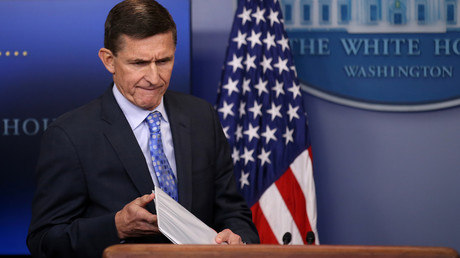
Schmerzlicher Abgang für Trump: Der Nationale Sicherheitsberater Michael Flynn räumt seinen Posten.
Voraussetzung dafür wäre, dass er für alle sichtbar an der Basis seiner Partei und auch darüber hinaus im Lager der Nicht-Wähler und Demokraten eine überwältigende Zustimmung mobilisieren könnte. Denn in diesem Fall müsste jeder Kongressabgeordnete, der sich gegen Trump stellt, befürchten, bei der nächsten Wahl zum Repräsentantenhaus, die alle zwei Jahre stattfindet, in seinem Wahlkreis durch einen Trump-Anhänger ersetzt zu werden.
Genau diese Strategie scheint Trump mithilfe seiner politischen Chefberater Steve Bannon und Jason Miller zu verfolgen: Unterstützung bei den breiten Massen zu gewinnen, indem der neue Präsident im Unterschied zu seinen Vorgängern genau das hält bzw. auf seine Agenda setzt, was er versprochen hat. Er kann es nur nicht durchsetzen, weil auch in den eigenen republikanischen Reihen korrupte Mitglieder des "Washingtoner Sumpfes" den neuen Präsidenten an der Umsetzung seiner vom Volk gewollten Politik hindern.
Die New York Times brachte dazu jüngst einige Zitate von Jason Miller, die Einblick in diese Strategie geben:
Die Leute müssen nicht mit allem übereinstimmen, was man tut, aber die Leute werden dich respektieren, wenn du tust, wovon du gesagt hast, dass du es tun würdest", so Trumps Top-Kommunikations-Stratege Miller. "Er [Trump] handelt zuerst und danach ist Zeit, um darüber zu reden", fügte Miller hinzu. "Auf diese Art und Weise wird er letztlich die Leute an sich ziehen, die nicht gewählt haben, oder Leute, die nicht für ihn gestimmt haben. Nur innerhalb der Lobbyisten und der Medien gibt es diesen Fokus auf Palast-Intrigen. Im Rest des Landes sieht man in ihm einen Kerl, der sich auf Arbeitsplätze und die Wirtschaft konzentriert."

Eines der Kernversprechen Trumps war auch, die US-Armee zur stärksten der Welt zu machen und dem Militärpersonal die besten Bedingungen, vom Sold über die Gesundheitsfürsorge bis zu den Bildungschancen, angedeihen zu lassen.
Keine Macht auf der Welt sollte auch nur auf den Gedanken kommen, Amerika anzugreifen. Es ging Trump beim Wahlkampf immer nur um die Verteidigung der USA. Dabei vermittelte er stets den Eindruck, dass die Verteidigung des US-Territoriums damit gemeint war und nicht wie auch immer gelagerte, so genannte US-Interessen.
Und genau das wird auch in den von der Regierung Trump jetzt vorgestellten Haushaltsprioritäten reflektiert: ein starker Zuwachs fürs Militär, der im Rahmen der gesetzlich verordneten Haushaltsobergrenze durch eine radikale Kürzung, quasi Eliminierung der Auslandsprogramme des US-Außenministerium mitfinanziert wird.
In diesen Programmen des US-Außenministeriums ist auch die Finanzierung der so genannten Militärhilfen an Länder enthalten, die in vielen Krisenherden rund um die Welt stattfinden. Gerade diese sind es, die - unterstützt von neo-konservativen US-Diplomaten und Geheimdiensten - bisher unendlich viel Unheil angerichtet haben.
Auch die Programme zur direkten und indirekten Finanzierung von so genannten Nicht-Regierungsorganisationen, die auf so genannte Demokratie-Hilfe spezialisiert sind und die bei Farbrevolutionen oder Staatsstreichen wie in Ägypten oder der Ukraine eine Hauptrolle gespielt haben, würden durch Trumps Kürzungen im Außenministerium der Spar-Axt zum Opfer fallen.
Der größte Teil der 42 Milliarden Dollar, die das US-Außenamt bisher jährlich für die beiden oben genannten Zwecke der Militär- und Demokratiehilfe ausgegeben hat, würde laut Trumps "America First"-Budgetprioritäten zur Deckung des finanziellen Mehrbedarfs ins Pentagon umgeleitet. So hat Trump z. B. bereits verfügt, dass für den Bau von Kriegsschiffen nur noch Stahl aus den USA verwendet werden darf.
Für eingefleischte Kriegstreiber und Russenhasser wie den republikanischen Senator Lindsey Graham, der sonst nicht genug Geld für das Pentagon bekommen kann, ist Trumps Axt am US-Außenministerium denn auch ein Horrorszenarium. "Das wäre ein Desaster", empörte sich Graham und kündigte seinen Widerstand an.
Donald Trump: Obama steht hinter Protesten gegen neue US-Administration
Unterstützt wurde er dabei von dem republikanischen Senator Marco Rubio, der betonte, dass die "Auslandshilfe kein Akt der Wohltätigkeit" sei, sondern "entscheidend für die nationale Sicherheit". Auch der demokratische Senator Christopher Coons unterstrich die hegemonialpolitische Komponente der US-Hilfeleistungen rund um die Welt, denn sie befördere "die nationalen Interessen der USA, indem sie eine sicherere und stabilere Welt" schaffe, berichtete Newsmax am 28.2.2017.
Die Auslandsprogramme zu retten, könnte jedoch für die Trump-Gegner innenpolitisch gefährlich werden. Wenn sich etwa die Republikaner im Kongress mit den Demokraten zusammentun, um mehr US-Steuergelder fürs Ausland statt für Projekte zu Hause auszugeben, wozu auch Trumps Rüstungsprogramme zählen, laufen sie Gefahr, ihre eigenen Chancen auf Wiederwahl erheblich zu verringern. Davon zeugen jüngste Entwicklungen.
Ausgerechnet der stark Trump-kritische Nachrichtensender CNN hat am 1. März berichtet, dass mehr als 75 Prozent der Americans positiv auf Trumps Rede zur Lage der Nation am Dienstag vor beiden Häusern des US-Kongresses reagiert haben. Von denen, die seine Rede gesehen haben, hätten 57 Prozent sogar eine "sehr positive" Reaktion verzeichnet.
Fast 7 von 10 Befragten sagten, dass die von Trump vorgeschlagene politische Richtung das Land auf den richtigen Weg bringen würde, und fast zwei Drittel waren der Meinung, der Präsident habe die richtigen Prioritäten für das Land gesetzt. Insgesamt äußerten sich etwa 7 von 10 optimistischer mit Blick auf die Zukunft des Landes. Auch ideologisch hielten etwa zwei Drittel Trumps Rede für weitgehend richtig.
Das heißt aber auch, dass die Strategie Trumps und seiner politischen Top-Berater Bannon und Miller aufzugehen scheint. Und nicht zuletzt, dass sich die Republikaner des Establishments im kommenden politischen Sommer "warm anziehen" müssen. Aber auch die Demokraten werden erkennen müssen, dass ihnen ihre politische Basis an den Graswurzeln wegbricht, falls sie weiter in sturer Totalblockade gegen Trump verharren.
RT Deutsch bemüht sich um ein breites Meinungsspektrum. Gastbeiträge und Meinungsartikel müssen nicht die Sichtweise der Redaktion widerspiegeln. https://deutsch.rt.com/meinung/47215-mit-volk-gegen-parteiapparate-trump-usa/

Sunday, March 5, 2017

With D. Trump "Evidently, change is in the air." MELKULANGARA BHADRAKUMAR


Trump Can Be Good for World Peace – If Only He’s His Way
 03.03.2017  OPINION

Trump Can Be Good for World Peace – If Only He’s His Way


When US President Donald Trump graduated from the twitter and his impromptu media remarks to take to the podium of the Congress on Capitol Hill to make his annual address, it became a moment the international community had been waiting for. Trump’s speech on Tuesday can be viewed from there angles.
How far did he deviate from his campaign pledges or the positions he’d articulated in the run-up to his inauguration on January 20? Are there any new elements? And, thirdly, what could be the expectations in the period ahead from Trump on the foreign-policy arena?
For the international community, of course, it is the last question regarding the trajectory of US foreign policies that will attract most attention. But then, the heart of the matter is that it is difficult, if not impossible, to sequester Trump’s ambitious domestic agenda from his foreign policies – or vice versa.
The two are inextricably linked in a way that is unprecedented in modern American politics. Therefore, America’s engagement with the world through the coming four-year period needs to be co-related with the historic nation-state that Trump puts at the centre of all his policies.
In a nutshell, Trump did not make major deviations in his speech from his earlier pronouncements on US foreign policies. There is remarkable consistency too.
Immigration and trade are high on his timetable, as he’d pledged all along. He underscored that «a new chapter of American greatness» is now beginning; that «integrity and the rule of law» must be restored at America’s borders»; that strong measures are needed to protect America from «radical Islamic terrorism».
He reiterated emphatically that this «vile enemy», ISIS, must be extinguished from the planet; that the «unbreakable alliance» with Israel will be preserved. He qualified that «free trade» should also be «fair trade».
Equally, Trump stressed that resources cannot be squandered away abroad wastefully, «national rebuilding» being the priority, and the US’ allies must meet their financial obligations.
He’s mostly stayed on message. Trump jettisoned a handful of extreme positions that he might have taken in the hurly-burly of politics but informed opinion moved in – shifting the American embassy to Jerusalem, declaring China as currency manipulator, vocally supporting Taiwan, or, voicing indifference to Japan or South Korea going nuclear.
So, at the end of the day, what sort of foreign policies can be expected under the Trump presidency? At the very outset, what can be said is the most obvious – Trump simply did not bother to either claim that the world community is clamouring for America’s leadership or that being the global leader is America’s tryst with destiny, as his predecessor Barack Obama had insisted all through his eight fine speeches on Capitol Hill.
No doubt, Trump too feels it in his blood and feels along his heart that America is a great nation. But he doesn’t claim it is an exceptional nation with a global mission based on «values». He’d leave it to the US’ allies to decide whether America should lead.
Indeed, if they so decide, then, they must also be prepared «to pay their fair share of the cost – have to do that» in terms of the mutual obligations of the partnership.
The punch line comes in three crisp sentences. Trump says: «Free nations are the best vehicle for expressing the will of the people, and America respects the right of all nations to chart their own path. My job is not to represent the world. My job is to represent the United States of America».
The above dramatically sets apart Trump’s foreign policies. This is not a cadence that the world community ever heard before in any of the US’ post-Cold War presidencies. The US’ post-Cold War triumphalism, the «unipolar predicament», which began with Bill Clinton presidency, is apparently being given an unceremonious burial by Trump.
Trump then goes on to explain, «America is better off when there is less conflict, not more. We must learn from mistakes of the past».
It is a fair assumption to make that Trump is willing to turn his back on the US’ interventionist policies of the quarter century, as they’d manifested in various avatars – under the rubrics of «humanitarian» impulses (Yugoslavia), «colour revolution» (Georgia and Ukraine), «regime change» (Iraq, Libya and Syria) or «war on terror» (Afghanistan).
How is this reconcilable with Trump’s intention to increase the military budget significantly and to eliminate the so-called «defence sequester»? He himself acknowledged that is going to be «one of the largest increases in national defence spending in American history».
Trump rationalizes this way: «Finally, to keep America safe, we must provide the men and women of the United States military with the tools they need to prevent war — if they must — they have to fight and they only have to win».
The important element here is that nowhere in his speech Trump proposes to fight new wars. The Pentagon expenditures do not necessarily portend greater US interventionism abroad. It is understandable, arguably, that in such extraordinary times in American politics – Trump just accused Obama of instigating media leaks and protests against him – the powerful US military-industrial complex can rest assured that their corporate interests are safe even if there are no interventionist wars abroad.
To be sure, Trump has redefined the terms of engagement of America with the world community. He said the foreign policies of his government will seek «direct, robust and meaningful engagement» but will be based on «vital national interests».
A significant feature of Trump’s speech is about what he omitted – America’s big-power relationships. He said nothing about Russia and almost nothing about China. Evidently, change is in the air.
It was habitual on Obama’s part to badmouth Russia on any and every occasion – even to the extent of bracketing ISIS and Russia in the US’ «threat perception». Trump’s speech confirms that demonizing Russia is no longer US policy.
In the case of China, there have been early indications already that he is speedily moving toward engagement, while with regard to Russia, it may turn out to be a slow process due to the hurdles that are being created on his path almost on daily basis.
Trump says China’s WTO membership cost the US economy 60000 factories during the period since 2011. But he said this not as a stand-alone accusation but by way of illustrating a «series of tragic foreign policy disasters».
This is where the best hope lies that under Trump, the US may career away from the trodden path of imperialism and global hegemony. Simply put, Trump’s foreign policies become a grand bargain since nation-building will be impossible amidst waging foreign wars.
To reinforce the point, Trump came up with the staggering figure that the US’ Middle Eastern wars have cost $6 trillion «while our infrastructure at home is crumbling. With the $6 trillion, we could have built our country twice, and maybe even three times, if we had people who could negotiate».
Trump’s speech testifies to his intense awareness that his domestic political base has not eroded despite the relentless, vicious attacks on him by an unforgiving opposition that lost the election. Indeed, it is to that base that he will have to return to seek a renewed mandate in 2020. He understands that his agenda to make the foreign policy serve as a tool to rebuild the country enjoys popular support. 
http://www.strategic-culture.org/news/2017/03/03/trump-can-good-for-world-peace-if-only-he-his-way.html

US-Abgeordnete Gabbard zu RT: US-Unterstützung für extremistische Milizen in Syrien muss aufhören

Wenn Sie oder ich al-Kaida oder dem IS Geld, Waffen und Unterstützung zukommen lassen, würde man uns ins Gefängnis stecken. Doch die US-Regierung hat diese Grundsätze über Jahre hinweg ignoriert, indem sie heimlich Verbündete und Partner von al-Kaida, Jabhat Fateh al-Sham, des IS und anderer Terror-Gruppen mit Geld, Waffen und geheimdienstlichen Erkenntnissen unterstützte, um den Umsturz in Syrien voranzutreiben.
Die 35-Jährige beschuldigte auch die CIA, überall auf der Welt durch verdeckte Operationen terroristischen Gruppen Geld und Waffen zukommen zu lassen. Dies geschehe mithilfe Saudi-Arabiens, der Türkei, Katars und weiterer Akteure. Sowohl die New York Times als auch das Wall Street Journal hatten diese Verbindungen zuletzt aufgedeckt. Gabbard weiter:
Die CIA hat für lange Zeit eine Gruppe mit dem Namen Fursan al-Haqq unterstützt, indem sie ihr Gehälter, Waffen und Unterstützung zukommen ließ. Die Gruppe kooperiert und kämpft zusammen mit einer weiteren Gruppierung, die als Verbündeter von al-Kaida gilt und versucht, die syrische Regierung zu stürzen. Die Levant Front ist eine andere so genannte „moderate Rebellengruppe“, die gegen die syrische Regierung kämpft. Vergangenes Jahr haben die Vereinigten Staaten mithilfe der Türkei dieser Gruppe geheimdienstliche Unterstützung und andere Arten von militärischer Hilfe zukommen lassen. Die Levant Front kämpft zusammen mit al-Kaida. Dieser Wahnsinn muss enden. Wir müssen aufhören, Terroristen zu bewaffnen. Die Regierung muss diese Doppelmoral beenden und denselben Gesetzen unterliegen wie die Bürger dieses Landes.
https://cooptv.wordpress.com/2017/03/04/us-abgeordnete-gabbard-zu-rt-us-unterstuetzung-fuer-extremistische-milizen-in-syrien-muss-aufhoeren/

Saturday, March 4, 2017

Drastic Changes in the Middle East Happen Unbelievably Fast


Drastic Changes in the Middle East Happen Unbelievably Fast
PETER KORZUN | 04.03.2017 | WORLD

The situation in the Middle East is changing at an incredible speed. The things unbelievable yesterday, become reality today. Each of the events becomes part of a bigger picture, with the region gradually moving away from abyss to become a better place.
On March 1, Iraqi forces were reported to have taken control of the last major road out of western Mosul, preventing Islamic State (IS) militants from fleeing the city. The route leads to Tal Afar, another IS stronghold that is 40 km further west. They have since driven militants from the international airport, a military base, a power station and a number of residential areas. IS fighters began to flee. Total control over the city by Iraqi forces seems to be a matter of a few days, maybe hours.
Being almost defeated in Iraq, the IS has nowhere else to go but Syria – the country where they have just suffered a defeat, with Palmyra retaken by Syria’s government forces. Russia’s support has been crucial in the Syrian army's push. Raqqa, the last remaining stronghold of the IS, will be the place of the final battle the extremist group is doomed to lose as many influential actors want it to be wiped away from the earth.
Turkey has announced its intent to launch an offensive to retake Raqqa but only after taking control of Manbij, the town held by the Kurds-dominated Syria Democratic Forces (SDF). The parties were in for a fight to benefit the IS and other terror groups. The US was at a loss as to how to prevent a clash between the NATO ally and the Kurds – the force it relies on in the fight against the IS. That’s when Moscow stepped in to avoid the worst, using its unique position as a mediator. It managed to do what nobody thought was possible. The military council in Manbij said on March 2 it will hand over areas west of the flashpoint town to Syrian government troops, after an agreement brokered by Russia.
Now the town is in Arab hands and Turkey has no reason to attack it. Syria and Turkey are not at war.
The United States had promised Turkey that Kurdish forces would withdraw from Manbij to the east of the Euphrates, but it never happened. Now Russia did what America had failed to do.
As a result of Russia’s effective mediation, Turkey can double down on its plans to advance to Raqqa, while Syria’s government has greatly strengthened its position. Turkey’s President Erdogan has just said he is ready to fight the IS together with Russia. He is coming to Moscow on March 9. It means no clash between Turkey and Syria will take place.
Many things are changing for the Syrian government and it has been going on for some time. It’s not a coincidence that voices get louder, calling for inviting Syrian President Assad to the March 29 Arab Summit in Amman – five years after Syria was expelled from the 22-member organization. Russia, Jordan and Egypt are applying efforts to reconcile the Arab community with the Syrian government. Last month, Egypt’s parliamentary committee for Arab affairs called for the return of Syria to the Arab League. This would signify the reconciliation between Saudi Arabia which backed the Syrian rebels – something unthinkable some time ago.
In 2015, then US President Obama predicted Russia would get stuck in Syria’s quagmire. He appears to have been wrong. Thanks to Russia’s involvement, one can see the light at the end of the tunnel to make the quagmire a thing of the past.
Moscow can facilitate the process of Iran joining with Arab states in the effort to reach agreement on Syria, bringing it to some mutual understanding with Saudi Arabia. Not much has been reported about some recent events of special significance. Iranian President Hassan Rouhani visited Kuwait and Oman on February 15. Saudi Arabian Foreign Minister Adel Al-Jubeir made a trip to Iraq on February 25, to be received by Iraqi Prime Minister Haider Al-Abadi. The trend is visible – Shia and Sunni are on speaking terms again and they are discussing something very important. It would have sounded incredible a short time ago but these are the facts.
All these events and emerging trends are taking place against the background of the ongoing UN-brokered Geneva talks on peaceful settlement in Syria. Here too we have an unexpected turn of events – the Syrian opposition seeks to meet with Russian officials!
According to Paul Vallely, a retired US Army Major General and senior military analyst for Fox News, Russia-US consultations on Syria are to start in two months after the presidents hold a summit. He said Russia is to play a key part in any scenario.
The recent days have literally shaken the Middle East. So many unexpected things happen to push things forward. Right in front of our eyes the impossible becomes possible.
As said before, Moscow is in a unique position to act as an intermediary and it plays its role aptly to achieve tangible results. If the current trend continues in the same direction, leading to the desired outcome, Russia’s effort will go down in history as an extraordinary achievement of military success combined with effective diplomacy. 

Wednesday, March 1, 2017

Trump’s Middle East: CrossTalk RT


  • Trump’s Middle East
    With the arrival of the new administration in Washington, will there be a new look at and new policy for the Middle East? To date, it’s looking like that hope may be a pipe dream. CrossTalking with Mohammad Marandi, Michael Maloof, and...

     https://www.rt.com/shows/crosstalk/