Trump was elected to end the era of foreign interventionism, he was elected because Hillary Clinton’s anti-Russian war mongering lost votes and never resonated with middle America, he won because he said that one cannot ‘kick the hell out of ISIS’ without allowing President Assad to govern his country.
... on the international stage, he must work to build new alliances and this requires the tone of Donald Trump the board member rather than Donald Trump the flamboyant salesman.
If he takes this approach, he may find that he has more friends overseas than in the msm and Congress. Unlike many of his strident opponents in America, the world, including and especially both Russia and China are willing to give him a chance. He must cultivate this opportunity.
Intellectual elites, as a rule, tend to be individuals who are out of touch with society, the real feelings of ordinary people and the needs of all people They also have a tendency to profess hatred of religion whilst they themselves act as deities on earth. Such an attitude is an insult to tradition, history and culture.
vor 2 Tagen - US-Senator Lindsey Graham hat Russlands Außenminister Lawrow in der ... „ 2017 wird das Jahr, in dem der Kongress Russland in den Arsch tritt.“ ... Signale der neuen US-Regierung in Richtung Moskau gegeben. ... andererseits kritisiert seine Regierung das Verhalten der Russen in der Ukraine-Krise. "Außenminister Lavrov durfte dann zumindest als letzter der prominenten Gäste des Samstagvormittags auch noch aufs Podium. Er bezeichnete die NATO als „Institution des Kalten Krieges im Denken und im Herzen“. Seine viel zitierte Formulierung einer „Post-West-Weltordnung“, vielleicht angeregt durch die Formulierung im Tagungsprogramm „The Future of the West: Downfall or Comeback?“, verband er allerdings mit der Hoffnung, dass das Völkerrecht dann endlich beachtet wird. Und am Sonntagvormittag konnte der russische Politiker Kosachev auf einem Podium zu Syrien darauf hinweisen, dass neben ihm zwar u.a. ein Vertreter der Syrischen Nationalkoalition, aber keiner der syrischen Regierung saß. Beim vorigen Podium, einer Debatte nur unter US- Senatoren, hatte aber bereits Senator L. Graham seine Überzeugung zum Besten gegeben, dass 2017 das Jahr sei, „wo wir den Russen in den Hintern treten müssen“." Gudrun Haas München, den 21.02.2017
Newsletter Nr. 7 – Eindrücke von der Münchner Sicherheitskonferenz 2017
Der Botschafter Russlands bei den Vereinten Nationen, Witali Tschurkin, ist am Montag im 65. Lebensjahr in New York plötzlich gestorben. Der herausragende Diplomat ist durch seine scharfen Äußerungen zu diversen politischen Problemen bekannt. Nachstehend einige markante Zitate Tschurkins:
„Wozu haben Sie Flugzeuge in die Zone geleitet, wo Kampfhandlungen geführt wurden? Die Passagiere der malaysischen Boeing konnten nicht wissen, dass es bei Ihnen einen bewaffneten Konflikt gibt. Auch die malaysischen Luftfahrtbehörden konnten letztendlich nichts von Ihrem bewaffneten Konflikt wissen. Aber Sie wussten das bestens. Warum haben Sie das getan? Aus Gier oder aus anderen Erwägungen heraus? Warum haben Sie Aufzeichnungen der Gespräche Ihrer militärischen Fluglotsen bislang nicht vorgelegt? Das ist Straflosigkeit. Haben Sie jemanden dafür bestraft, Herr Klimkin? Wurde jemand in der Ukraine dafür bestraft?“ (Tschurkin im Juli 2015 in einer Sitzung des Weltsicherheitsrates in einem Kommentar zu Äußerungen des ukrainischen Außenministers Pawel Klimkin, der Russland den Boeing-Absturz und die Unterstützung der Volkswehr im Donbass ein weiteres Mal zur Last legte).
„Ich weiß nicht, von welcher Stelle Sie zu tanzen beginnen. Aber unsere Verhandlungen werden zu einem weiten Themenkreis geführt und nicht von Kiew diktiert.“ (Tschurkin im Mai 2014 in einer UN-Sitzung zur Äußerung eines ukrainischen Vertreters, wonach die Frage der Rückgabe der Krim offen bleibt und „wir von dieser Stelle aus tanzen werden“.)
„Das, was im Weltsicherheitsrat im August 2014 geschah, erinnert mich an das ‚Königreich der Zerrspiegel‘, denn einige Ratsmitglieder waren nicht daran interessiert (zu wissen), dass im Osten der Ukraine friedliche Einwohner sterben und dass sich dort eine humanitäre Katastrophe anbahnt. Aber sie waren darüber besorgt, dass Russland Menschen, die beschossen werden, humanitäre Hilfe erweist.“ (Tschurkin im August 2014 in einer Sitzung des UN-Sicherheitsrates in einer Diskussion zur Ukraine-Krise.)
“Was meine Weigerung betrifft, die ‚Komfortzone zu verlassen‘, wie Sie sagten, so haben Sie völlig recht. Nach acht Sitzungen des UN-Sicherheitsrates zur Situation in der Ukraine und auf der Krim (sechs davon fanden vor laufenden Fernsehkameras statt) fühle ich mich wirklich recht komfortabel, weil die Wahrheit allmählich ans Licht kommt. Wenn Sie darauf anspielen, dass ich unbequeme Fragen nicht beantworten will, so sollten Sie sich daran erinnern, dass ich im Jahr 1983 in der Nationalen Kathedrale in Washington gesprochen hatte. Dies geschah zwei Wochen nach dem Abschuss eines südkoreanischen Verkehrsflugzeuges. Dann machte ich Aussagen im Mai 1986 im US-Kongress, nach der Havarie im AKW Tschernobyl, ganz zu schweigen von Hunderten weiteren Auftritten in Medien und Livesendungen. Also kann ich jedem erklären, was es bedeutet, ‚die Komfortzone zu verlassen‘“. (Tschurkin im März 2014 zur Äußerung der CNN-Journalistin Christiane Amanpour, die ihm vorwarf, ein Interview mit ihr zu verweigern.)
„In diesem Zusammenhang muss daran erinnert werden, dass in der Verfassung der Vereinigten Staaten solche bemerkenswerten historischen Worte stehen: ‚Wir, das Volk‘… Das Volk der Krim hat seinen Willen beim Referendum durchaus konkret geäußert.“ (Tschurkin am 2. Februar 2017 in einer Sitzung des Weltsicherheitsrates zur Erklärung seiner US-amerikanischen Kollegin Nikki Haley, wonach die Krim ukrainisch ist und an Kiew zurückgegeben werden muss.)
„Bringen Sie die Malwinen zurück, bringen Sie Gibraltar zurück, bringen Sie den von Ihnen konservierten Teil Zyperns zurück, bringen Sie den Chagos-Archipel im Indischen Ozean zurück, den Sie in einen riesigen Militärstützpunkt verwandelt haben. Dann dürfte Ihr Gewissen möglicherweise reiner werden und Sie würden auch andere Themen ansprechen können.“ (Tschurkin am 2. Februar 2017 im Weltsicherheitsrat zu Anschuldigungen des britischen Vertreters Matthew Rycroft, die Ukraine-Krise verursacht zu haben.)
„Bräuchten wir eine Predigt, würden wir in die Kirche gehen, bräuchten wir Gedichte, würden wir ins Theater gehen … Legen Sie bitte wenigsten einen Beweis vor oder belassen Sie Ihre Erzählungen für einen Roman, den Sie möglicherweise künftig verfassen werden.“ (Tschurkin am 27. Oktober 2016 zu Äußerungen von UN-Vizegeneralsekretär Stephen O’Brien, der Russland Bombardements in Syrien zur Last legte und dabei aus einem Gedicht des schottischen Dichters Robert Burns zitierte.)
„Ich kann Ihnen versichern, sehr geehrte Kollegen, und ich glaube, dass sich mehrere darüber im Klaren sind: Wäre Nadeschda Sawtschenko unter ähnlichen Bedingungen nicht in Russland, sondern in den USA festgenommen worden, wäre ihr Schicksal prädestiniert und traurig gewesen. Sie hätte diese Welt nie wieder sehen können.“ (Tschurkin am 6. März 2015 zur Verurteilung der ukrainischen Kampfpilotin Sawtschenko in Russland, der Moskau Beihilfe zum Mord an zwei russischen Reportern im Donbass zur Last gelegt hatte.) https://de.sputniknews.com/politik/20170220314627009-tschurkin-tod-beste-zitate/
Vitaly Churkin was one of the wisest voices in international diplomacy. His voice will no longer echo in the halls of the United Nations. Articulate, polite yet commanding, wise yet affable, he oversaw some of Russia’s and the world’s most important events in a position he occupied since 2006.
Standing next to some of his colleagues, he often looked like a titan in a room full of school children.
His death, a day before his 65th birthday, is a tragedy first and foremost for his family, friends and colleagues. It is also a deeply sad day for the cause of justice, international law and all of the principles of the UN Charter which Churkin admirably upheld in the face of great obstacles.
His death however raises many uncomfortable questions…
Here are 5 things that must be considered:
1. A Macabre Pattern Has Emerged
Beginning in 2015, there were several deaths within the Russian Diplomatic corps and a special Russian Presidential adviser.
–LESIN
First there was Russia’s RT founder and special adviser to President Putin, Mikhail Lesin. He died in November of 2015 in his hotel room. Reports said that he appeared discombobulated during his last sighting before he died. Later it emerged that he died of a blunt head trauma. Drinking was blamed, but many questions were left unanswered.
–MALANIN
Earlier last month, Andrei Malanin, a Senior Russian Diplomat to Greece was found dead in his bathroom. The causes of death remain unknown.
–KADAKIN
Just last month, Russia’s Ambassador to India, Alexander Kadakin, an always prestigious role, died of a heart attack, although no one was aware of any previous health issues.
–KARLOV
In December of last year Russia’s Ambassador to Turkey was assassinated by a lone jihadi gunmen in an art gallery. There was no effective security as the killer simply walked up to Ambassador Andrei Karlov and shot him multiple times in the back.
–CHURKIN
Vitaly Chirkin is the highest profile member of Russia’s diplomatic corps to die in recent years.
2. A Motive For Foul Play?
Each of the recently deceased Russian Ambassadors were high profile targets for miscreants and criminals, whether state actors, mercenaries or fanatics.
Lesin was a instrumental in the creation of RT, a news outlet which has come under constant attack from the western establishment.
Malanin had overseen a period of warming fraternal relations between Greece and Russia at a time when Greece is feeling increasingly alienated from both the EU and NATO.
Karlov is said to be responsible for helping to facilitate the rapprochement between Presidents Erdogan and Putin.
Kadakin oversaw a period of renewed tensions between India and Pakistan at a time when Russia was trying to continue its good relations with India whilst building good relations with Pakistan.
On the 31st of December, 2016, Churkin’s resolution on a ceasefire in Syria passed in the UN Security Council after months of deadlock. The resolution is still in force.
Anyone who wanted to derail the diplomatic successes that the aforementioned men achieved for Russia would have a clear motive to extract vengeance.
3. Who Stands To Gain?
In the matter of Karlov, any derailment of restored Russo-Turkish relations would be good for those happy for Turkey to continue her support of jihadists in Syria rather than moving towards accepting a Russian and indeed Iranian brokered peace process which respects the sovereignty of Syria as Russia and Iran always have, but Turkey has not.
In the case of Lesin, anyone wanting ‘vengeance’ for RT’s popularity would be able to say that a kind of former media boss was taken down.
For Malanin, many fear that if ‘Grexit’ happens, Russia will become an increasingly important partner for Greece. The EU would not like one of its vassal states enjoying fruitful relations with Russia, a country still under sanctions from Brussels.
For Kadakin, it is a matter of interest for those wanting Pakistan to continue favouring western powers and not wanting Russia to be able to mediate in conflict resolutions between New Delhi and Islamabad.
Churkin had come to dominate the UN in ways that his counterparts on the Security Council simply could not. No one really stood a chance in a debate with Churkin. His absence leaves open the possibility for a power vacuum that would makes other peoples’ jobs easier.
4. Where The Deaths Took Place
Each death took place on foreign soil. Mr. Karlov’s killing in particular, exposed the weakness of his security contingent. If security was that weak in a comparatively volatile place like Turkey, it goes without saying that security in states considered more politically stable would be even more lax.
Again it must be said that a non-biased detective might say that the only pattern which has emerged is that many people in the Russian diplomatic corps and related institutions have heart attacks. Maybe they eat fatty foods every day and drink and smoke too much. But if this was this case, why are the heart attacks all on foreign soil?
If all of the former Ambassadors except Karlov were really in bad health, is it really just a coincidence that none of these men had a health scare on Russian soil? Again, a pattern has emerged.
5. The Ethics of Speculation?
Many will say that it is too early to suspect foul play. Indeed, I must make it clear that this is simply speculation based on a pattern of tragic and at times unexplained events, combined with the objective reality that because of Russia’s recently elevated profile as a born-again geopolitical superpower, Russia is a bigger target for international criminals than it was in the broken 1990s or the more quiet early 2000s.
When such events happen, one’s duty is to speculate so that better health and safety precautions are taken to ensure the wellbeing of Russia’s important diplomats. Furthermore, if foul play is a factor, it means that such seemingly unrelated events must be investigated more thoroughly.
Russia has historically suffered from invasion, revolution and more recently from immense international pressure. The Russian people, like Russia’s ambassadors are entitled to the peace and long lives deserved by any member of a country that has suffered for too long.
Am Tage vor seinem 65. Geburtstag ist der vitale, populäre und brilliante Spitzendiplomat V. Churkin der die Russischen Föderation bei den Vereinten Nationen vertrat, in einem New Yorker Hospital
gänzlich unerwartet verstorben. Er war zuvor in seinem New Yorker Büro zusammengebrochen. Churkin vertrat Russland seit 2006 als UN Botschafter und wußte in vielen kritischen Situationen ('Kosovokonflikt', 'Georgienkrise', 'Syrienkonflikt') mit viel diplomatischem Geschick und dank genauer Kenntnisse von Völkerrecht und Kollegenschaft seine Expertisen friedensgerecht einzubringen. Noch vor wenigen Tagen trat er energisch und kraftvoll in der Öffentlichkeit in Erscheinung. Die Ursache für sein plötzliches Ableben ist bis dato unbekannt.
Im UN-Hauptquartier wurde heute früh eine Schweigeminute für ihn abgehalten. Mit ihm ging eine dem Frieden verpflichtete Stimme. Er wear der vierte russische Diplomat, der innerhalb der letzten drei Monate unerwartet verschied.
RT international skizziert Churkins allseits beliebte Persönlichkeit in folgenden biografischen Notizen:
"His natural charisma led him to a brief career as a child actor and at the age of 11, he appeared in several movies, including the 1963 film “Blue Notebook” about Vladimir Lenin.
In 1974, Churkin graduated from the Moscow State Institute of International Relations and in 1981 obtained a Ph D in History. In addition to English, Churkin also spoke French and Mongolian.
In 1974, he joined the diplomatic service as a translator, where his language skills proved invaluable during the SALT-2 talks in Geneva. From 1979 to 1982, Churkin worked at the Soviet Foreign Ministry’s department covering the United States. He was subsequently appointed Third Secretary at the Soviet Embassy in Washington.
From 1989 to 1990, Churkin served as press secretary to Soviet Foreign Minister Eduard Shevardnadze (who was later president of Georgia) before being promoted to the post of Director of the Foreign Ministry’s Information Department. In 1992, Churkin became the Deputy Minister of Foreign Affairs under his university course mate, Andrey Kozyrev. From summer 1992 until October 1994, Churkin served as the Special Representative of the Russian President in the Balkans and took part in negotiations during the Bosnian conflict, during which time he also held regular briefings with foreign journalists.
During the following years Churkin served as Russian ambassador to Belgium (1994-98) and to Canada (1998-2003). He then became Ambassador-at-Large for the Foreign Ministry, before finally becoming Russia’s representative to the United Nations in April 2006.
Over the course of his career, Churkin defended Russian interests on a number of contentious issues, including the disputed status of Kosovo as well as 2008 Russian-Georgian war and the Syrian conflict. He is survived by his two children, Anastasia and Maksim." https://www.rt.com/news/377988-russian-ambassador-churkin-un-dies/
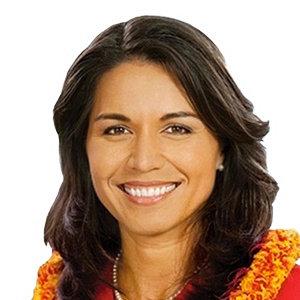
I support Rep. Tulsi Gabbard, D-Hawaii, going to Syria and meeting with President Bashar al-Assad because the congresswoman is a brave person willing to take criticism for challenging U.S. policies that she believes are wrong.
Rep. Tulsi Gabbard, D-Hawaii
It is important that we have representatives in our government who will go to countries where the United States is either killing citizens directly by U.S. intervention or indirectly by support of militia groups or by sanctions.
We need representatives to sift through what the U.S. government says and what the media reports to find out for themselves the truth, the shades of truth and the untruths.
We need representatives willing to take the heat from both their fellow members of Congress and from the media pundits who will not go to those areas and talk with those directly affected by U.S. actions. We need representatives who will be our eyes and ears to go to places where most citizens cannot go.
Tulsi Gabbard, an Iraq War veteran who has seen first-hand the chaos that can come from misguided “regime change” projects, is not the first international observer to come back with an assessment about the tragic effects of U.S. support for lethal “regime change” in Syria.
Nobel Peace Laureate Mairead Maguire began traveling to Syria three years ago and now having made three trips to Syria. She has come back hearing many of the same comments from Syrians that Rep. Gabbard heard — that U.S. support for “regime change” against the secular government of Syria is contributing to the deaths of hundreds of thousands of Syrians and – if the “regime change” succeeded – might result in the takeover by armed religious-driven fanatics who would slaughter many more Syrians and cause a mass migration of millions fleeing the carnage.
Since 2011, the Obama administration supported various rebel groups fighting for “regime change” in Syria while U.S. allies – Saudi Arabia, Qatar and Turkey – backed jihadist groups including Islamic State and Al Qaeda’s Syrian affiliate, some of the same extremists whom the U.S. military is fighting in Iraq and Afghanistan. If Assad were overthrown, these extremists might take power and create even worse conditions for Syrians.
This possibility of jihadists imposing perverted extremist religious views on the secular state of Syria remains high due to international meddling in the internal affairs of Syria. This “regime change” project also drew in Russia to provide air support for the Syrian military.
Critical of Obama’s ‘Regime Change’
During the Obama administration, Rep. Gabbard spoke critically of the U.S. propensity to attempt “regime change” in countries and thus provoking chaos and loss of civilian life.
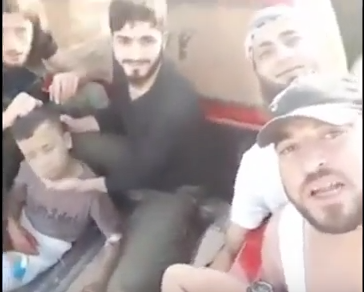
U.S.-backed Syrian “moderate” rebels smile as they prepare to behead a 12-year-old boy (left), whose severed head is held aloft triumphantly in a later part of the video. [Screenshot from the YouTube video]
On Dec. 8, 2016, she introduced a bill entitled the “Stop Arming Terrorists Act” which would prohibit the U.S. government from using U.S. funds to provide funding, weapons, training, and intelligence support to extremists groups, such as the ones fighting in Syria – or to countries that are providing direct or indirect support to those groups.
In the first days of the Trump administration, Rep. Gabbard traveled to Syria to see the effects of the attempted “regime change” and to offer a solution to reduce the deaths of civilians and the end of the war in Syria. A national organization Veterans For Peace, to which I belong, has endorsed her trip as a step toward resolution to the Syrian conflict.
Not surprisingly, back in Washington, Rep. Gabbard came under attack for the trip and for her meeting with President Assad, similar to criticism that I have faced because of visits that I have made to countries where the U.S. government did not want me to go — to Cuba, Iran, Gaza, Yemen, Pakistan, North Korea, Russia and back to Afghanistan, where I was assigned as a U.S. diplomat.
I served my country for 29 years in the U.S. Army/ Army Reserves and retired as a colonel. I also served 16 years in the U.S. diplomatic corps in U.S. Embassies in Nicaragua, Grenada, Somalia, Uzbekistan, Kyrgyzstan, Sierra Leone, Micronesia, Afghanistan and Mongolia. I resigned from the U.S. government nearly 14 years ago in March 2003 in opposition to President George W. Bush’s “regime change” war on Iraq.
In my travels since my resignation, I didn’t agree with many of the policies of the governments in power in those countries. But I wanted to see the effects of U.S. government policies and, in particular, the effects of attempts at “regime change.”
I wanted to talk with citizens and government officials about the effects of U.S. sanctions and whether the sanctions “worked” to lessen their support for the government that the U.S. was attempting to change or overthrow.
For making those trips, I have been criticized strongly. I have been called an apologist for the governments in power. Critics have said that my trips have given legitimacy to the abuses by those governments. And I have been called a traitor to the United States to dare question or challenge its policy of “regime change.”