Wednesday, December 28, 2016


ADAM GARRIE: "Let 2017 be the year Donbass is fully free and peaceful."
My New Year’s wish: freedom for Donbass
Point of Reflection and Discussion (Blogger's Choice):
The people of Donbass have been let down by the media, the international community and even some of their friends and comrades. Let 2017 be the year Donbass is fully free and peaceful.
The people of Donbass have been let down by the media, the international community and even some of their friends and comrades. Let 2017 be the year Donbass is fully free and peaceful.
There are many wishes I have for the New Year.
Broadly speaking, I hope that the many
geo-political triumphs of 2016 are translated into human triumphs in
both a literal and metaphysical sense.
This includes my wish for the
Shanghai Cooperation Organisation, Eurasian Economic Union and the
BRICS to fundamentally demonstrate that there is no turning back to
unipolarity in geo-politics.
What’s more is that I am confident that
long before the end of 2017, Syria and her allies will achieve their
final decisive victories over all terrorists still operating in the
country.
Peace and prosperity will return to the
great people of Syria. The trilateral peace process led by Russia
with Iran and Turkey is one step in the right direction, in spite of
Turkey’s recent actions.
But my primary wish is for a conclusion to
the war in Donbass.
The war in Donbass has raged since 2014
and of all unnecessary wars ravaging the earth, it remains the most
unnecessary war of them all. It started not as a result of
terrorists flowing into Donbass, nor as a result of Western
intervention in Donbass, a historic Russian region that in modern
history has never been anything but Russian contrary to
idiotic Bolshevik* drawing of the internal map of Soviet
Republics.
Rather a Western financed coup brought
fascists to power in Kiev, and the people of Donbass simply had
enough.
After suffering for decades under the
unreliable, disloyal and incompetent leadership of Kiev,
putting naked fascists in power was simply the last straw.
The Donetsk and Lugansk republics were
formed after the populations expressed their will to do so in a
democratic referendum. That should have been the end of the matter.
Instead fascist troops, their
mercenaries and free-lance terrorists, including Islamists, have
continually invaded Donbass. Men, women, children and even infants
have been pillaged, left homeless, or been tortured, killed
or rapedin the process.
In spite of the so-called Minsk II
agreement, Kiev’s troops continue to invade the Donbass republics.
Over the western Christmas period, the invasions became even
more lethal, although this was totally ignored by the mainstream
media.
This is why it is my personal wish for
an historic injustice which has resulted in a deadly war to be
corrected in 2017.
The Donbass republics should be
recognised as sovereign entities, and if they elect to join the
Russian Federation, this should be accomplished without any caveats
or delays.
In the longer term, this historically
fake state of Ukraine** will cease to exist. It is inevitable that
half or perhaps more of the Ukrainian regions will either join the
Russian Federation or form a confederacy that is friendly and open to
Russia.
The western regions, which until 1945
were part of the Second Polish Republic, might well become a European
vassal state, a kind of cold weather Kosovo style mafia state. If
that is what the people wish, so be it, although they still have time
to reconsider the folly of their recent ways.
But whilst all of Ukraine suffers and
much of it is enslaved, the people of Donbass have struck the first
decisive blow against this fascist tyranny.
Their freedom must be achieved and can
be achieved rapidly, so long as the powers acting in the name of
justice do not forsake their duties.
See original source: http://theduran.com/new-years-wish-freedom-donbass/
* Bolshevik? no Chrutchev's unilateral decision
** its history to be studied in depth
Monday, December 26, 2016
Terror oder Sabotage ausgeschlossen ?
Zum tragischen Absturz der TU-154
Eine Kondolenz von Irene Eckert
Eine Kondolenz von Irene Eckert
 Ich bin zutiefst berührt und
wachgerüttelt von der neuerlichen Katastrophenserie, die um die
Weihnachtstage Russland heimsuchte. Bei uns fast nur als Randnotiz
wahrgenommen. Den Heimsuchungen liegt ein zutiefst inhumaner Geist
zugrunde. Noch unverarbeitet ist der feige Mord an Botschafter
Andrej Karlow in Ankara am 19. 12. Der offenbar schutzlose Diplomat
wurde von einem fraglos dazu aufgehetzten, blutjungen
„Sicherheitsmann“ durch mehrere Schüsse von hinten
niedergestreckt. Minutenlang kam ihm keine Hilfe zu. Die Ambulanz
brauchte eine Ewigkeit bis zum Unfallort. Nur wenige Stunden später,
warf das opferreiche Attentat am Berliner Breitscheidplatz, einen
Rauchvorhang vor die Berichterstattung über die Mordtat in der
türkischen Hauptstadt. Gestern nun stürzte am 1. Weihnachtstag in
aller Frühe rein "zufällig" eine Tupolev-154 Maschine
des russischen Verteidigungsministeriums bei Sochi ins Meer. Der
Flieger hatte das Alexandrow Essemble an Bord. Die Truppe bleibt
weltberühmt, auch als der „Rote-Armee-Chor mit heute 84
überwiegend jungen Sängern, Musikern und sogar drei Tänzerinnen.
Die Maschine stürzte nur zwei Minuten nach dem Start des Flugzeugs
bei Sotschi ins Meer. Außer den beliebten Musikern waren mehrere
Reporter und Kameraleute an Bord und die Ärztin Elizaveta Glinka,
die russische Mutter Theresa. Sie alle wollten humanitäre Hilfe
leisten und zu Neujahr ihre noch in Syrien stationierten Kameraden
mit einem Konzert moralisch bei ihrem wichtigen Einsatz für die Menschenrechte, gegen den Terror unterstützen. Dr. “Liza“, wie die unermüdliche
Helferin zärtlich von den ihren genannt wurde, wollte medizinische
Ausrüstung für die Uniklinik in Latakia überbringen. Die
Besatzung der Maschine und alle Flugzeuginsassen wurden statt dessen
mit einem Schlag ausgelöscht. Ihr Zielort war die russische
Militärbasis Khmeimim in Latakia.
Ich bin zutiefst berührt und
wachgerüttelt von der neuerlichen Katastrophenserie, die um die
Weihnachtstage Russland heimsuchte. Bei uns fast nur als Randnotiz
wahrgenommen. Den Heimsuchungen liegt ein zutiefst inhumaner Geist
zugrunde. Noch unverarbeitet ist der feige Mord an Botschafter
Andrej Karlow in Ankara am 19. 12. Der offenbar schutzlose Diplomat
wurde von einem fraglos dazu aufgehetzten, blutjungen
„Sicherheitsmann“ durch mehrere Schüsse von hinten
niedergestreckt. Minutenlang kam ihm keine Hilfe zu. Die Ambulanz
brauchte eine Ewigkeit bis zum Unfallort. Nur wenige Stunden später,
warf das opferreiche Attentat am Berliner Breitscheidplatz, einen
Rauchvorhang vor die Berichterstattung über die Mordtat in der
türkischen Hauptstadt. Gestern nun stürzte am 1. Weihnachtstag in
aller Frühe rein "zufällig" eine Tupolev-154 Maschine
des russischen Verteidigungsministeriums bei Sochi ins Meer. Der
Flieger hatte das Alexandrow Essemble an Bord. Die Truppe bleibt
weltberühmt, auch als der „Rote-Armee-Chor mit heute 84
überwiegend jungen Sängern, Musikern und sogar drei Tänzerinnen.
Die Maschine stürzte nur zwei Minuten nach dem Start des Flugzeugs
bei Sotschi ins Meer. Außer den beliebten Musikern waren mehrere
Reporter und Kameraleute an Bord und die Ärztin Elizaveta Glinka,
die russische Mutter Theresa. Sie alle wollten humanitäre Hilfe
leisten und zu Neujahr ihre noch in Syrien stationierten Kameraden
mit einem Konzert moralisch bei ihrem wichtigen Einsatz für die Menschenrechte, gegen den Terror unterstützen. Dr. “Liza“, wie die unermüdliche
Helferin zärtlich von den ihren genannt wurde, wollte medizinische
Ausrüstung für die Uniklinik in Latakia überbringen. Die
Besatzung der Maschine und alle Flugzeuginsassen wurden statt dessen
mit einem Schlag ausgelöscht. Ihr Zielort war die russische
Militärbasis Khmeimim in Latakia.
Die Ermordung des Botschafters Karlow
in Ankara könnte allein schon ein Sarajewo-Moment sein. Die Tat,
begangen mit dem vollmundigen Rachespruch, dies sei die Revanche für
Aleppo, kommt einem Angriff auf die Atom-Macht Russland gleich.
Sollte sich ungeachtet aller gegenteiligen Vermutungen und
Verlautbarungen herausstellen, dass dem Flugzeugabsturz der TU-154
kein menschliches oder technisches Versagen zugrunde liegt, dann ist
der scheinbar allgegenwärtige Kriegsfuror ein Stück näher an
Russland herangerückt. Vor dem Hintergrund der letzten bedrohlichen
Rede des scheidenden US-Präsidenten Obama*, der ganz unverhohlen
Russland für die Niederlage seiner präferierten Kandidatin die
Verantwortung zu schob und der dafür mit Rache drohte, auch auf
verdeckte Weise, so seine Worte, sind die jüngsten Ereignisse in
Ankara, Berlin, Zürich und Sochi durchaus in einem Zusammenhang zu
sehen. Sie verheißen der Welt nichts Gutes. Den Niedergang des
Imperiums werden sie aber nicht aufzuhalten vermögen – so oder so.
___________
* http://theduran.com/obama-is-ready-to-punish-russia-for-allegedly-hacking-the-us-elections/
The Washington Post (the publication that got the ball rolling on “fake news” fiction) is reporting that the Obama administration is close to announcing a series of measures to punish Russia for its interference in the 2016 presidential election, including economic sanctions and diplomatic censure, according to U.S. officials.
___________
* http://theduran.com/obama-is-ready-to-punish-russia-for-allegedly-hacking-the-us-elections/
The Washington Post (the publication that got the ball rolling on “fake news” fiction) is reporting that the Obama administration is close to announcing a series of measures to punish Russia for its interference in the 2016 presidential election, including economic sanctions and diplomatic censure, according to U.S. officials.
https://www.youtube.com/watch?v=LQmfZ1JygMw
https://www.rt.com/news/371884-alexandrov-choir-performing-america/
https://www.rt.com/news/371884-alexandrov-choir-performing-america/
The tragic loss of the Alexandrov Choir (VIDEO)
All but three members of Russia’s most beloved vocal music ensemble are lost for ever
All but three members of Russia’s most beloved vocal music ensemble are lost for ever
Sunday, December 25, 2016
German Resistance to Russia Detente Gilbert Doctorow

EDITOR'S CHOICE | 25.12.2016
Gilbert Doctorow is the European Coordinator of The American Committee for East West Accord Ltd. His latest book, Does Russia Have a Future? was published in August 20, 2015
As German Chancellor Angela Merkel’s government is staggered by security lapses that may have permitted a fatal terrorist attack on a Christmas market in Berlin, the question many inside and outside Germany are asking is how this may affect the chances of her CDU party and its junior affiliate in Bavaria (CSU) to dominate the 2017 parliamentary elections and form the next government.
Her personal standing has weathered a number of crises in the past year, and polls before the terror attack gave her about a 50 percent approval rating. Moreover, within the CDU itself, she received more than 89 percent backing at the party convention in Essen a couple of weeks ago to remain at the helm and fight for another term as Chancellor next October.
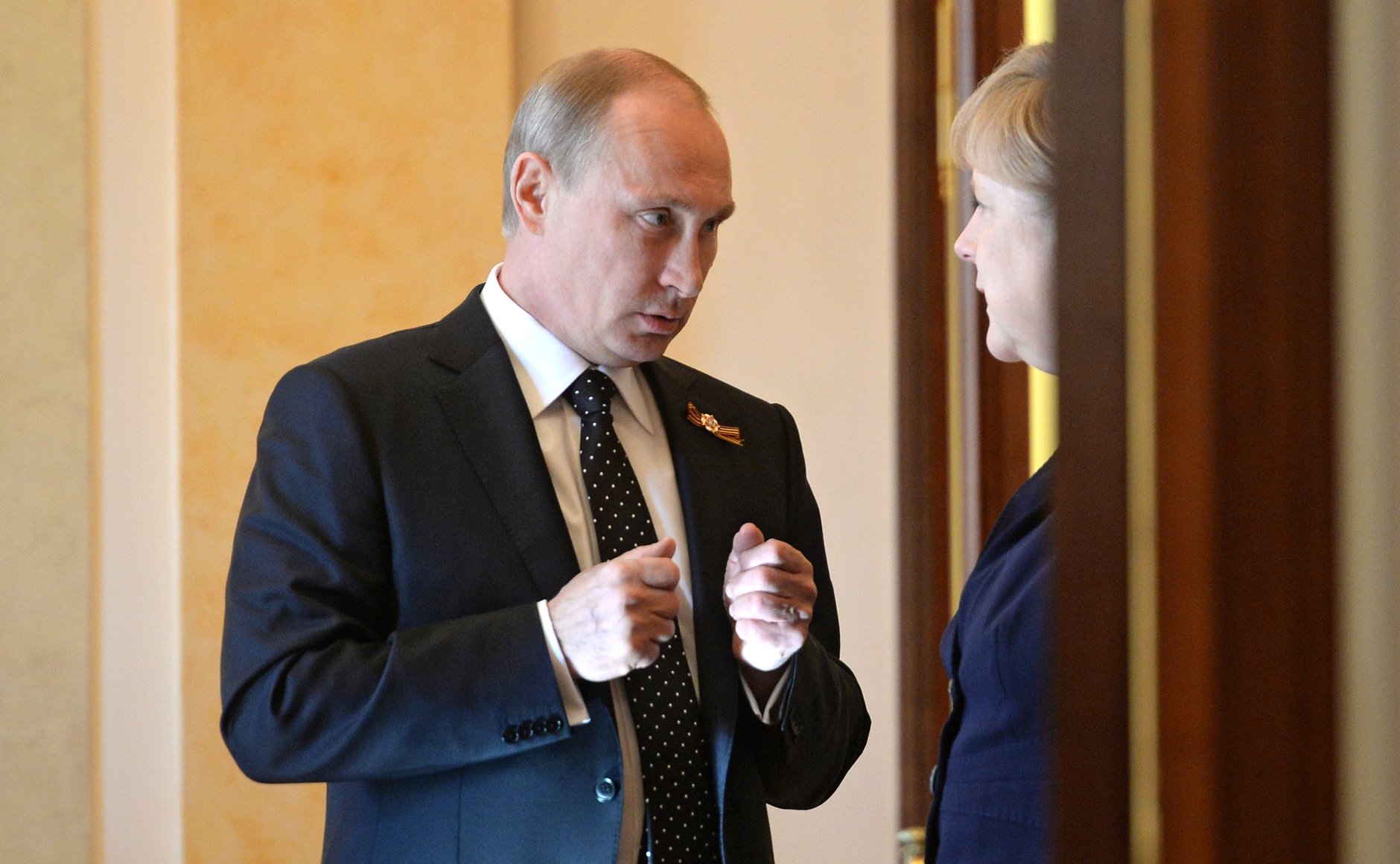
Russian President Vladimir Putin with German Chancellor Angela Merkel on May 10, 2015, at the Kremlin. (Photo from Russian government)
That being said, the party has not done as well as Merkel. It lost several regional elections this past fall and the leader of her Bavarian affiliate, Herr Seehofer, was nipping at her heels over her continued hardline economic sanctions against Russia relating to the Ukraine crisis and more particularly over her lenient admission of around one million Mideast immigrants.
One of the widely noted features of Angela Merkel’s ten-years-plus in office is that she has sidelined all possible competitors, not only within her party but even in the leading opposition party, the Socialists (SPD) with whom she has shared a coalition government.
Just what this means in practice I saw firsthand last Friday when I was in Berlin for an event organized and attended by SPD party officials and supporters. The event was a press briefing at the Bundestag announcing the European launch of Détente Now! (or “Neue Entspannungspolitik Jetzt!” in German) after its U.S. debut with an op-ed in The Nation. The launch on two continents was meant to draw attention to the overarching objective of establishing a new peaceful Atlanticism to replace the neocon-dominated Atlantic Alliance that has developed over the past two decades in a malignant way, bringing us into a New Cold War and, in the estimation of some of us, to the brink of a hot war.
Judged as a “press briefing,” the meeting was a failure. Out of the 20 or so participants, there were just three journalists. One came from Deutsche Welle – not to prepare a report or do interviews but to ask insulting questions, such as why Russian President Vladimir Putin’s signature was not on the appeal to reinstate the policy of rapprochement with Moscow that German Chancellor Willy Brandt had championed nearly a half century ago.
Explaining the History of Détente
The significance of the event lay elsewhere as several organizers of Détente Now! met with representatives of German church groups, pacifist movements, one former Greens politician, and American friends of the initiative (myself and one other). But the single most important politician in the room was SPD Bundestag member Ute Finckh-Kraemer, a longtime supporter of peaceful coexistence who keeps the memory of détente’s great thinker Egon Bahr shining bright.
Ute Finckh-Krämer is on the Bundestag’s Foreign Affairs Committee and is Deputy Chairperson of the Subcommittee on Arms Control and Disarmament. In that context, it was illuminating to hear her response to a somewhat hostile question: namely how can you consider implementing détente with Russia when Putin is doing so many nasty things like flying military aircraft around the Baltic Sea with their transponders turned off?
Finckh-Kraemer reminded the questioner of just how Entspannungspolitik originally came about, not at a time of easy relations with Moscow but amid dangerous tensions. Détente toward Moscow was first implemented by Willie Brandt in 1969 in response to the Soviet invasion of Czechoslovakia the preceding August to oust a reformist regime. Instead of imposing sanctions on the Soviet Union, Brandt sent his assistant, Egon Bahr, to Moscow for extensive talks with the Kremlin with plans to draw closer to them and seek to influence their behavior from within.
Finckh-Kraemer argued that what is urgently needed today is precisely what Brandt undertook in 1969, a policy of de-escalating tensions without preconditions. With her comments, Finckh-Kraemer demonstrated that within the SPD there are very able defenders of détente who understand with great clarity why it’s needed.
The problem is that the party as a whole is enthralled to discipline of the coalition government with the CDU and to its own internal hierarchy, where the most senior voices of the party, Frank-Walter Steinmeier and Sigmar Gabriel, lack charisma and seem to lack as well the courage to openly challenge the “group think” coming from Washington and passing down through Merkel to the whole German government.
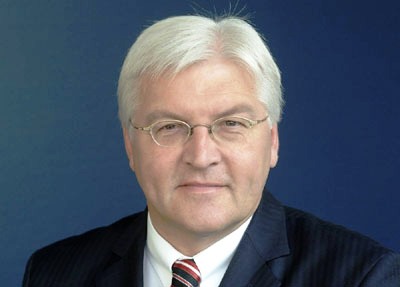
German Foreign Minister Frank-Walter Steinmeier
The apologists for Steinmeier explained that he, like Merkel, helped frame the still-uncompleted Minsk-2 accords regarding the Ukraine crisis in 2015 out of fear that the then-imminent defeat of Ukrainian forces in the Debaltsevo Cauldron might cause the United States to step up its military support for Kiev, risking an all-out proxy war with Russia that could spread the conflagration into Central Europe.
Since then, it would appear that Steinmeier and Merkel have remained fearful of breaking with Washington over the anti-Russian sanctions or over Syria lest the Obama administration do something reckless in its final weeks in office.
That is a different approach from what is happening in France where Republican candidate Francois Fillon – emboldened by Donald Trump’s U.S. victory – made improved relations with Russia a key element in his successful primary campaign in November.
Can Germany Shift?
In Germany, the question is: will the timorous SPD and the pigheaded CDU continue to hold to these New Cold War policies during the fall 2017 federal elections? The answer seems to be yes, unless the issue is seriously addressed now and a constituency arises favoring a more constructive approach toward Russia.
Within the SPD, the two main contenders for party leadership as candidates for Chancellor are Sigmar Gabriel, who is presently serving as Deputy Chancellor for Economics, and Martin Schulz, the outgoing President of the European Parliament. Of the two, Schulz is arguably the more “charismatic” if that is taken to mean outwardly self-confident, even strident. But Schulz brings with him the baggage of his association with the increasingly unpopular European Union bureaucracy.
During his years in the European Union’s institutions, Schulz was a defender of what is called “democracy promotion,” the West’s funding and training of activists who then challenge – through media propaganda and street protests – governments that are regarded as insufficiently liberal. In that context, Schulz has been arrogant and censorious towards Russia, very much in line with the policy that developed in Berlin over the same period.
Gabriel is less involved in foreign policy and lacks his own message regarding future relations with Russia.
Meanwhile, from my correspondence with leading experts on Russia within the SPD’s main think tank, the Friedrich Ebert Stiftung, I must conclude that people with a distinctly neocon or “liberal interventionist” viewpoint continue to rule the roost there. One does not get very far in the think tank by calling for a change of direction on Russia without being labeled “Putin Versteher,” a pejorative that roughly translates to “Putin sympathizer” and is fatal to any political career.
The same holds true for the Foundation’s foreign relations magazine, Internationale Politik und Gesellschaft (IPG). Reading through the issues since the U.S. presidential election, you could easily assume that the journal is edited by frustrated members of Hillary Clinton’s campaign. Its featured articles and authors are all anti-Trump and anti-détente. With this think tank and magazine, it’s hard to see how the SPD can develop a new foreign policy that deviates from Merkel’s anti-Russian orthodoxy.
Of course, there is more to German politics than the CDU and SPD, which together in the last elections gathered less than 60 percent of the votes. But the other parties also do not give much reason for hope that Germany can change direction.
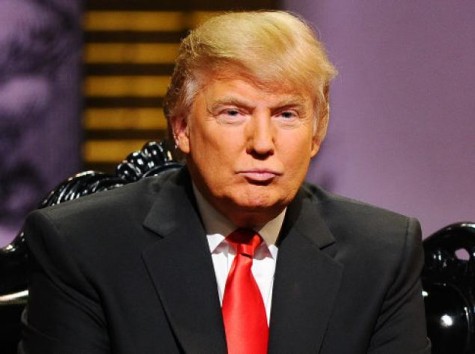
President-elect Donald Trump
Die Linke (the Left) has some very courageous thinkers and politicians on the issue of foreign policy, none more so that Bundestag Member Sahra Wagenknecht. But Die Linke is split internally and engaged in petty wrangling, so that its electoral performance remains well below its potential.
Meanwhile, the German Greens have been — from their very beginning, going back to the days of Daniel Cohn-Bendit and Joscha Fischer — a virulently anti-Russian force. There are signs that the party has some dissenting voices today on the Russia issue, but not enough to shift the course of German foreign policy.
That leaves the far-right Alternativ fuer Deutschland, which, like the Front National in France, is unequivocally in favor of normalizing relations with Russia. But the anti-immigration and other social issues espoused by the nationalist and xenophobic AfD puts them out of play for any coalition formations.
For all of the above reasons, it will take a small miracle for the Entspannungspolitik initiative to move forward and capture the imagination of the SPD and win at the polls in the autumn of 2017. That miracle could come either from France, where a veto on current E.U. foreign policy is virtually certain following the April elections and will position France as a direct competitor to Germany for leadership in the E.U. Or it may come from the U.S., depending on how the Trump administration handles relations with Germany and the E.U.
Subscribe to:
Posts (Atom)