Wednesday, March 23, 2016

Trump versus Hillary. Pragmatism verus Ideology: Posing the Right Questions

Neueste Ausgabe von Peter Lavelles Crosstalk diskutiert Trump versus Hillary kontrovers und sehr aufschlussreich
  • CrossTalk
    'CrossTalk' is RT's flagship program. This TV debate experience presents hot-topic discussions on politics, business, newsmakers, global trends, present-day conflicts, and dangers and challenges facing our world. Host Peter Lavelle poses hard, straightforward questions to his guests, and demands concrete answers in response. Peter's guests are politicians, journalists, scientists and decision-makers of all sorts – anyone who influences the decisions changing our world or plays a key role in forming public opinion.

https://www.rt.com/on-air/

Bernie Sanders to support Clinton if nominated

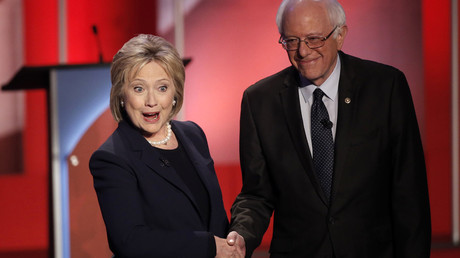
In the US, Bernie Sanders has promised to support Clinton if or when she's nominated. He, too, has voted for America's use of violence against countries when he thinks it is "right." He says Obama has done "a great job." RT.

Obama in Cuba… History in the Faking by FINIAN CUNNINGHAM


Obama in Cuba… History in the Faking


US President Obama said his three-day state visit to Cuba was an «historic opportunity for the two countries to build relations».
As he arrived onboard Air Force One with his family, Obama announced: «I look forward to meeting and hearing directly from the Cuban people».
Such hubris. One can imagine the uproar in Washington if Cuban President Raul Castro made a similar condescending appeal to the American public, bypassing their rulers.
The New York Times headlined: «Obama lands in Cuba with a pledge to listen to its people».
It all sounds momentous and conciliatory. Sadly, it is not. US media hype belies the fact that Washington’s view of Cuba is one-sided and grotesquely distorted.
The fact is that Washington continues to impose a brutal trade embargo on the impoverished island of 11 million people. That is nothing short of economic warfare and for alleged reasons that many people can’t even remember. The official justifications for the embargo are suitably forgettable because the real reason is simply this: might is right, to crush any form of political dissent in Washington’s presumed backyard.
The US also continues to occupy Cuban territory with its military base-torture center at Guantanamo Bay.
On both counts, these fundamental violations of Cuban sovereignty are not up for discussion, according to imperious Washington.
But Cuba is expected to give way on US allegations of crimping democratic rights and freedom of speech. In any case, those Cuban offenses are relatively minor in the scale of world-class crimes committed by Washington, from its relentless subversion of foreign countries to all-out wars of aggression.
That dissonance in reality captures the nub of the problem: official US arrogance and self-entitlement to trample over weaker nations, without a hint of remorse.
Official US hubris is so rampant that Obama’s tour of Cuba is turned into a farcical narrative of Washington bringing change and hope, instead of it being a moment for Americans to genuinely reappraise their country’s history and its pernicious role in international relations.
Fawning media reports on Obama’s visit tell us it is the first time since a sitting American president visited the Caribbean island state in nearly 90 years. That was when Calvin Coolidge landed in 1928 – aboard a US warship. That little bit of information tends to be overlooked, yet it hints at the sinister background.
US-Cuba relations are indeed replete with historical significance. When the US took possession of Cuba in 1898 after the Spanish-American War, it marked the rise of Yankee imperialism in the hemisphere under which Latin American countries would be routinely carved up and subjugated to Wall Street capitalism. Dictators and death squads abounded and millions were consigned to horrific violence and deprivation.
When Fidel Castro, Che Guevara and Fidel’s brother Raul led the Cuban revolution in 1959 they managed to extricate the country from a US-backed tyrant. Like so many other US-backed despot-regimes, Cuba had been a byword for poverty and barbarity for the masses.
The Cuban revolution defied this fate and became a model for social development, a country where hunger and disease would become abolished, and where free education and healthcare were enshrined. Today, despite more than five decades of a vicious economic blockade, Cubans have a life expectancy better than most US citizens.
Socialist Cuba embraced the Soviet Union only after the island was attacked by the US in the Bay of Pigs invasion of 1961. That failed invasion was an embarrassing fiasco for the Central Intelligence Agency. Nevertheless, it was an act of war by the US against its southern neighbor.
Over the next decades, there would be countless other acts of war committed by the US on Cuba, including dozens of attempted assassinations on President Fidel Castro, acts of terror and sabotage, such as the blowing up of a Cuban civilian airliner in 1976, as well as large-scale poisoning of agricultural crops and animals.
Another historical connection conveniently omitted by mass media is that Cuba was pivotal in the rise of the modern US «deep state». The real, shadow government of the US – dominated by the military-industrial complex, Wall Street banks and corporate power – was born out of the obsession to crush the Cuban revolution.
The CIA under director Allen Dulles and the US ruling clique never forgave President John F Kennedy for refusing to send in a large-scale military invasion to salvage the Bay of Pigs debacle. JFK’s subsequent policy of rapprochement with Castro, as with other Third World revolutionary governments at the time, was seen by the CIA, the bankers and industrialists as a betrayal of American capitalism. It would cost Kennedy his life when CIA snipers blew his head off in Dallas in November 1963.
It is arguable that for the past 50 years, US democracy has ceased to exist. Presidents come and go like so much puppets, while the unelected, unaccountable deep state exercises the real power. Is it any wonder that US social conditions continue to deteriorate year after year, with poverty and inequality at runaway record levels? Because since the CIA coup in 1963, US democracy is a window-dressing charade to conceal the wielding of corporate power against the interests of the people.
Cuba is central to the hidden history of the demise of US democracy. But you would never know from reading mainstream media coverage of Obama’s «historic» visit to the island this week.
The refusal to end the US trade embargo on Cuba and return Guantanamo Bay are key indicators that Washington remains an unrepentant offender regime.

Terror Needed to Reassure EU-Unity??? Possible Background


EU Urges UN to Join Anti-Russia Sanctions
ALEX GORKA | 23.03.2016 | WORLD | BUSINESS

EU Urges UN to Join Anti-Russia Sanctions


The European Union called on March 18 for more countries to impose sanctions on Russia over Crimea joining the Russian Federation two years ago.
In a statement issued on the anniversary of Crimea’s formal accession to Russia, the EU said it will maintain its sanctions that ban European companies from investing in Russian Black Sea oil and gas exploration.
«The European Union remains committed to fully implementing its non-recognition policy, including through restrictive measures», the European Council, which represents EU governments, said. «The EU calls again on UN member states to consider similar non-recognition measures».
Separately, NATO Secretary-General Jens Stoltenberg urged the EU and United States to maintain their broader economic sanctions against Russia over its support for self-declared republics in the eastern part of Ukraine. «It is important that we continue the economic sanctions», Stoltenberg told an event in Brussels.
The Crimean Peninsula became a part of the Russian Federation on March 18, 2014 after the referendum carried out on March 16 showed 97 percent of voters supported joining Russia. 
The Kremlin responded by saying that the issue of Crimea could not be «a matter of negotiations or international contacts». «Our position is known: this is a region of the Russian Federation. Russia has not discussed and will never discuss its regions with anyone», President Vladimir Putin's spokesman Dmitry Peskov said in a teleconference with reporters.
«In this case we should treat with respect the expression of the will of Crimean residents and the decision which was taken two years ago», he emphasized.
The 28-nation EU imposed its Crimea sanctions in July 2014 and then tightened them in December 2014, banning EU citizens from buying or financing companies in Crimea. The United States, Japan and some other major economies, including Australia and Canada, also imposed sanctions on Russia, whereas many other economically developed nations, like, for instance, China and Brazil, refused to join.
It should be noted that the extension of anti-Russian sanctions is a very much divisive issue inside the European Union.
Hungary and Italy said last week they would not agree to extend the EU’s toughest economic sanctions on Russia, the EU’s major energy supplier, without discussions before the summer.
Germany’s Economy Minister Sigmar Gabriel called on March 17 for the EU to try to create conditions by this summer to lift sanctions.
France’s Minister for the Economy, Industry and Digital Affairs Emmanuel Macron said in January that Paris will look to assist in the lifting of Western backed sanctions on Russia by the summer.
Serbia, a nation in talks on joining the EU, has firmly rejected the idea of joining the sanctions regime.
US Republican Senator John McCain has the reputation of hawk calling for getting tough on Russia. But even he had to admit the fact that the sanctions are becoming increasingly unpopular inside the EU. «I think there is clearly a lot of conversation amongst the Europeans about lifting the sanctions… There are many countries that are looking for the exit sign», the Senator said in February. «I have been hearing it for months, that there is enormous pressure in a lot of countries, particularly Germany, to lift the sanctions», he noted.
At that the prominent US politician believes it is up to Washington if and when the sanctions are eventually lifted, saying that the final decision will «to some degree depend on American leadership». Actually, the US right-wing politician openly stated the EU decision on the sanctions is made under US pressure.
Indeed, the EU is following the US. President Obama announced American sanctions against Russia are to be prolonged for another year on March 2.
The EU obediently chimed in 16 days later.
The attempts of the EU to influence other countries into joining the anti-Russia sanctions regime look especially ridiculous against the organization’s failure to make the tiny nation of San Marino, an enclaved microstate surrounded by Italy, comply with the EU’s demands. The republic is not officially part of the European Union and does not face Russia's food embargo. According to Rossiyskaya Gazeta, a Russian government daily newspaper of record which publishes the official decrees, statements and documents of state bodies, San Marino and Russia signed an export agreement on March 18 during the International Economic Forum of CIS countries.
San Marino’s Minister of Regional Development and International Economic Cooperation Antonella Mularoni attended the forum. Now this European country will export to Russia a range of products, including Parmesan cheese and premium meat products like local Parma type ham. «There are 24 dairies in the republic, and a lot of enterprises engaged in meat smoking», the executive director of the national wholesalers association Vladimir Lishchuk told Rossiyskaya Gazeta. According to him, imports will take the place of illegal goods bypassing the Russian food embargo. Russia’s food safety watchdog Rosselkhoznadzor said it would monitor food imports from San Marino to prevent re-exports of sanctioned products from neighboring EU countries. Russia introduced the food embargo in August 2014 in response to Western sanctions. The ban applied to meat, poultry and fish, cheese, milk, fruit and vegetables from the United States, the EU, Australia, Canada, Norway, Japan and a number of other countries. According to Russia's Ministry of Economic Development, the import of banned products has fallen by nearly half to $6 billion in the first six months of 2015. Overall imports from the EU have fallen by 45 percent.
Evidently, the EU’s call for UN members to join the sanctions is an effort doomed to go down the drain. The European Union has no leverage strong enough to make world nations comply. 
The organization itself is not in a strong position. Looks like it has seen its best days. Brussels is facing a host of acute problems. Many of them seem to be a tall order, for instance: the flows of migrants, the economic inequality of the Union’s members, debt problem and the conflicting views of the UK and Germany on European integration, to name a few.
Doing away with the divisive issue of anti-Russia sanctions could provide an impetus to making progress in other fields, but Brussels prefers a different approach.
The EU statement shows the Union’s leadership is adamant in its desire to go down the slippery slope risking a revolt among the member-states with tensions running already high inside «the European family».

Tuesday, March 22, 2016

Göttin bewahre uns vor solchen Frauen! - Willy Wimmer Adjusted

Analyse von Willy Wimmer: Berlin gehört "auf die Couch"

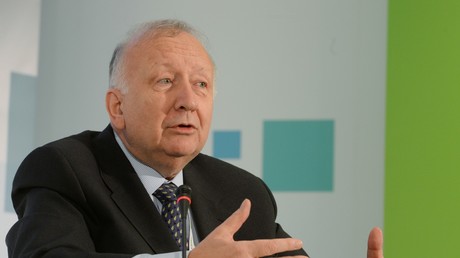
Willy Wimmer, Staatssektretär a.D.
Die vergangenen Landtagswahlen sorgen für ein politisches Erdbeben. Staatssekretär a.D. Willy Wimmer beleuchtet die Hintergründe des Wahlausgangs. Er fragt, wie die innenpolitische Verfasstheit der Republik mit der kriegerischen Außenpolitik der USA zusammenhängt. "Der von den Vereinigten Staaten zu verantwortende 'Todesstreifen' zwischen Kabul und Timbuktu lässt die betroffenen Menschen in das europäische 'Herz der Finsternis' fliehen."
Die Menschen im Land treibt eine Frage um: Was kann getan werden, um den erkennbaren politischen Irrsinn zu stoppen und eine normale staatliche Politik im Inneren und Äußeren wieder herzustellen? Die Antwort darauf ist schwierig bis unmöglich. Mit großer Wahrscheinlichkeit gibt es keine zufriedenstellende Antwort. Die Umfragen, die den täglichen politischen Betrieb steuern, scheinen auf einem anderen Stern erhoben zu werden. Wenn im Freundes- und Bekanntenkreis darüber gesprochen wird, sieht das alles anders aus.
Wahlen bringen es auch nicht, wenn die politisch Verantwortlichen sich breitbeinig hinstellen und nur ihre Ignoranz manifestieren. Dabei geben die Wahlen noch die verlässlichste Antwort auf alle Fragen. Lösungen sind damit aber keinesfalls verbunden. Große Koalitionen, für Notfälle gedacht, können kaum noch Regierungen tragen. Dafür ist der rasante Niedergang der ehemals so stolzen Sozialdemokratischen Partei verantwortlich. Baden-Württemberg und Sachsen-Anhalt sind für die SPD der direkte Weg in die Marginalisierung und die Bedeutungslosigkeit. Für die SPD drohen überall "bayrische Verhältnisse."
Die CDU kann sich auf dem absehbaren Schicksal der SPD nicht ausruhen oder gar mit Häme den weiteren Weg der SPD verfolgen. Dafür gibt es keinen Grund, denn im Staatsinteresse muss die CDU sehen, wie sehr sie auf die SPD für den Fall der Fälle angewiesen ist. Außerdem hängt ihr die AfD in ganz anderer Weise an den Fersen. Bislang waren konservative Parteigründungen mit Hinweisen auf "SS-Vergangenheiten" hinreichend schnell und nachhaltig zu diskreditieren.
Wenn man sich die AfD heute ansieht, dann stellt man zweierlei fest. Ein Wählerpotential, das die bisherige Linkspartei ebenso umfasst wie Nicht-Wähler oder Anhänger der CDU oder der SPD. Ein Blick auf das westdeutsche Führungspersonal macht deutlich, dass es sich um respektable "Freunde" handelt, vor allem aus der ehemaligen CDU auf der Ebene von städtischen oder ländlichen Strukturen.
An Verhetzungspotential mit Hilfe der Zensurpresse ist da kaum zu denken. Soweit Führungspersonal aus den ostdeutschen Ländern bei der AfD eine Rolle spielt, ist das oftmals jenseits jeder Gewöhnungsfähigkeit und als problematisch anzusehen, weil deren Äußerungen so sind, wie sie sind. Natürlich kommt es jetzt darauf an, was diese "Aufwindpartei" jetzt aus der erstaunlichen Wählerunterstützung macht.
Warum soll sie sich nicht selbst "Beine stellen", wie andere das auch geschafft haben? Gewiss ist das nicht und hierin liegt für die CDU die größte Gefahr. Die AfD erweckt den Eindruck, dass die Menschen ungehindert ihre Belange ansprechen können. Genau das, was in der Merkel-CDU bis in den letzten Kreisverband abgestellt zu sein scheint.
Demokratie und nicht "Volksdemokratie" lebt aber von dem bewussten Staatsbürger, der heute sofort nach "Berlin verpfiffen wird", wenn er vor Ort seinen Mund aufmacht. Alles könnte sich zu einer Gefahr für Frau Dr. Merkel entwickeln und deshalb wird sofort "scharf geschossen". Der letzte Parteitag in Karlsruhe im Dezember 2015 hätte genau so gut in einer Volksdemokratie wie in den USA stattfinden können. Regie war alles. Dabei stören Staatsbürger, die es aber zu Hauf in Deutschland gibt. Sie werden in der AfD eine ihnen zustehende Perspektive finden.
Da rollt etwas auf die CDU zu, das mehr als einen gesundbetenden Generalsekretär verlangt. Ohne eine Emanzipation der CDU von ihrer Parteivorsitzenden wird die Operation nicht gelingen. Dann ist aber der weitere Weg absehbar.
Schon wieder ist es Berlin, und es ist nicht gut so
Um erst gar keine Nostalgie aufkommen zu lassen: Bonn wäre kaum anders. Das "alte Bonn" hatte den "Hauch und Charme" eines fähigen Staates. Man hätte im Traum nicht daran gedacht, dass ein Bonner Ministerium in deutscher Staatstradition nicht in der Lage gewesen wäre, jeden Gesetzentwurf fürs Parlament auf den Weg zu bringen. Für die Staatsbürger war das die Gewissheit der demokratischen Verantwortlichkeit des Staates und ihrer eigenen Einwirkungsmöglichkeit.
So etwas gibt es heute noch in Bayern, weil bayrische Staatlichkeit in Deutschland von besonderer Qualität ist. Ohne die bayrische Staatsverwaltung wäre auch Bonn nicht in der Lage gewesen, die Dinge ordentlich zu erledigen.
Nach dem Ende des Kalten Krieges ging ein Tsunami über Westeuropa und dieser Umsturz hatte einen Namen: „shareholder value“ bestimmte fortan das US-amerikanische Interesse an Westeuropa und nicht mehr die "soziale Marktwirtschaft". Das hatte den "schlanken Staat" zur Folge und die Unterordnung Westeuropas und dann bis zur russischen Grenze unter die Interessen von "Corporate America".
Man muss sich nur den US-amerikanischen Präsidentschaftswahlkampf vor Augen führen, und die US-amerikanischen Stimmen auffangen, die die dortige Demokratie in Scherben sehen. Bei uns ist das nicht anders. Da muss man nicht wie das Kaninchen auf die Schlange TTIP starren. Das ist das Ende der parlamentarischen Demokratie und dazu reicht schon der von Vizekanzler Gabriel ins Gespräch gebrachte internationale Handelsgerichtshof.
Denn auch der wird die Gewinn-Erwartungspläne der US-amerikanischen Globalunternehmen zum Maßstab über den Volkswillen setzen. Vielleicht erschöpft sich auch in diesem Umstand die Rolle des deutschen Vizekanzlers in Anbetracht der Dinge, die bei der näheren Betrachtung des Großraumes Hannover ins Auge fallen.
In Berlin treffen uns die Entwicklungen mit aller Wucht
Der Staat, der nach seinem Umzug von Bonn in Berlin angekommen ist, ist nun einmal von ganz anderer Qualität als das, was in Bonn den Umzugskartons anvertraut worden war. Es war nicht der Umzug nach Berlin alleine. Gleichzeitig wurden Kompetenzen des deutschen Staates nach Brüssel abgegeben, die dort nie angekommen sind, weil sie zuvor von Lobbygruppen jedweder Couleur im Stile Washingtons abgefangen worden sind.
Nicht der deutsche Staatsbürger sondern die Washingtoner Think Tanks und NGO's waren der Maßstab. Bei der Bankenpleite im Stile Lehman Bothers wurde schlagartig klar, dass selbst das stolze deutsche Finanzministerium auf US-amerikanischen Anwaltskrücken laufen musste. Schlimmer kann ein Staat nicht abgewrackt werden. Das ist das heutige Berlin, das wie ein Raumschiff über dem Lande schwebt und sich in dieser Rolle auch noch gefällt.
Nicht auszuschließen ist, dass wegen des inneren Eingeständnisses darüber, wie prekär die eigene Lage ist, auch das durch nichts auf russischer Seite gerechtfertigte massive Vorgehen gegenüber Moskau zu erklären sein dürfte.
Russland unter Präsident Putin macht deutlich, dass es einen handlungsfähigen Staat durchaus auch heute noch geben kann, unbeschadet der eigenen Zurückhaltung, was die Nicht-Einmischung in die inneren Angelegenheiten eines anderen Staates anbetrifft. Aber genau dieser Blick auf Moskau macht für Berlin und damit für Deutschland deutlich, dass über unser Schicksal eher in Washington und vielleicht Brüssel, aber keinesfalls in Berlin entschieden wird.
Man muss nichts von dem, was in Russland geschieht, in Deutschland gutheißen. Aber darüber haben die Russen zu befinden, und die scheinen derzeit weniger gespalten und innerlich zerrissen zu sein, wie das leider durch die Bundeskanzlerin für Deutschland und die EU-Staaten bewerkstelligt worden ist. Warum also nicht einmal über den Zaun blicken und sich fragen, woran das eine oder andere liegt?
Der Westen als Hort der organisierten Ausweglosigkeit
Wir sehen es seit dem Sommer 2015 mit aller Deutlichkeit: Unsere eigene Politik schlägt mit aller Dramatik auf uns zurück und erschüttert alles. Der von den Vereinigten Staaten zu verantwortende "Todesstreifen" zwischen Kabul und Timbuktu lässt die betroffenen Menschen in das europäische "Herz der Finsternis" fliehen.
Wir nehmen südlich und südöstlich unserer Grenzen mehreren hundert Millionen Menschen die Lebensgrundlage und fallen den Tätern deshalb nicht in den Arm, weil wir zu Hilfsleistungen herangezogen werden und uns durch die deutsche Verteidigungsministerin auch noch andienen.
Wenn der US-amerikanische Präsident Obama in wenigen Wochen tatsächlich nach Hannover kommt, dann sollte der in China herumtönende Bundespräsident oder die deutsche Bundeskanzlerin vor laufenden Kameras sowohl ein Ende der verbrecherischen US-amerikanischen Politik als auch die Übernahme der Flüchtlingsströme durch die USA einfordern.
Es ist natürlich nicht zu verkennen, wie diese US-Politik in die Karten der europäischen Machthaber spielt. Diese trauen sich nicht, dem US-amerikanischen Präsidenten das zu sagen, was gesagt werden müsste. Fluchtursachen werden durch die deutsche Bundeskanzlerin nur bekämpft, wenn sie sich gegen aufbegehrende eigene Staatsbürger in Stellung bringen lassen. Damit erleichtert man über transatlantische Netzwerke den Vereinigten Staaten die Fortsetzung einer mörderischen Politik und bleibt innenpolitisch weiter am Ruder, demnächst mit den Grünen als der deutschen Kriegspartei par excellence.
Wir können uns innerstaatlich auf die Hinterbeine stellen wie wir wollen: Die Kriegskarawane zieht weiter und sie opfert die Menschen zwischen Kabul und Timbuktu und darüber hinaus. Wir sind dann noch nicht einmal mehr fähig, unsere eigenen staatlichen Grenzen zu schützen und diese werden zum Einfallstor von Terroristen.
Das Elend nimmt aber kein Ende
Wir sind etwas atemlos, was die Betrachtung des US-amerikanischen Präsidentschaftswahlkampfes anbelangt. Frau Clinton steht für eine auf Krieg gebürstete Politik. "Wir sahen, wir kamen und wir killten", ist doch wohl das neue Motto der Ehefrau eines US-amerikanischen Präsidenten, der den Krieg wieder nach Europa brachte.
Was Gutes für uns? Da man in Europa Herrn Sanders nicht wählten kann, bleibt nur noch der Blick auf die Republikaner übrig. Alles, außer McCain, scheint da die einzige Hoffnung zu sein, denn ein Krieg gegen Russland wäre für uns alle das Ende. Genau das aber könnte uns blühen, wenn bestimmte Kräfte in Washington reüssieren sollten. Gott bewahre uns vor solchen Freunden.
Robert Kennedy: Harte Abrechnung mit unmoralischer US-Politik in Syrien
Robert Kennedy jr. hat in einem bemerkenswerten Essay dargelegt, welch unselige Rolle die USA in Syrien und im Nahen Osten bisher gespielt hätten: Die USA hätten im Kampf ums Öl ihre Werte schamlos verraten und mehrfach Regierungen gestürzt. Die Folge: Der Hass der Araber auf den Westen, weil ihnen das Recht auf Selbstbestimmung verwehrt wurde.
Unter dem Titel „Warum uns die Araber nicht in Syrien haben wollen“ hat der Sohn von Robert Kennedy in Politico einen äußerst lesenswerten Essay geschrieben. Darin erklärt Kennedy im Detail, wie die US-Regierungen und Geheimdienste in vielen Ländern Staatsstreiche verübt und „islamistische Revolutionen“ angezettelt haben, um sich des Zugriffs auf das Eröl zu versichern. Ganz bewusst hätten die Amerikaner die religiöse Komponente in die Konflikte getragen.
Er schreibt:
„Während der 1950er Jahre wiesen Präsident Eisenhower und die Dulles Brüder – CIA Chef Allen Dulles und Staatssekretär John Foster Dulles – sowjetische Vertragsvorschläge zurück, den Nahen Osten im Kalten Krieg als neutrale Zone zu belassen und Araber, die arabische Welt regieren zu lassen. Stattdessen lancierten sie einen heimlichen Krieg gegen arabischen Nationalismus – welchen Allen Dulles mit dem Kommunismus gleichsetzte – vor allem, weil eine arabische Selbstverwaltung ein Entgegenkommen beim Öl gefährdete. Sie schleusten geheime amerikanische Militärunterstützung zu Tyrannen in Saudi Arabien, Jordanien, dem Irak und in den Libanon, bevorzugt Marionetten mit konservativen dschihadistischen Ideologien, welche sie als wirksames Gegenmittel für den sowjetischen Marxismus betrachteten. Bei einem Treffen des Weißen Hauses zwischen dem Planungschef der CIA, Frank Wisner, und John Foster Dulles im September 1957, riet Eisenhower der Agentur laut eines Memos, welches durch seinen Stabssekretär General Andrew J. Goodpaster aufgezeichnet wurde: „Wir sollten alles Mögliche tun, um den „Heiligen Krieg“-Aspekt zu betonen.“
Genau nach dieser Methode seien die Amerikaner auch in Syrien vorgegangen. Die Erklärung des Syrien-Krieges findet sich, wenn man etwas weiter in der Geschichte zurückblickt:
Die CIA begann ihre aktiven Einmischungen in Syrien im Jahr 1949 – gerade ein Jahr nach der Gründung der Agentur. Syrische Patrioten hatten den Nazis den Kampf erklärt, ihre Vichy-französischen Kolonialherren verstoßen und eine fragile säkulare Demokratie nach dem amerikanischen Model aufgebaut. Doch im März 1949 zögerte Syriens demokratisch gewählter Präsident Shukri-al-Quawatli, die Transarabische Pipeline – ein amerikanisches Projekt, das die Ölfelder Saudi Arabiens über Syrien mit dem Hafen vom Libanon verbinden sollte – zu bewilligen. In seinem Buch, CIA – Die ganze Geschichte (i. O. Legacy of Ashes) erzählt CIA-Historiker Tim Weiner, wie die CIA in Vergeltung für Al-Qawatlis fehlenden Enthusiasmus bezüglich der US-Pipeline einen Coup arrangierte, der Al-Qawatli durch einen vom CIA handverlesenen Diktator ersetzte – einen überführten Schwindler, namens Husni al-Za’im. Al-Za’im hatte kaum Zeit, das Parlament aufzulösen und die amerikanische Pipeline zu bewilligen bevor seine Landsleute sich seiner nach viereinhalb Monaten entledigten.
Nach mehreren Konterrevolutionen im destabilisierten Syrien versuchten sich die Syrer in 1955 erneut an einer Demokratie, wählten wieder al-Quwatli und seine Nationalistische Partei. Al-Quwatli war noch immer ein Neutralist des Kalten Krieges, jedoch, betrogen durch die amerikanische Beteiligung in seiner Amtsenthebung, neigte er sich nun eher dem sowjetischen Lager zu. Diese Haltung ließ CIA-Chef Dulles verkünden, dass „Syrien reif ist für einen Coup“ und seine Coup-Zauberer Kim Roosevelt und Rocky Stone nach Damaskus zu senden.
Kennedy sieht in dem Verhalten der US-Regierung und der Geheimdienste den Grund, warum die Araber den Amerikanern so feindselig gegenüberstehen.
Kennedy zieht ein ernüchterndes Fazit über die geopolitische Position der USA im Nahen Osten. Die Machenschaften der Dienste und die Abkehr von den amerikanischen Werten hätten die Rolle der Weltmacht im Nahen Osten schwer beschädigt – und sie vom möglichen Partner zum Feind gemacht:
Sie (die Araber, Anm. d. Red.) hassen nicht „unsere Freiheiten“. Sie hassen, dass wir unsere Ideale in ihren eigenen Ländern betrogen haben – für Öl.
Teils, weil mein Vater von einem Araber ermordet wurde, habe ich mich bemüht die Auswirkungen der US-Politik in Nahost zu verstehen, insbesondere die Faktoren, die manchmal blutdurstige Reaktionen der islamischen Welt gegen unser Land antreiben.
Während wir uns auf den Aufstieg des Islamischen Staates konzentrieren und nach der Quelle der Grausamkeit suchen, die so viele unschuldige Leben in Paris und San Bernardino kostete, sollten wir vielleicht über die bequeme Erklärung durch Religion und Ideologie hinausschauen. Stattdessen sollten wir die komplexeren Begründungen durch Geschichte und Öl untersuchen – und erkennen, dass wir den anklagenden Finger oft auf uns selbst richten müssten.
Amerikas unrühmliche Vergangenheit von gewalttätigen Eingriffen in Syrien – von der nur wenige Amerikaner, jedoch viele Syrer wissen – hat einen fruchtbaren Nährboden für den islamistischen Dschihadismus hinterlassen, der nun jede wirkungsvolle Reaktion unserer Regierung auf die Herausforderung, die ISIL darstellt, verkompliziert.
(…)
Um diese Dynamik zu verstehen, muss man die Geschichte aus Syriens Perspektive betrachten und insbesondere die Saat des aktuellen Konflikts. Lange vor unserer Besetzung des Iraks in 2003, die den sunnitischen Aufstand auslöste, der sich nun in den Islamischen Staat umgewandelt hat, nährte die CIA den gewalttätigen Dschihadismus als eine Waffe des Kalten Krieges und belud die amerikanisch-syrischen Beziehungen mit giftigem Ballast.
Das geschah nicht ohne Kontroversen zu Hause. Im Juli 1957, nach einem gescheiterten CIA-Coup in Syrien, verärgerte mein Onkel Sen. John F. Kennedy, Eisenhowers Weißes Haus, die Führer beider politischer Parteien und unsere europäischen Verbündeten mit einer Meilenstein-Rede, die das Recht zur Selbstregierung in Arabischen Welt befürwortete und auch ein Ende der imperialistischen Einmischungen Amerikas in den Arabischen Ländern.
Während meines gesamten Lebens und insbesondere während meiner regelmäßigen Reisen in den Nahen Osten, haben sich viele Araber dieser Rede wohlwollend erinnert, als das klarste Statement des Idealismus, den sie von den USA erwarteten.
Kennedys Rede war ein Appell, um Amerika an die hohen Werte zu erinnern, die unser Land in der Atlantik-Charta verfochten hatte; die formale Zusicherung, dass alle ehemaligen europäischen Kolonien nach dem zweiten Weltkrieg das Recht zur Selbstbestimmung haben würden. Roosevelt hatte Winston Churchill und die anderen Anführer der Alliierten unter Druck gesetzt, die Atlantik-Charta zu unterschreiben, als Voraussetzung der US-Unterstützung im europäischen Krieg gegen den Faschismus.
Doch dank Allen Dulles und der CIA, deren außenpolitische Intrigen oft direkt mit der verkündeten Politik unserer Nation haderten, wurde der Weg, der durch die Atlantik-Charta skizziert wurde, nicht befolgt. In 1957 saß mein Großvater, Botschafter Joseph P. Kennedy, in einem geheimen Komitee, das damit beauftragt wurde, den klandestinen Missstand der CIA im Nahen Osten zu untersuchen. Der sogenannte „Bruce-Lovett-Bericht“, den er mitunterzeichnete, beschrieb CIA-Komplotte in Jordanien, Syrien, dem Iran und Ägypten, welche auf arabischen Straßen hinlänglich bekannt waren, jedoch nahezu ungehört von der amerikanischen Öffentlichkeit, die die Leugnung der Regierung für bare Münze nahmen.
Der Bericht machte die CIA für den grassierenden Anti-Amerikanismus verantwortlich, der zu dieser Zeit mysteriöser Weise „in den vielen Ländern der Welt heute“ Wurzeln schlug.
Der „Bruce-Lovett-Bericht“ zeigte auf, dass derlei Einmischungen im Gegensatz zu amerikanischen Werten standen und Amerikas internationale Führung und moralische Autorität ohne das Wissen des amerikanischen Volkes kompromittiert hatten.
Der Bericht sagte außerdem aus, dass die CIA nie durchdacht hatte, wie wir solche Einmischungen handhaben würden, wenn eine fremde Regierung sie in unserem Land dirigieren würde.
Das ist die blutige Geschichte, die moderne Befürworter wie George W. Bush, Ted Cruz und Marc Rubio übersehen, wenn sie ihre narzisstischen Redewendungen rezitieren, dass nahöstliche Nationalisten „uns für unsere Freiheiten hassen.“ Zum größten Teil tun sie das nämlich nicht. Stattdessen hassen sie uns für die Art und Weise, in der wir diese Freiheiten innerhalb ihrer Grenzen verraten haben.

http://deutsche-wirtschafts-nachrichten.de/2016/03/22/robert-kennedy-knallharte-abrechnung-mit-unmoralischer-us-politik-in-syrien/

The Murder of Chávez. The CIA and DEA Cover Their Tracks


The Murder of Chávez. The CIA and DEA Cover Their Tracks


The journalist Eva Golinger (US – Venezuela) has repeatedly questioned the suspicious circumstances surrounding the death of Venezuelan President Hugo Chávez. The website aporrea.org quotes her statement: «Everything that Washington was trying to achieve during the administration of Hugo Chávez is today being realized in his absence. The cancerous illness from which Chávez suffered was unusually aggressive and suspicious, and every day turns up more evidence that it is possible Chávez was murdered».
The first signs of cancer were found in Chávez in May 2011. In June he underwent two surgeries at a specialized center in Havana. His Cuban surgeons found and removed a malignant tumor that had metastasized with sinister persistence, despite all preventive measures. New operations were needed. This athletic man, who was full of strength and physically robust, passed away on March 5, 2013 at the age of 58.
Expanding on this topic, Eva Golinger writes, «It is enough to know that one man who had for several years been one of his closest aides, who was often alone with him and brought him his food, coffee, and water, is now a protected witness in the United States. Soon Leamsy Salazar’s covert actions and close collaboration with intelligence agencies in Washington will be revealed».
The name of Hugo Chávez’s chief bodyguard was rarely mentioned in the media while the president was alive. Due to the nature of his work Leamsy Villafaña Salazar shunned publicity, did not like to be photographed, and tried to stay in the shadows. Chávez considered him to be a reliable, incorruptible, and professionally trained Bolivarian officer. This was precisely how the president described him on a TV broadcast about the attempted pro-American coup in April 2002. Conspirators managed to depose Chávez for three days, but with the support of the people and army, he triumphantly returned to the presidential Miraflores palace. From the roof of his palace he was welcomed by the military, among whom Salazar was readily visible, victoriously waving the Venezuelan flag. That image became the symbol of the victory over the counter-revolution.
Oddly enough, little is known about Salazar, and mostly from tight-lipped American sources. He was born in 1974 to a large family living in Petare, a slum district in the Venezuelan capital. After high school he entered the naval academy, graduating in 1998. He was a middling student, finishing 27th out of his class of 55. Nonetheless, in 1999 Salazar was tapped to be a presidential honor guard. Tito Rincón Bravo, Venezuela’s minister of defense and father of Leamsy’s first wife, played an important role in this appointment. Salazar became a personal assistant to Chávez. That job came with a very intense workload, due to the frantic pace of the president’s life.
After the events of 2002, Salazar was unexpectedly posted to a naval base in the provinces – in Punto Fijo (in Falcón State), but in 2006 Chávez ordered Salazar’s return to his former duties in the security detail.
Following Chávez’s death, Salazar provided security for the president of the National Assembly, Diosdado Cabello. But oddities in Salazar’s behavior made Cabello uneasy. At that time debate was still raging about the causes of Chávez’s death and the people who could have been involved, and so Cabello eventually asked the minister of defense to transfer Salazar to another post. At some point during this period Salazar married once again. His new wife was Anabel Linares Leal, a graduate of the military academy who had been presented with her officer’s sword from Chávez’s own hands. For a while Anabel worked with the financial accounts of the Venezuelan armed forces at Banco Bicentenario, which means that she had access to secret information about arms purchases abroad. The newlyweds applied for permission to travel to the Dominican Republic for their honeymoon. That permission was granted, and soon the couple was in Santo Domingo, but from there flew on to Spain. A special plane belonging to the Drug Enforcement Administration (DEA) flew Salazar and his family from Spain to the US.
This is how Emili J. Blasco, a Washington correspondent for the Spanish newspaper ABC who has often served as a mouthpiece for propaganda from US intelligence services, described Salazar’s escape. He claimed that in Spain the Americans had subjected the Salazars to lengthy interrogations in order to determine the «true objectives of their break with the regime».
The stories about Salazar in the international media, which were similar in tone and had obviously come from the same source, emphasize that while Chávez was alive, Salazar had been a «committed Bolivarian», but that after his death Salazar had decided to break with the regime. Therefore, Salazar had held secret negotiations with the DEA for 13 months, not only to arrange his escape, but also to obtain certain promises regarding his own safety, as well as that of his wife and children. But the CIA is not mentioned, only the DEA. The reason for that is clear – the CIA is a spy agency, and any indicator of possible long-standing secret ties with this «bureau of hit men» was something Salazar’s protectors tried to avoid, knowing that Venezuela’s SEBIN (Servicio Bolivariano de Inteligencia Nacional) counterintelligence agency would investigate the story of his involvement in Chávez’s murder.
Now the couple is in the US, living under federal protection, and they give testimony on a wide range of issues, but primarily on the «involvement» of various figures in the Bolivarian regime in drug trafficking, including military leaders. It should be kept in mind that long before Salazar made his escape, US intelligence agencies had begun to plant false information in the media about the existence of a so-called «Cartel of the Suns» (Cartel de los Soles), which was allegedly led by Diosdado Cabello and a group of Venezuelan generals with ties to him. Cabello was compromised as a preemptive measure, because US intelligence agencies saw him as the most likely successor to Chávez, but holding more radical anti-American views. Immediately after his escape, Salazar was recruited into this smear campaign against Cabello. Some of the information obtained from Salazar (or rather from his handlers in the CIA and DEA) was used by Emili J. Blasco in his book Bumerán Chávez, which was published simultaneously in Washington and Madrid in April 2015.
In particular, Salazar recounted how he had accompanied Diosdado Cabello on an excursion during which he had witnessed that leader of parliament’s (!) «direct involvement» in the late-night dispatch of drug-laden speedboats from the Paraguaná peninsula in Falcón State. For whom these drugs were intended and why this was done so close to the islands of Aruba and Curaçao, where there are surveillance outposts for the Pentagon, as well as CIA stations and DEA offices, Salazar did not explain. Based on Blasco’s commentary, one can conclude that the boats were headed for Cuba! What’s more, Salazar claimed that while accompanying Cabello he also had the opportunity to see his «secret armored vaults filled with US currency», with «mountains upon mountains of wrapped bills from floor to ceiling». That’s what a drug lord’s stash looks like in a Hollywood movie. According to Salazar’s account – or rather, the cover story that US intelligence services dreamed up for him – the troubles experienced by one of the guards who refused to take part in the drug deals were the last straw, prompting Salazar’s decision to flee: «They threatened to physically exterminate the man».
The pro-American media does its utmost to gloss over the questions that inevitably arise about Salazar’s participation in the preparations for Chávez’s murder. They claim that there can be no doubts about Salazar: he honorably served the regime and idolized Chávez until he realized that those immediately above him were mixed up in drug trafficking. However, the investigation conducted by SEBIN raises doubts about Salazar’s «spotless rectitude». Even his mother has admitted that Leamsy’s work in the presidential guard weighed heavily on him. But he was in no rush to distance himself from Chávez, because Salazar’s primary employer was someone else, and those people insisted that he strictly discharge his duties.
Recent media revelations about ties between Venezuela’s Cartel of the Suns and the Sinaloa Cartel have demonstrated the imagination and verve with which US intelligence agencies are fabricating «deals», with the intention of compromising their enemy. Allegedly «Chapo» Guzmán himself was in Venezuela in August and September of 2015 in order to discuss some joint projects. Passing mention has been made of his «business» trips to the country in 2009 and 2010 and of the warm nature of his relations with General Hugo Carvajal, a close associate of Diosdado Cabello. This is the same Carvajal whom the DEA tried to kidnap from the island of Aruba in the summer of 2014 – despite his diplomatic passport – and ship off to the US as a drug trafficker. Officials on the island prevented this from happening, and the general returned to Venezuela where he was greeted by President Maduro, Diosdado Cabello, and other Bolivarian leaders as a hero. It would be naive to think the DEA’s hunt for Carvajal was over. He is still on their «wanted list» because of evidence fabricated by US agents. That list also includes the names of others whom the DEA has identified as the ringleaders of the Cartel of the Suns.
Salazar’s statements are sharply at odds with the image of the honorable patriot he had previously cultivated. Quite revealing are Salazar’s allegations that Chávez died not in March 2013 but in December of 2012. Supposedly all of Chávez’s relatives took part in this ruse, as well as the members of the Bolivarian government, the leaders of Cuba, and Cuban counterintelligence. This was done in order to preserve the continuity of government authority serving the interests of «Maduro’s factions». Thus, every decree and resolution signed by the president after December can be declared fraudulent, and the Maduro government – illegal.
Meanwhile, the buzz of reporting on the Venezuelan leaders’ «drug deals» is getting louder. The plan devised by US intelligence is clearly evident: to distract the global public from the fact that Salazar is the most likely candidate to have killed Chávez. The Bolivarian media calls Salazar «Judas». Official (and unofficial) agencies in Venezuela are collecting evidence of his criminal activities, his clandestine meetings with representatives from the CIA and DEA, and the possibility that he gave the Americans information about the president’s travel itineraries and individuals with whom he had planned to meet, as well as biological material that belonged to Chávez.
The Americans are doing their best to impede this work. In Madrid, for example, the CIA station has manufactured a crisis surrounding the Venezuelan Defense Attaché Office staff, accusing them of spying on members of the opposition. But of course the real issue is quite different – the threat of lurid revelations about Chávez’s murder. Right now it is difficult to say who exactly will reveal the whole truth. That could end up being an idealist like Snowden – someone who considers lynching a politician like this to be unacceptable. There is some hope that a material incentive might prove effective: Venezuela’s leaders have decided to offer a financial reward for any specific information about the individuals who coordinated and carried out the murder of Hugo Chávez.
by NIL NIKANDROV | 14.03.2016 | WORLD
Source:http://www.strategic-culture.org/news/2016/03/14/murder-chavez-cia-and-dea-cover-their-tracks.html