Friday, February 5, 2016


China pledges 10,000 tons of food support to Syria

CCTV.com
02-05-2016 19:34 BJT

At the conference, Chinese Foreign Minister Wang Yi announced China will donate ten thousand tonnes of food to help ease the food shortages among Syria refugees. He also stressed the importance of political progress in resolving the Syrian crisis.

"We hope that this conference will see new efforts and contributions in achieving peace and stability in Syria, especially in resolving its current humanitarian crisis. At the G20 Antalya Summit last November, Chinese President Xi Jinping had called on the United Nations to hold high-level meetings regarding the refugee crisis," Wang Yi said.


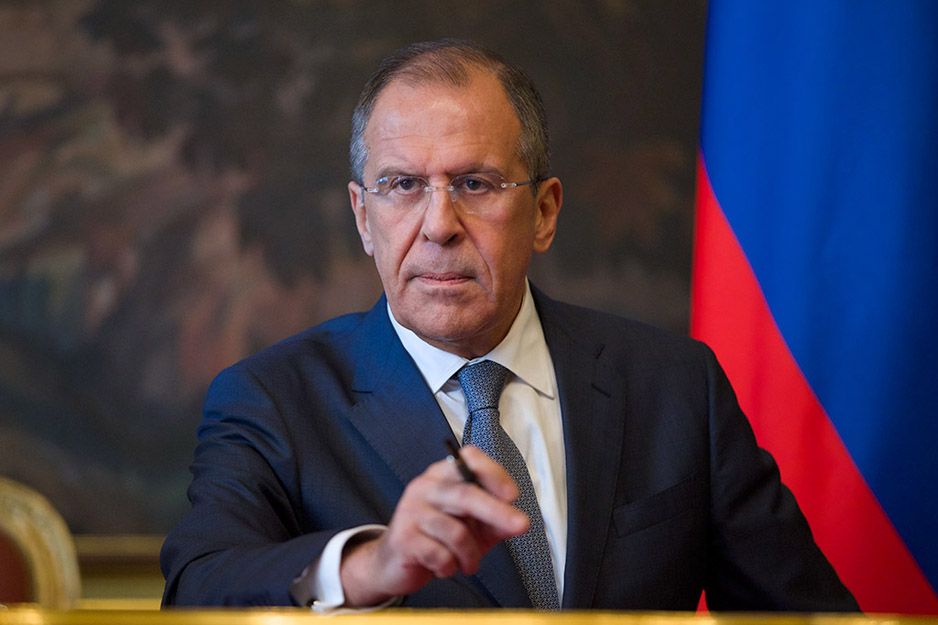
Russian Foreign Minister Sergey Lavrov’s interview with Italian magazine Limes

EDITOR'S CHOICE | 05.02.2016 | 07:00

On the February 2, Italian magazine Limes published on its website an interview given by the Foreign Minister of Russia, Sergey Lavrov, titled «Il mondo visto dalla Russia» – «The world as seen from Russia» which was later included in the magazine’s special issue dedicated to Russia’s geopolitical and strategic choices «Il mondo di Putin» – «Putin’s World».
Here we partially republish the official English version of the interview.
Speaking about Ukrainian crisis, Sergey Lavrov said:
«The Ukrainian crisis was not incidental, but rather the result of systemic problems that have been accumulating in European affairs and international relations over the past two decades.
An unprecedented opportunity to create a Europe without dividing lines after the end of the Cold War, based on the principles of indivisibility, security and broad cooperation, has been lost. Despite Russia’s insistent urging and the commitments to create a community of nations based on security, which were undertaken at a high level in the framework of the OSCE and the Russia-NATO Council, the policy of unrestrained eastward geopolitical expansion controlled by Euro-Atlantic organisations has gained the upper hand in the West. The policy of interfering in the internal affairs of others and enforcing certain reform formulas, including militarily, has been widely used in Europe and the rest of the world. All these problems also influenced the situation in Ukraine».
When asked Russian relations with European countries and the US, the Minister replied:
«Russia, while pursuing an independent foreign policy, is open to the development of broad cooperation with everyone who is willing to reciprocate...
Unfortunately, there are forces in Europe who are bent on settling historical accounts with Russia and who are doing their utmost to heighten the conflict intensity on the continent. At the same time, it is gratifying that in this challenging situation many European countries, including our Italian partners, have shown a sincere interest in maintaining a constructive dialogue with Russia and in improving the atmosphere in Europe. We highly appreciate these sentiments.
We said repeatedly that the gradual development of equitable and mutually beneficial relations between Russia and the EU would meet the interests of both parties and is a major factor in the bid to strengthen international security, especially considering that the many current challenges and threats, including the unprecedented outbreak of terrorism and extremism, call for a collective response. For our part, we don’t see any reasonable alternative to ultimately creating a zone of economic and cultural cooperation from the Atlantic to the Pacific based on the architecture of equal and indivisible security.
…It’s incorrect to compare the present relations between Russia and the United States to the Cold War years. At that time, the situation was fundamentally different: Tension between the two superpowers originated from the irreconcilable confrontation of ideologies and socioeconomic models, that was projected on the entire system of international relations.
Over the last quarter of the century, the world has become a different place. Today, there is every reason to say that attempts to create a unipolar model of the world have failed. Stable world development can only be ensured and current threats can be effectively fought only through collective efforts based on the sound foundation of international law. These are precisely the approaches that we consistently promote on the international arena, including in our dialogue with the United States.
The impression is that Washington has not yet appreciated the fact that there is no alternative to this line of conduct in international affairs. It prefers US «exclusiveness» to the objective trend toward the evolution of multipolarity, seeking to preserve the remnants of its hegemony in the world no matter what. Hence its proclivity toward unilateral action and the desire to punish countries that disagree with its policies.
For our part, we have always believed in developing bilateral ties on the honest basis of partnership, without dictate or coercion. When the United States decided to scale down cooperation – what’s more, it took this path long before the outbreak of the Ukraine crisis that it is so fond of citing as a pretext for such action – we warned that this line will lead to an impasse. It seems that Washington has finally realised that it’s impossible to «isolate» Russia or limit its influence to a regional level. Not surprisingly, alongside its aggressive rhetoric against us, the Obama administration has maintained dialogue with us on a broad range of key issues. Importantly, it has often been the initiator of this dialogue, repeatedly seeking our support on many issues.
We hope that US approaches to relations with Russia will evolve towards greater pragmatism and balance. Historical experience shows that our countries can effectively collaborate and achieve results when they seek to maintain a balance of interests and are not guided by considerations of political expediency. Today, we are facing a lot of shared problems, including the fight against international terrorism. Being the largest nuclear powers, we continue to bear a special responsibility for the maintenance of strategic stability.  There is a great potential for bilateral ties in trade, investment, innovation, technology, culture, humanitarian, science and other areas.
As President Vladimir Putin has repeatedly stressed, we do not seek confrontation and are open to cooperation with the United States. This is not to say, of course, that Russia is trying to impose its friendship or that it will trade in its priorities or turn a blind eye to aggressive attacks. Interstate relations are a two-way street. Normal relations with Washington can only be ensured if the latter demonstrates constructive behaviour to meet us halfway and the willingness to work on the basis of genuine equality, consideration for Russian interests and non-interference in our internal affairs».
Talking about Russia’s rapprochement with China, Sergey Lavrov said: «Russia is pursuing a multi-vector foreign policy. Its goal is to expand equitable cooperation with our partners in every region.
In this context, expanded political dialogue and practical cooperation with China is a strategic policy without any time-serving considerations. Our two very large nations are located in close proximity to one another. Over the past decades, we have completed substantial joint work, and one can now safely say that our ties have reached an all-time high.
This amounts to genuine mutually beneficial cooperation without any senior or junior partners, leaders and those led by them. The course of Russian-Chinese relations has been charted with due account for the basic interests of both countries’ peoples, and neither we, nor our Chinese friends are planning to change it.
Since 2010, the People’s Republic of China has been Russia’s No 1 trade partner. We are implementing strategic long-term energy projects, and we are expanding our cooperation in high-tech sectors, including the aerospace industry, the nuclear power industry and military-technical cooperation. We are focusing on both investment and financial aspects of our partnership. We have reached principled agreement on combining integration processes for the Eurasian Economic Union with China’s Silk Road Economic Belt initiative.
The coordination of our countries’ efforts on the international scene has become an important factor for maintaining international and regional stability. Russia and China voice similar or close approaches towards key modern issues. They advocate more substantial collectivist concepts in global affairs, based on international law, respect for the unique essence of nations and their right to independently choose their own road of development. We resolutely oppose pressure on sovereign states, including through unilateral sanctions or by force. We effectively cooperate at various multilateral venues, including the UN, the G20, BRICS and the Shanghai Cooperation Organisation, and we invariably support each other.
I’m confident that the whole world would benefit if relations between all other countries resembled Russian-Chinese relations. In that case, a stable and equitable polycentric system of global governance would be established».
Expressing Russia’s view on ISIS, the Minister said: «Recent events, including the barbarous terrorist attacks against the Russian airliner, as well as civilians in France, Iraq, Turkey, Lebanon and Egypt, confirm that the Islamic State, or ISIS, which is a terrorist group, has issued a serious challenge to human civilisation and made a bid to establish a quasi-state.
Standing up to this all-out threat requires the collective effort of the international community on the universal basis of international law. Every state should contribute to defeating terrorists and confirm its solidarity by concrete action.
It may be recalled that President Vladimir Putin has put forward the initiative of forming a united antiterrorist front under the auspices of the UN with the participation of all those who are really fighting terrorists, as well as other interested countries, both in and outside the Middle East.
To eradicate the seat of terrorism on Syrian soil, the Russian Aerospace Defence Forces, with the approval of the Syrian government, are continuing their operation to clear the country’s territory of Islamic State militants and other terrorist groups. Our efforts to coordinate actions with a number of our Western partners, in particular France, are designed to make the fight against ISIS more effective. New countries, for example, the UK and Germany, are joining the fight against ISIS. So what we should think about is not the prospect of ISIS gaining UN membership but the time when this and other terrorist groups will be finally destroyed.
At the same time, antiterrorist efforts should be comprehensive and involve the facilitation of political stabilisation and socioeconomic reconstruction in the Middle East and North Africa, based on respect for the sovereignty of regional states, as well as measures to prevent the radicalisation of public sentiments there.
There is a need for an inclusive intra-Syrian political process in keeping with the Geneva Communique of June 30, 2012. We are providing active international support for it, including through the International Syrian Support Group with Russia’s active participation.
Iran is Russia’s long-standing partner. Our relations develop in the spirit of friendship and good-neighbourliness. We are confident that Tehran’s full participation in regional affairs will contribute to regional security and cooperation.
An international information centre, which includes representatives from Russia, Iran, Iraq and Syria, started working in Baghdad several months ago. We are open to cooperation in this format with other interested parties, including the Kurdish resistance and the patriotic part of the Syrian opposition. We continue to closely collaborate with Jordan and Egypt in the fight against terrorism».
When asked about Russian-Turkish relations, Sergey Lavrov commented: «Ankara’s action was an unprecedented challenge to the Russian Federation. Obviously, it was bound to affect Russian-Turkish relations – trust in Turkey as a partner has been seriously undermined. As a result, our cooperation that took many efforts to develop over the past few years is being suspended in many areas. This was not our choice.
Up to now we have not heard from the leaders of Turkey either apologies, or the expression of readiness to somehow compensate us for what was done or the intention to duly punish those who are guilty. On the contrary, Ankara is asserting that the Turkish side was right because it protected its ostensibly violated sovereignty. Against this background, some vague statements by Turkish politicians about their «grief and regret» do not match the serious character of this action.
Russia has repeatedly emphasised its concern over the growth of terrorist threats in Turkey and the lack of readiness on behalf of the Turkish authorities to cooperate in the struggle against terrorism. Thus, despite our repeated requests Ankara – with rare exceptions – has dodged any effort to cooperate in detaining and transferring to Russian law-enforcement bodies Russian citizens that were going to join terrorist and extremist groups operating in the countries of the Middle East and North Africa.
We will not forget Turkey’s aiding and abetting terrorists. At the same time we do not put an equal sign between a part of its ruling upper crust that is directly to blame for the death of our military servicemen in Syria and our long-time and reliable friends among the Turkish people.
For Russia the anti-terrorist struggle and settlement in Syria are fundamental issues. This is why the attack of the Turkish Air Force on our bomber cannot change our approaches. If the Turkish provocation pursued this goal, its authors had obviously miscalculated».
Tags: ISIS Russia Syria Turkey Ukraine US Lavrov
http://www.strategic-culture.org/news/2016/02/05/lavrov-interview-with-italian-magazine-limes.html

Planned Turkish Invasion of Syria? In Close Liaison with Washington

EDITOR'S CHOICE | 05.02.2016 | 13:38
 
All Turkish military actions are approved by or complicit with Washington. Erdogan would never act unilaterally on his own, not even aggressively against his own Kurdish population, slaughtering civilians in cold blood.
Does he intend a Syrian incursion, unprovoked aggression, if launched? Russian evidence suggests it, according to Defense Department spokesman General Igor Konashenkov, saying:
We have serious grounds to suspect intensive preparations by Turkey for a military invasion on the territory of the sovereign state of Syria. We are recording more and more signs of concealed preparations by the Turkish military.
Days earlier, Russian video evidence revealed cross-border Turkish shelling on northern Latakiaprovince Syrian populated areas.
US-led NATO officials “and numerous organizations allegedly protecting human rights in Syria, despite our call to respond to these actions, still remain silent,” despite irrefutable evidence of Turkish aggression, along with supporting ISIS and other terrorist groups, Konashenkov explained.
Turkey wants evidence of its illegal military activities along the Syrian border suppressed. It denied a Russian observation flight over its territory, scheduled from February 1 – 5, permitted under the Open Skies Treaty (OST), up to a range of 1,900 km, with Turkish specialists onboard, after earlier expressing no pre-conditions or restrictions.
In 1992, 34 nations signed OST, effective in 2002, including Russia, America, Turkey, EU countries and Canada. Treaty objectives are to foster transparency, monitor fulfillment of arms control agreements, and improve capabilities to prevent crises.
Konashenkov called denying Russia’s legitimate right to conduct an observation flight over Turkish territory according to OST provisions “a dangerous precedent and an attempt to conceal illegal military activity near the border with Syria.”
Russian satellite and other intelligence can keep close watch on what Erdogan may intend, including possible cross-border belligerence against Syria.
In 2015, 32 foreign observation flights over Russian territory took place, according to OST principles, four by Turkey.
If Erdogan intends aggression against northern Syria, Russian intelligence will prove it. Key is how Putin and Assad respond.
Neither leader wants greater war than already, nor will they tolerate naked aggression, threatening their national security.
Stephen Lendman, globalresearch.ca

Thursday, February 4, 2016

Erdogan’s Impunity

Brian CLOUGHLEY | 05.02.2016 | 00:00

Entirely coincidentally, on January 29, just at the time when western nations were at last paying a little attention to Turkish President Erdogan’s persecution of so many of his citizens, the Turkish government alleged that a Russian aircraft had violated Turkish airspace.
Western media headlines were predictable, as was the reaction by NATO, which is ever-ready to grasp at straws to attempt to justify its existence even after so many years of demonstrating a dismal combination of incompetence and belligerence.
After NATO’s 2011 blitz on Libya, the US Supreme Allied Commander Europe (the military head of NATO) at the time of the onslaught, Admiral James G (‘Zorba’) Stavridis, announced proudly that «NATO’s operation in Libya has rightly been hailed as a model intervention». The fact that his savage campaign reduced the country to its present catastrophic shambles and provided a base for Islamic State barbarians has caused him neither remorse nor repentance. This bloodstained oaf is now «Dean of the Fletcher School of Law and Diplomacy at Tufts University, the oldest school in the United States dedicated solely to graduate studies in international affairs». Irony has no boundaries.
It will be remembered that Turkey shot down a Russian aircraft last November, alleging that the plane had flown through its airspace for seventeen seconds and therefore presented a shocking menace to Turkish sovereignty. No matter the absurdity of the Turkish stance at the time, NATO Secretary General Jens Stoltenberg spouted the usual nonsense about «unacceptable violations» as if the fleeting passage of an aircraft along any border could possibly present any sort of threat. He actually declared that «For us, this does not look like an accident, it is a serious violation».
Had it not been for the fact that the Turkish shoot-down resulted in the death of a Russian pilot, the affair would have been laughable.
This time, in the January 29 incident, Turkey did not attempt to shoot down the aircraft that it alleged had flown momentarily in its airspace. This was wise, as the plane that was supposed to have committed the violation was not a ground-attack bomber without air-to-air missiles, but a more modern machine that would have deflected Turkish-fired missiles and blown an attacking aircraft out of the sky. But Erdogan immediately hyped the tiny incident (if indeed it actually took place) as if Turkey was being threatened by an enemy intent on its destruction.
The Turkish President’s reaction to this miniscule affair was to declare to the media that «Such irresponsible steps do not benefit either the Russian Federation, or Russia-Nato relations, or regional and global peace».
Surely he can’t be serious? An alleged airspace violation lasting for a period of perhaps a half-dozen heartbeats is a problem for «global peace»? The immediate conclusion is that the man is a fool.
But he is not a fool. He is a crafty manipulator of world opinion that is only too ready and anxious to be convinced that any Russian action, anywhere, is a threat to the West.
At the time of the first alleged violation of Turkish airspace it happened that the BBC was reporting, that «The European Commission has called on Turkey urgently to address significant failings on human rights and democracy».
Then Human Rights Watch observed in its 2015 Report that «The Justice and Development Party (AKP) and Recep Tayyip Erdoğan – elected president in August 2014 – are undermining the gains of the past decade with steps that erode human rights and the rule of law in Turkey... the government intensified its interference in the criminal justice system, reassigning judges, prosecutors, and police, attempted to exert greater executive control over Turkey’s already politicized judiciary, and clamped down on Internet freedom».
These condemnatory comments about Erdogan’s government by the European Union and Human Rights Watch were serious and demanded action. But Erdogan’s only actions at the time were to increase persecution of Turkey’s oppressed Kurds and to shoot down a Russian aircraft.
As a Kurdish member of Turkey’s Parliament put it: «Erdogan wants to play the role of a dictator in Turkey. He is seeking to break the will of the Kurdish people...»
Erdogan is not only seeking to break the will of the Kurdish people (in which endeavour he will never succeed, as the Kurds are a resolute and admirable people), but he is trying to break the will of citizens who question his increasingly dictatorial stance. He wants to destroy all those who speak against him. And he appears to be succeeding. Not only that, but his domestic persecution is ignored by most western media outlets, which are usually eager to criticise foreigners who do not follow western rules.
In January it was reported, that «US President Barack Obama has listed Turkish Prime Minister Recep Tayyip Erdoğan among the five world leaders [with whom] he has the closest personal ties», but Mr Obama has chosen to ignore the fact, that «two Turkish journalists face life in prison over a story alleging that the Turkish government was arming Islamist militants in Syria». The editor of Cumhuriyet newspaper and a reporter were charged with espionage and President Erdogan declared that they «would pay a heavy price», even before they appeared before a court.
There was not a word of criticism from any western government about this mockery of justice by the President of a NATO country who personally ordered the shooting down of an aircraft that allegedly violated his country’s airspace for seventeen seconds and is now complaining about another alleged fly-by that would have lasted – at most – for a similar time. The US and NATO have been supporting President Erdogan without reservation. They have thus awarded him impunity which indicates exemption from judgement following allegations of having committed crimes against humanity.
And on February 1 there came the news, that «the United Nations’ top human rights official has called for an inquiry into the alleged shooting of unarmed civilians by the army in the south east of Turkey». He asks «the Turkish authorities to respect the fundamental rights of civilians in its security operations».
No chance of that.
The «Turkish authorities» – President Erdogan and his adherents, in other words – have no respect for fundamental human rights. But he is opposed to Russia and in the eyes of his Western admirers can therefore do no wrong.
Tags: NATO Kurdistan Middle East Russia Turkey Erdogan
http://www.strategic-culture.org/news/2016/02/05/erdogan-impunity.html

US to Quadruple Military Spending in Europe: Looming Quagmire of Heightened Tensions and Uncurbed Arms Race

Andrei AKULOV | 05.02.2016 | 00:00
Less than a week after Russia’s Foreign Minister Sergey Lavrov warned that NATO's military build-up near Russian borders is «counterproductive and dangerous», the United States is ramping up the deployment of heavy weapons and armored vehicles to NATO member countries in Central and Eastern Europe.
A statement from the White House said, expanded European operations will provide «continuous US armored brigade rotations» and «enable a quicker and more robust response in support of NATO’s common defense».
The administration said on February 2 it wants to quadruple military spending in Europe. It is proposing more than $3.4 billion in military spending in the region next year – far more than the $786 million in the current budget – and will position new equipment and have a full armored combat brigade (between 3,000 to 5,000 soldiers). The plans also include placing stocks of well-maintained gear and ammunition in forward locations across NATO's eastern flank on a rotating basis, at all times. Hungary, Romania and the Baltic states are among the countries where the equipment and additional forces could be deployed. «We’re going to have to help countries to harden themselves against Russian influence… and also mount – as we did in decades past – staunch defense of our NATO allies», Defense Secretary Ash Carter explained.


The proposed budget increase includes a $1.8bn outlay on 45,000 GPS-guided smart bombs and laser-guided rockets to boost the forces precision strike capability.
Estonia, Latvia and Lithuania asked for a big statement of American military support at the NATO defense meeting held this January.
The US already has 65,000 troops in Europe and has been stockpiling resources in Eastern Europe and the Baltic region for more than a year. Warsaw has called for a permanent NATO troop presence in the country.
For one, it wants more: permanent US bases hosting up to 5,000 troops each, as in the former West Germany during the Cold War. President Andrzej Duda has said, he will use the upcoming NATO summit in July to make this issue top the agenda.
The US Department of Defense announced in November 2015 that equipment from the European Activity Set (EAS) was scheduled to be delivered to Central and Eastern Europe.
The EAS is comprised of a combat brigade worth of prepositioned equipment, including 250 tanks, infantry fighting vehicles and self-propelled howitzers staged at EAS sites in Mannheim and Grafenwoehr (both located in Germany). This equipment is drawn by rotational forces such as the 1st Brigade Combat Team, 3rd Infantry Division, which will then use it for training exercises with NATO and other partner nations. Bulgaria, Estonia, Latvia, Lithuania, Poland and Romania agreed to host company to battalion-sized elements of EAS equipment. Germany already hosts it.
«We will continue to step up our exercises this year», said NATO Secretary General Jens Stoltenberg in the Annual Report he delivered a few days ago.
«We have visibly increased NATO’s presence in the eastern part of our Alliance. And to the south, we have agreed to increase the presence of AWACS early warning aircraft over Turkey, as we continue to augment Turkey’s air defenses», the Secretary reported.
«We have tripled the size of the NATO Response Force to more than 40,000 troops. And at its core is our new, very high readiness ‘Spearhead Force’. That is now operational», he added.
Meanwhile, Romania over the weekend announced its desire to station a permanent alliance fleet –including ships from Bulgaria, Romania, Turkey, Germany, Italy, and the US – in the Black Sea to counter what they see as Russia's rising involvement in the region.
While the increase in funding for Europe is significant, the administration is proposing that the money come from a separate war-funding account that is meant to pay for operations in the conflicts in Iraq and Syria, as well as continued American military presence in Afghanistan. That means it is a one-time request, not necessarily a continuing commitment built in to budget requests beyond 2017. This budget workaround leaves the decision on what to do about the future military spending in Europe for the next administration.

Not everyone happy in Europe

Not everyone in Europe will be happy about a larger US military presence. Take for instance the Czech Republic, where the President of the country enjoys wide public support. He has called many times for better relations with Moscow.
In 2014, 74% of Germans opposed the idea of larger US military presence in Europe.
Back then, the prime ministers of Slovakia and the Czech Republic also expressed their opposition to the increased presence.
It’s too early to say how European nations will react to the plans, but somehow, the mass public protests in the 1980s against the presence of intermediate range missiles spring to mind. Few people want to become a target for a retaliatory response.

It should be noted that the US plans are announced against the background of the statement on the conflict in Ukraine made by Zeid Ra'ad Al Hussein, the United Nations High Commissioner for Human Rights, saying there has been a «sharp de-escalation of hostilities» since August.
The Russian Embassy in Washington criticized the Obama administration for its new plans on the very same day the announcement was made.

 Russia - NATO Founding Act cancelled ?

«Moscow condemns the US for the promotion of weapons in Eastern Europe», says the headline of the statement published by Foreign Policy magazine.
The Russian Embassy called the announcement an attempt to «escalate tensions without obvious reasons» and said it violated the NATO-Russia Founding Act of 1997, which included an agreement that both sides would not station substantial combat forces on a permanent basis in the countries that joined the alliance.

Destabilizing European Security

«In our view, these steps of the USA and NATO are destabilizing European security and cause it damage», it states. «There should be no doubt that Russia will in all circumstances be able to protect its citizens and national security interests». Indeed, one does not have to be a military expert to realize that stationing forces abroad under the pretext of holding exercises cannot be done on a non-rotational basis. Any unit has an operational cycle, and any combat formation goes through exercises. The announced plans are nothing else but a permanent military presence of substantial forces. The talks about rotational basis do not change this fact. Actually, this is a declaration of the plans to withdraw from the Act, leaving the Russia-NATO military relationship without a legal basis to go upon. 

In case the Founding Act between Russia and NATO is cancelled, only some minor agreements will remain, some of which were signed during the Soviet Union era. They could hardly play any significant role in regulating relations between Moscow and the alliance. The document has played a very important role for the relationship during 19 years. Willy-nilly, Russia will have to deploy additional military aircraft and Iskander missile systems closer to the border. It would not breach any agreement if the Iskander missiles had nuclear warheads. Will it enhance the security of Western Europe?

Europeans Should Raise Voices

The US has taken a game changing decision with very serious implications to follow. It will greatly reduce European security and provoke an arms race with unpredictable results. There is still time to oppose the scenario. The interests of US administration do not always meet the interests of common Europeans who can raise voices and express their security concerns to influence the agenda of the next NATO summit which will be taking place this July in Warsaw, Poland. They can do it before it is too late to avoid the quagmire of heightened tensions and arms race. 

http://www.strategic-culture.org/news/2016/02/05/us-quadruple-military-spending-europe-looming-quagmire-heightened-tensions-uncurbed-arms-race.html
Tags: NATO Pentagon Eastern Europe Russia US

Widerspruch Herr Steinmeier!

Guten Tag Herr Steinmeier,

das Syrische Volk, die Syrische Arabische Armee, die Syrische Regierung unter ihrem Präsidenten Dr. Bashar al-Assad, unterstützt von Verbündeten und einer breiten internationalen Solidarität, führt einen heldenhaften antiimperialisten Widerstand.
Genau wie in Stalingrad "bezahlen" sie diesen Widerstand mit einem fast unermesslich hohen Preis.

Aber, in Syrien wird dem Imperialismus sein "Stalingrad" bereitet.
Das ist gut so und von außergewöhnlicher historischer Bedeutung.

Mit antiimperialistischen Grüßen

Willi Schulze-Barantin

Rainer Rupp über Russland und Völkerrecht in Syrien