Saturday, October 10, 2015

EU exporter of terrorism to crisis-hit countries: Mogherini

News | 10.10.2015 | 13:12
 
PressTV - EU foreign policy chief Federica Mogherini says the European Union has turned into an exporter of terrorism to crisis-hit countries like Iraq and Syria. 
"The reality is that our continent exports more than imports terrorism," Mogherini told an annual conference of the European Union Institute for Security Studies on Friday.
She said European countries should adopt a unified strategy instead of "turning inwards" and building walls to deal with global crises in today’s world.
"Walls are of little use when there is no fine line separating the inside from the outside," the senior diplomat stressed.
A growing number of foreign terrorists in both Iraq and Syria have come from numerous European states, with Western authorities failing to stop the flow of the militants to the region – mostly through Turkey. Western governments fear that the battle-hardened militants may carry out terrorist attacks once they return home.
There may be some 5,000 Europeans fighting alongside extremist groups in Iraq and Syria, according to the New York-based Soufan Group and the London-based International Center for the Study of Radicalization and Political Violence.
Last month, The New York Times cited US intelligence officials as saying that some 30,000 militants from over 100 countries, including more than 250 Americans, have traveled to Syria and Iraq since 2011 to join the ranks of Takfiri terrorist groups. 
The northern and western parts of Iraq have been plagued by gruesome violence since Daesh terrorist group began its campaign of terror in the country in June 2014.
In Syria, the foreign-sponsored conflict, which flared in March 2011, has claimed more than 250,000 lives up until now, according to reports.
 
Tags: European Union Middle East

Warum das US-Imperium ins Schleudern gerät

USA: Imperium mit starken Verblödungstendenzen


US: The World's Silliest Empire:
Alle kriegerischen Aktionen der USA bewirken entweder das Gegenteil des ursprünglich Beabsichtigten oder enden im Chaos, was aber, solange die US-Rüstungskonzerne ihr Geld bekommen, nicht weiter schlimm ist …
  

Wird auch China gegen den IS aktiv?


Was die NZZ zu Putin zu berichten weiss: Die alte Tante schmiegt sich treu an die Seite des Imperiums und plappert eifrig alles nach, was die US-Regierungsstellen so herauslassen.


Der amerikanische Globalstratege Zbigniew Brzeziński (was zählt ist Russland, alles andere ist Beilage) unter Jimmy Carter hatte 1980 die "geniale" Idee, islamische Gotteskrieger in Afghanistan aufzurüsten und gegen die Sowjets loszulassen. Dieselben islamischen Fanatiker haben später in Bosnien Serben die Köpfe abgeschlagen und wüten nun im Libyen, Mali oder Syrien im Sinne ihrer diskreten Sponsoren. 
Mit der total willkürlichen Forderung, dass Assad, der die Mehrheit der syrischen Bevölkerung hinter sich weiss, weg müsse, versteigen sich die USA in beabsichtigte Widersprüche in ihrem "Kampf" gegen den Terrorismus. Es besteht die berechtigte Hoffnung, dass dank dem klugen, robusten Eingreifen der Russen diese Tragödie in Syrien nachhaltig entschärft wird. In der Ukraine ist die auch mit hysterischen Verblödungstendenzen durchsetzte US-Strategie noch unbereinigt.
Kaspar Trümpy, ICDSM Schweiz

Friday, October 9, 2015

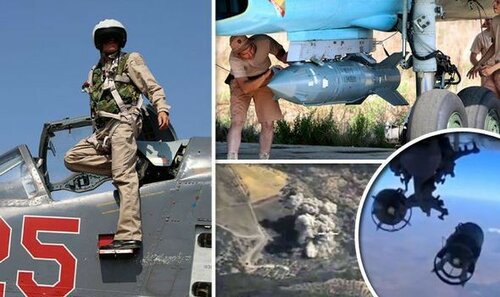
Russia, Syria on United Front against Terrorism (II)


by Pyotr ISKENDEROV | 10.10.2015

The urgent NATO meeting in Brussels was another good example of «double standards» practiced by the leadership of the organization. Instead of studying the ways to interact with Russia in the air campaign against terrorists in Syria, NATO made a decision to take a tougher stance against Moscow claiming it to be almost fully responsible for instability in the region. 
This is the result of policy implemented by Washington being concerned over Russia’s growing influence in the strategically important Middle East, and the separate game that Ankara wastes no time to play. A Russian aircraft violated Turkish air space by mistake and Turkey brought the incident to the top of the agenda of the NATO session. In the final statement the participants noted «the extreme danger of such irresponsible behaviour». «Russian military actions have reached a more dangerous level with the recent violations of Turkish airspace on 3 October and 4 October by Russian Air Force SU-30 and SU-24 aircraft in the Hatay region,» the statement says. Actually the wording echoes the Turkish version of what happened, fully ignoring the essence of the events in Syria.
The Turkey’s intention is more than clear. Its main goal is to forcibly overthrow Syria’s President Bashar Assad and ensure that the further development of the events in that country meets its interests. Ankara realizes well that the air strikes launched by Russia complicate the accomplishment of this mission postponing the implementation of its plans for uncertain period of time.
Essentially, a US-UK-Turkey alliance is being formed to oppose not only Russia, but also such leading European powers as Germany and France, not to mention Central and Eastern Europe. The Turkish political establishment interprets this tendency the following way: a US official has said he does not believe the incident was accidental putting the blame on Russia. UK ambassador to Turkey Richard Moore tweeted: «Russia’s incursion into Turkish airspace is reckless and worrying. UK, and its other NATO Allies, stand shoulder to shoulder with Turkey». In fact, it was Obama who gave a signal to react this way.
Besides, Turkey goes to any length to make its voice heard inside NATO to counter the European Union, the organization it has practically frozen ties with. According to available information, its tacit encouragement of asylum seekers flows to Europe is viewed by Ankara as leverage to influence the European Union and make it act in accordance with Turkey’s interests. The main goal of its NATO policy is to make the alliance concentrate on the situation at the Turkish-Syrian border. By inciting anti-Russian hysteria, Ankara strives to position itself as a key NATO ally in the region. It utilizes the catchphrases of Euro-Atlantic solidarity to cover up its real plans and intentions. In Azerbaijan, a friendly country for Turkey, they speak about it more plainly. «Turkey believes that Russia’s military actions will bolster Assad. That’s what Russia is trying to achieve. From Ankara's perspective, Assad getting stronger spells total failure of Turkish policy on Syria,» writes  Azerbaijani Trend News Agency.
More often European politicians come up with sound judgements. For instance, Czech Defense Minister Martin Stropnicky said the Russian air strikes against the Islamic State terrorists could stabilize Syria. The official believes it is reasonable to welcome anything that may calm down the situation there. He set as an example the exacerbating European refugee crisis which is a direct result of the Syria conflict.
Conservative members of the UK Parliament Defense Select Committee also supported the Russia’s decision to use its Air Force for striking terrorists in Syria. In particular, Bob Stewart actually called on the West to put up with the Bashar Assad’s rule, stating that «in order to defeat the great Satan you might have to put up with a lesser devil as well». James Gray, his fellow Defense Select Committee member, said, «You can't fight both Assad and IS at the same time». Julian Lewis, Chair of the Defence Select Committee,summed up the results of debates saying that unlike the West, Russia has a consistent strategy on Syria.
Today the Russia’s consistent Syria strategy – which applies to the situation in the entire Middle East, not Syria only – is intensively enforced. It gives rise to outright panic in the West. Strategy is what the United States and its close allies lack there. Their half-baked actions motivated by self-interest destabilize the situation and create breeding ground for terrorism, which has become the main threat for the world and Europe in particular. Turkey is playing its own game which has nothing to do with constructive and well thought over approaches. 
European ruling elites are extremely reluctant to admit the fact that Western geopolitical experiments in North Africa and the Middle East are directly related to the refugee flows of hundreds of thousand people while terrorism bred by the West is going on rampage in Syria and Iraq. They will certainly realize it as time goes by if only the national elites will not be ousted by more radical political forces that give priority to national interests.
Tags: ISIS Middle East Russia Syria

Deutsche Welle: « New President of the United States Cannot Ignore Russian Leadership"


Russia, Syria on United Front Against Terrorism (I)

Pyotr ISKENDEROV | 09.10.2015 | 08:00
The military operation started by Russia in Syria evoked jittery reaction in the US. The Pentagon called Moscow’s actions «aggressive» like if the US-delivered air strikes against Syria were peaceful by definition.
At that Russia’s actions in Syria are taken in accordance with all standard procedures to meet the norms of international law. Russian President Vladimir Putin informed international community of Russia’s intention to take an active part in the anti-terrorist operation on the territory of the Syrian Arab Republic during his address at the United Nations General Assembly session. Then the Federation Council, the upper chamber of Russian parliament, unanimously endorsed the President’s request to use military force abroad. Finally, Russia had given an advance warning to the United States about its plans.
After all that, why does Washington react so hysterically to the fact that Russian aviation has started to strike terrorists?
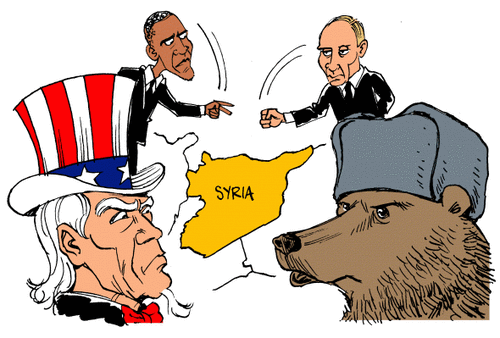
The answer is simple: Russia strengthens Bashar Assad’s position. Washington believes that the steps taken to bolster Assad or, even more, boost military cooperation between Moscow and Damascus in coordination with Tehran, pose a much bigger threat than the Islamic State.
The coordinated activities of Moscow, Tehran and Damascus in Syria hinder US plans to drastically change the existing borders of the Greater Middle East. The terrorists of Islamic States have an important role to play in the implementation of this scenario. Washington wanted a regime change in Syria with Assad leaving his office as far back as three-four years ago. Now the military support of legitimate Syria government may change the way the events unfold in Syria, as well as boost Russia’s clout in the Middle East. This is the region the United States has routinely viewed as its ranch or a testing range.
In a nutshell, these are the main implications of the joint actions undertaken by Russia and Syria:
First, Russia is taking practical steps to expand its role in the fight against international terrorism that poses a direct threat to Russian interests and exerts an increasingly destabilizing influence on Europe. The hundreds of thousands of asylum seekers that flood European countries are a direct consequence of the West’s connivance with terrorist activities in Syria.
Second, Russia provides military and political support to legitimate governments in the Middle East. It runs contrary to US efforts to disseminate the virus of various «color revolutions». The West has resorted to international interference in many parts of the world (The Serbian region of Kosovo, Afghanistan, Iraq and Libya) in the last decade and a half. As the experience shows, each time it led to strengthening of the positions of terrorist and extremist groups.
Third, Russia has never completely left the Middle East in the last quarter-century, though it considered it to be a region of secondary importance for a long time. Now it strengthens its position in the region.
Fourth, Russia is taking an important step on the way of forming a new international security structure based on a broad coalition of states supporting the idea of multipolar world and operating out of direct control of the United States. In many respects it will constitute an alternative to what is imposed by Washington and its allies. The coalition strives for a new type of international order which presupposes interaction, compromises and absence of «double standards», including in the field of international cooperation in the fight against terrorism.
The West’s accusations against Russia blaming it for «aggressive actions» in Syria are launched to divert attention from the failure of its own strategy in the Middle East.
As US magazine Newsweek rightly notes that, no matter what Moscow does, «…the problems surrounding increased U.S. intervention in Syria remain the same as always. There are few rebel groups left in Syria that could be considered «moderate» or acceptable to U.S. policymakers, while those that do exist are not focused on battling ISIS but on overthrowing the Assad regime. And though some of Russia’s targets are clearly 'moderate' anti-regime forces, it has also targeted the Nusra Front and other extremist groups. There is no doubt about Russia’s motives here, which are focused on eliminating threats to the Assad regime, not fighting extremists. But stepping up support to these extremist groups simply because Russia has targeted them would be folly; the enemy of my enemy is not always my friend».
The same can be applied to the situation in Iraq, another country chosen by Washington to be used as a testing ground. Iraqi Prime Minister Haider al-Abadi said he has no objections against Russian aircraft striking the Islamic State positions on the territory of his state. According to al-Abadi, he has sent a corresponding request to Moscow because it serves the interests of Iraq to appeal to anyone pursuing the goal of countering the Islamic State.
In his previous interview with France 24 channel, the Iraqi leader said that he would welcome Russian air force strikes on positions of "Islamic state" in Iraq. The Russian Ministry of Foreign Affairs responded that it did not rule out the possibility of air strikes in that country in case a request is received from the Iraqi government. When asked about the likelihood of starting airstrikes, Ilya Rogachev, director of the Ministry’s department for new challenges and threats, told journalists, »If we have either a corresponding request from the government of Iraq or a resolution from the U.N. Security Council, the adoption of which to a conclusive degree matches the will of the government of Iraq… If we have these sufficient grounds, then the political and military appropriateness will be evaluated».
Russia would consider the possibility of extending the air strikes on Iraq only if it received an official request, said Russian Foreign Minister Sergey Lavrov.
The intensive expansion of military and political contacts between Moscow and Baghdad could present another dramatic challenge to the US.
According to Deutsche Welle, «a new President of the United State, no matter who takes office, would not be able to ignore the Russian leadership. He (or she) will have to deal with it just because Russia has a foothold in the Middle East. Putin is filling the void left by the Obama administration in the region without much hassle. Who could have thought that US-supported Iraqi government with its military would become Russia’s ally?»
All these factors explain the Washington’s jittery reaction to the Russian military operation which serves the propose of providing regional stability and security – the things President Obama likes so much to talk about.

Russia dismisses U.S. refusal to share intelligence in campaign in Syria

News | 09.10.2015 | 00:06
Xinhua - The reluctance of the United States to share intelligence on Syria will not hamper Russia's operations in the war-torn country as Moscow has sufficient information from other sources, a Russian official said Thursday.
"We get this information from sources in a number of other countries, coordinating it with our partners within the Baghdad Information Center," said Deputy Foreign Minister Sergei Ryabkov.
Russia, Iran, Iraq and Syria have set up an information center in the Iraqi capital city of Baghdad to share information about terrorist facilities in Syria.
Russia has been repeatedly accused by Western politicians and media of launching strikes against facilities irrelevant with the Islamic State (IS) terrorist group and causing civilian losses since it started operations in Syria on Sept. 30.
To prove that Russia was indeed striking IS targets, Moscow proposed to Washington and its allies involved in the U.S.-led coalition to share reconnaissance on Syria. Russia's proposal, however, was rejected, said Ryabkov.
He said the refusal to cooperate proved that Washington and its allies have their own goals in Syria, which had nothing to do with providing conditions for a national reconciliation there.
"I will risk saying that the United States and other countries involved in the coalition have put themselves in a politically ticklish situation where question arises as to which side they are fighting in this war," he said.
Russian Defense Minister Sergei Shoigu said Wednesday that the Russian air force has attacked a total of 112 targets, destroying 19 command posts, 12 ammunition depots, 71 armored vehicles as well as factories and workshops producing various explosives, including devices used in car bombs.
Russian warships based in the Caspian Sea joined the air campaign Wednesday, launching 26 cruise missiles from a distance of 1,500 km and destroying 11 terrorist targets in Syria, according to Russia's Defense Ministry.

Syrian army makes new gains in western province of Lattakia

News | 09.10.2015 | 10:46
 
PressTV - The Syrian army, backed by allied forces and the Russian Air Force, has made significant advances against militants in different parts of the country.
A Syrian military source said on Thursday that the Syrian troops, along with forces belonging to the Lebanese resistance movement, Hezbollah, “have seized most of the hilly region of Jeb al-Ahmar," a highland in the western Syrian province of Lattakia.
There have been heavy clashes between Syrian forces and terrorist groups, including al-Qaeda-linked al-Nusra Front, in the area for months.
The so-called Syrian Observatory for Human Rights also reported that “violent clashes” erupted between the government forces and militants in the area of Jeb al-Ahmar.
The UK-based group said the government forces made advances during the clashes and controlled “several areas there.”
Clashes are reportedly still under way in the area between the Syrian forces and the militants.
Elsewhere, during an operation covered by the Russian Air Force, units of the Syrian army targeted militants in the eastern countryside of the western province of Hama, killing 32 of them and injuring 38 others, Syria's official news agency, SANA, quoted a military source as saying.
Reports also said that four armored vehicles and three canons belonging to the militants were destroyed in the operation.
Another Syrian military source added that the Russian Air Force, in cooperation with the Syrian Air Force, conducted a series of “precise” airstrikes on several Daesh positions in a number of areas, including Atarib, Deir Hafer, al-Mansoura and al-Bab, in the northern province of Aleppo.
The source said hundreds of militants were killed in the joined operation and a large ammunition depot belonging to the terrorists was destroyed.
Russia launched a major air campaign against foreign-sponsored terrorists in Syria on September 30 upon the request of the Syrian government.

Brief aus Syrien aus dem Jahre 2007

 von Susanna Böhme-Kuby  im Ossietzky

Mit dem Irak, dem Land zwischen Euphrat und Tigris, verbinden Bewohner unseres heutigen Zeitdorfes trostlose Bilder von Gewalt und Verwüstung. Die Zerstörung auch der antiken Zeugnisse jener »Wiege der Menschheit« durch anglo-amerikanische Bomben zeigt an, in welchem Maße der Menschheit das Bewußtsein von Geschichte und Zusammengehörigkeit verloren geht. Alle sozialen Übereinkünfte werden durch den Krieg außer Kraft gesetzt.
Im Nachbarland Syrien, zwischen Mittelmeer und Euphrat, sieht die Welt ganz anders aus. Was sich den Reisenden hier bietet, ist ein Bild des Friedens, religiöserer Toleranz und orientalisch bunter Geschäftigkeit, das Bild eines Landes im Aufschwung, das auf Kooperation mit dem Westen, mit Europa, setzt.
Längs der 100 Kilometer Autobahn von Damaskus nach Homs, der großen Industriestadt, reiht sich eine Anpflanzung an die andere: Pinien und Zedern. Der breite grüne Aufforstungsgürtel sticht ab gegen die lehmfarbigen Hänge des Anti-Libanon-Gebirgszuges zur Linken und gegen die zementgrauen, halbfertigen Neubausiedlungen der Ortschaften, meist unverputzt, übersät mit Satellitenschüsseln. Lastwagen aller Arten sind unterwegs, uralte Busse mit holzumrandeten Fenstern und private Personenautos, deren Zahl in die Höhe geschnellt ist, seit die hohen Einfuhrsteuern herabgesetzt worden sind.
Die Bevölkerung des Landes hat sich in den letzten dreißig Jahren – auch dank der Investitionen ins öffentliche Gesundheitswesen – weit mehr als verdoppelt: von knapp acht Millionen auf etwa 19 Millionen, von denen 75 Prozent jünger als 30 Jahre sind; das Durchschnittsalter soll bei 16 Jahren liegen! Die meisten Kinder lachen und winken; wohin man geht oder blickt, begegnen einem Schüler und Studenten. Seit 1970 besteht die neunjährige Schulpflicht, ab der zweiten Klasse lernt man Fremdsprachen, heute überwiegend Englisch. Neben den fünf großen staatlichen Universitäten gibt es inzwischen auch private Hochschulinstitute, internationale Kooperationen werden ausgebaut, der Deutsche Akademische Austauschdienst (DAAD) hat in Damaskus einen eigenen Vertreter. Die Wirtschaftsreformen seit Beginn der 90er Jahre haben das Land für Privatinvestitionen aller Art geöffnet; die Bautätigkeit ist unübersehbar.
Das säkular-sozialistische System der Baath-Partei unter den Präsidenten der Assad-Familie, deren Konterfeis an den Wänden einem auf Schritt und Tritt begegnen, läßt sich mit westlichen Begriffen schwer fassen, der Orient ist hier mit einem Hauch von DDR und Kuba überzogen. Dabei sind aber die orientalischen Familienstrukturen vorherrschend geblieben, bei Christen wie bei Muslimen, die hier seit Jahrhunderten mit- oder nebeneinanderleben.
»Ein Volk lehrt Toleranz« lautete kürzlich der treffende Titel eines Zeit-Artikels von Charlotte Wiedemann, denn »Toleranz ist pragmatisch und Friedfertigkeit vernünftig«. Moscheen und Kirchen stehen dicht beieinander, allein elf verschiedene christliche Konfessionen, katholische und orthodoxe, leben als kleine Minderheiten neben der großen sunnitischen Mehrheit, den Schiiten und weiteren moslemischen »Sekten« wie Drusen oder Alawiten. Letzteren gehört auch der Assad-Clan an. Die Alawiten konzentrieren sich um die Hafenstadt Lattakia am Mittelmeer, wo man fast überhaupt keine verschleierten Frauen sieht, sondern eher Jeans und kurze Röcke, und wo große Hotels nach westlichem Muster entstehen.
Man kann sich kaum eine pluralere Gesellschaft vorstellen, zusammengesetzt aus mehreren Ethnien, die in unterschiedlichen Landstrichen leben. An der Mittelmeerküste wähnt man sich in Ligurien oder Umbrien: endlose Olivenplantagen und Obstkulturen. Im Nordwesten zur Türkei hin steile Gebirge, dann der meeresähnliche Assad-Stausee am Euphrat, dessen Bau mit sowjetrussischer Hilfe den Schlüssel für die Urbarmachung und Bewässerung weiter Teile des Landes bildete. Syrien ist immer noch überwiegend ein Agrarland, aber selbst die weite Wüstensteppe Richtung Irak und gen Süden, nach Jordanien hin, ist elektrifiziert, kleine Erdölpumpen fördern die Energie für den nationalen Bedarf zutage, das Erdgas wird großteils exportiert. Die dort in Lederzelten oder flachen Lehmbauten lebenden Beduinen sind Halbnomaden; sie ziehen mit ihren Schaf- und Ziegenherden nur noch zeitweise umher.
Hier werden auch die wertvollen, zum Export bestimmten Erze abgebaut, Kupfer und Phosphate, und auf Eisenbahnwaggons verladen, die man quer durch die Steppe rollen sieht; einst führte die Bahnlinie von Aleppo bis nach Bagdad.
Etwa 120 Kilometer vor der Grenze zum Irak haben clevere junge Beduinen ein »Bagdad Café« eröffnet, in Anlehnung an den gleichnamigen Film von Percy Adlon mit Marianne Sägebrecht (deutscher Titel: »Out of Rosenheim«); ein Original-Filmplakat hängt über den Wasserpfeifen. Sie wollen neben ihrem Zelt demnächst ein kleines Hotel eröffnen. Syrien setzt auch auf den Ausbau des Tourismus. In Damaskus fand gerade im April die 3. Internationale Tourismusmesse statt, laut Syria Times mit hoffnungsvollen Perspektiven.
Die Reiseziele sind unvergleichlich: Etwa 25 aufeinanderfolgende Zivilisationen haben hier seit fast 10.000 Jahren ihre Spuren hinterlassen, die derzeit an 3000 Stätten ausgegraben werden; viele europäische Archäologen sind im Lande, und ich hatte das Privileg, eine deutsche Grabung (Technische Universität Berlin) in Resafa näher kennenzulernen.
Der Schauer, der einen überkommt, wenn auf dem Grabungshügel von Ebla auf der einen Seite die Sonne unter- und direkt gegenüber der Vollmond aufgeht, ist kaum zu beschreiben. In dem immensen Tempel des Baal in Palmyra verspürt man einen Hauch von Unendlichkeit. Und nach dem Aufstieg zur Zitadelle von Aleppo begreift man, weshalb sie zu den Weltwundern zählte.
Auf dem mit zwölf Kilometer Länge größten Bazar des Nahen Ostens in Aleppo fällt auf, wie selbstbewußt, freundlich und interessiert die Menschen den Besuchern aus Europa begegnen. Man kommt leicht ins Gespräch, viele können Deutsch, Englisch oder Französisch und fragen nach unserer Meinung über ihr Land. Und ob wir es tatsächlich für einen »Schurkenstaat« halten.
Allein in Damaskus lebt etwa die Hälfte der rund zwei Millionen Kriegsflüchtlinge aus dem Irak. 2006 kam eine halbe Million Menschen aus dem Libanon hinzu. Auch etwa 600.000 Palästinenser sind im Lauf der Jahre mehr oder weniger integriert worden. All das bisher erstaunlicherweise ohne wesentliche Probleme – wenn man von der Teuerungsrate absieht, die alle beklagen. Wohnraum in den Riesenstädten wird auf dem freien Markt langsam unbezahlbar. Und die Arbeitslosigkeit nimmt nicht ab, wenn immer mehr Menschen zuströmen.
Europa wäre gut beraten, Syrien bei der Integration der Flüchtlinge stärker zu unterstützen. Italien, Deutschland und Frankreich sind Syriens wichtigste Handelspartner. Sie können viel dazu beitragen, daß das Land eine Bastion des Friedens im Nahen Osten bleibt.


Erschienen in Ossietzky 10/2007