Friday, July 31, 2015

Patriotismus und Internationalismus sind keine Gegensätze

Wider  den "antideutschen" Ungeist  

Ein Beitrag von Irene Eckert


UFA  in Bashkortostan. Das ist die Hauptstadt einer russischen Provinz von der jüngst weltpolitisch bedeutsame Signale ausgingen. Eine  Bezugnahme auf die hoffnungsstiftende BRICS/SCO-Tagung im russischen UFA ist überfällig. Von den Mainstream-Medien wurde das zukunftsweisende Ereignis ausgespart. Volker Bräutigam erstattete dagegen dankenswerter Weise eine Programmbeschwerde.
Ohne  Gewahrsein der gewichtigen tektonischen Verschiebungen in der  außereuropäisch-NATO-dominierten Welt kann lähmender Pessimismus sich ausbreiten.

Notwendig im Interesse des Friedens und der Arbeit für eine  menschliche Zukunft ist darüber hinaus eine  differenzierte Haltung zur  nationalen Identität und Souveränität. Wer den Frieden und den Menschheitsfortschritt herbeisehnt, braucht den Blick auf hoffnungsstiftende Kräfte. Wer einen Ausweg aus der  EU/SA Misere  sucht, braucht den Blick auf vorwärts weisende Entwicklungen. Er braucht ein sicheres  Bewusstsein seiner Selbst und der Möglichkeiten seines Volkes ebenso wie die Bezugnahme auf potentielle Verbündete.
Die Etikettierung und Ausgrenzung von Personen wie sie in völlig obsolet gewordenen, neu-alten  "Friedenszirkeln"  hierzulande seit längerer Zeit stattfindet,  ist nicht nur niederträchtig, sondern  ein zerstörerisches Mittel der politischen Scheinauseinandersetzung. Die Verunglimpfung von Personen als "Querfrontler", als Nationalisten, als potentielle Neonazis gar findet ihre Parallele in der gleichgerichteten Diffamierung unliebsamer Staaten und deren Vertreter. Man umgeht die inhaltliche Auseinandersetzung,  man bedarf keiner sachlichen Analyse konkreter Strategiefragen mehr, man zielt ad personam und entledigt sich so mühevoller Kleinarbeit. Man zielt auf Gefühle und meint so den Verstand außer Kraft setzen zu können.

Die nationale Frage

Die „nationale“ Frage wird zu diesem Zwecke von dem Imperialismus dienenden Kräften in sinnverkehrender Weise missbraucht.  Das Imperium zielt auf Zerschlagung der Nationalstaaten, ja die nationale Idee überhaupt ist ihm zuwider, soweit sie andere Länder betrifft. Intakte Staatengebilde, die auf gewachsene Identität ihrer Völker  gründen und daher  zum Widerstand gegen seine imperiale Anmaßung befähigt sind,  müssen  in seinem Herrschaftsinteresse zerschlagen werden. Das Konzept der nationalen Souveränität wird auf Grund dessen prinzipiell abgelehnt. Es steht  ja der imperialistischen Einmischung in die Angelegenheiten eigenständiger staatlicher Entitäten im Wege.  Eine ziemliche Verwirrung diesbezüglich lähmt infolge solch propagandistischer Einflussnahme die auch in unserem Volk steckende, potentiell einigende Kraft zur Abwehr interessierter Manipulation von oben und von außen.  Jeder Humanist wendet sich berechtigter Weise gegen neudeutsches NAZITUM. Das ist gut so, das ist notwendig. Aber nicht jeder, der ihn die Nähe der verbrecherischen Ideologie gerückt wird, hat solche Stigmatisierung verdient.
  Es kann aber  keine Breitenwirkung entfaltende Bewegung gegen die  immer weiter eskalierende Kriegsgefahr entstehen, solange Freund und Feind nicht klar erkannt und unterschieden werden, solange Opfer und Täter nicht klar unterscheidbar sind.

Auch Deutsche haben ein zu verteidigendes Vaterland


Wenn sich fortschrittlich  oder "links" dünkende Kreise meinen, Deutschland ein „zu verteidigendes Vaterland“ absprechen zu müssen,  dann  hat  das fatale Voraussetzungen und  entsprechend verheerende Folgen.  Es kommt solche Einstellung letztlich  aus  dem  Giftschrank der "Antideutschen". Diese aber sind rotlackierte NAZIS. Die Verkehrung der Begriffe stiftet Unheil. Dem "antideutschen" Unsinn ist mit aller Entschiedenheit entgegenzutreten ist. Denn um mit dem  deutschen Dichter Bert Brecht zu sprechen:

„ ...nicht über und nicht unter
Andern Völkern wolln wir sein
Von der See bis zu den Alpen
Von der Oder bis zum Rhein

Und weil wir dies Land verbessern
Lieben und beschirmen wir's
Und das Liebste mag's uns scheinen
So wie andern Völkern ihrs.“*

Diese Zeilen schrieb der Dichter der "Kinderhymne" in der DDR, wohin er nach dem US-amerikanischen Exil zurückkehrte. Sie gelten aber sinngemäß immer noch auch für unser wiedervereintes  Deutschland, das  wahnwitziger Weise neuerlich imperiale Größe anstrebt.

Das imperialistische Deutschland war weder das erste noch das letzte

Deutschland ist aber  nicht das erste und nicht das letzte imperialistische Zentrum der Geschichte. Sollten wir schon vergessen haben, was die Spanier mit dem Heraufdämmern der Neuzeit dem gesamten lateinamerikanischen Kontinent angetan haben oder ihre Erben die Briten gleich auf mehreren Kontinenten? Die deutschen KZs haben ihre Vorläufer etwa im britisch, belgisch, französisch kolonisierten Afrika und ihre Nachläufer im US-amerikanisch geführten Guantanamo, Baghram und Abu Ghraib, um nur einige der verheerendsten Auswüchse des US-Imperialismus zu nennen. Auch seien die Fußangeln der deutsch-imperialistischen Politik ins Bewustsein gehoben, die allerspätestens seit 1949 vom US-Imperialismus festgezurrt wurden. Ich meine sogar, dass derartige Abhängigkeiten bereits in der Folge des I.Weltkrieges eingetreten sind und dass der Aufstieg des deutschen Faschismus nicht ohne solch äußere Einmischung erfolgt ist. Ich verweise dazu etwa auf eine hochinteressante Broschüre von Oswald Garrison Villard „Shall We Rule Germany?“ (Sollen wir Deutschland regieren/beherrschen?) aus dem Jahre 1943 (!), erschienen in New York und vom Post War World Council herausgegeben. Dort wird sehr krititisch noch zu Roosevelts Zeiten von einem Parteigänger des NEW DEAL auf einschlägige Pläne des State Department Bezug genommen. Alles was dort warnend gesagt wird, ist inzwischen  so oder doch ähnlich eingetroffen, ja sinngemäß übertroffen worden. Washington „wusste“ damals schon, dass Hitler Selbstmord begehen würde und fasste selbstherrliche Pläne zur diktatorischen Unterwerfung und Gängelung Deutschlands und zur Vereinheitlichung Europas.

Wir Deutschen haben wie alle anderen Völker eine gemeinsame Geschichte und eine trennende. Uns gegen imperiale Bevormundung zu stellen ist bei uns ebenso wie überall auf der Welt vonnöten.

Wiederbelebung des deutschen Kulturgeistes nötig und möglich

Uns eint also  nicht nur die deutsche Sprache, die auch  in anderen Nationen geliebt und gesprochen wird  und deren  wunderbare Lieder  etwa ein nach der Heimat sich sehnender, ziemlich  verbürgerlichter Heinrich Heine zu uns aus Frankreich herübersang. Uns eint nicht nur das deutsche Kulturgut, das so unterschiedlich verankerte Geistesgrößen wie Goethe und Schiller, wie Lessing, Kleist und Kant, Hegel und Fichte, wie Thomas Mann und seine Brüder, Luther und Nietzsche, wie Anna Seghers und Bert Brecht, Lion Feuchtwanger und Günther Grass, um nur einige wenige zu nennen, beigesteuert haben und das auch anderswo geschätzt wird auf der Welt. Ähnliches gilt für die Baukunst, die Malerei und sowieso die Musik, zu der Deutsche maßgeblich beigetragen haben, eben so wie zur Entwicklung der Wissenschaft. Uns eint heute auch die Ablehnung der Hetze gegen Russland und die neuerliche Heraufbeschwörung eines Angriffskrieges. Vereinigend wirken  könnte  auch der Rekurs auf die Befreiungsbewegung gegen ausländische Besatzung zu Beginn des 19. Jahrhunderts und im Ansatz gegen die Ruhrbesatzung in den Zwanziger Jahren des folgenden Jahrhunderts. Auch in den diversen Widerstandsbewegungen zunächst gegen päpstliche Bevormundung, dann gegen die absolutistische Adelsherrschaft, später gegen den Faschismus waren klassenübergreifende Kräfte am Wirken. In visionärer Voraussicht waren die Vertreter der unteren Klassen immer führend und brachten die meisten Opfer.

Von deutschem Widerstandsgeistes in Geschichte und Gegenwart

Wir haben als Nation einen erheblichen Beitrag geleistet zur revolutionären Weltbewegung und einen entsprechend hohen Blutzoll bezahlt. Die ersten Opfer des Faschismus waren zehntausende Deutsche unterschiedlicher politischer Couleur in den Lagern, von denen Deutschland übersät war und jene Deutschen die schon früh ins Exil getrieben wurden. Auch jene, die nach Kriegende ihre Heimat verloren haben letztlich als Opfer des Faschismus zu gelten, der die ethnischen Säuberungen allerorten zu verantworten hat.
Wir können uns im Guten wie im Bösen durchaus mit anderen Völkern messen. Der Kampf der Klassen hat - wie überall - auch auf unserem Boden schlimm gewütet und sein Wüten wirkt bis heute nach , wirkt fort.
Für die opferreichen Schlachten des 'Kalten Krieges' sind deutsche Bürger, deutsche Parlamentarier und deren Regierungen ebenso wie viele andere mitverantwortlich. Führend in diesem Krieg war allerdings zu allen Zeiten die selbsternannte 'lead-nation', die derzeitige Führungsnation des Imperialismus und das sind noch immer die Vereinigten Staaten von Amerika. Die Welt ist übersät mit US-amerikanischen Militärbasen, von dort aus werden die Kriege in die Welt hineingetragen. Ramstein in Deutschland ermöglicht unter anderem die Drohnen-Kriegsführung und Stuttgart mit Africom die Kontrolle des afrikanischen Kontinents. Die Atomwaffen in Büchel gehören den Amerikanern und stehen unter deren Kontrolle. Der Verbleib Griechenlands in der EU und der NATO wird ebenso wie die von uns mitverantwortete (!) Kriegspolitik der Türken von den USA aus gesteuert, der wichtigesten Militärmacht der Erde. Dies gilt auch für die völkerrechtsverachtende Politik Israels. Natürlich tragen „wir“ die Verbrechen mit. Unser Regierungspersonal ist genau wie unsere Parlamentarier mitbeteiligt an Verbrechen der NATO, die unser Land völlig unhinterfragt mitträgt. Das ist anzuprangern. Aber wir sind keine Ausnahme, beileibe nicht. Die französische Kolonialmacht ist nicht besser. Das französische Volk inzwischen ziemlich mürbe gemacht. Anderswo geht es zugegeben kämpferischer zu. In unserer Nation wurde dem Widerstandswillen gegen imperialistische Politik durch vielerlei Tricks inzwischen ziemlich komplett der Garaus gemacht, vorübergehend. Aber das gilt mehr oder weniger halt auch für andere Nationen. So wie es ist aber, bleibt es niemals und wir können dazu einen Beitrag leisten.

Verteidigung des nationalen Erbes und der nationalen Souveränität

Zerschlagung des nationalen Erbes aller Völker ist die erklärte Politik des Imperiums. Die Berufung auf ein gemeinsames Erbe schafft nämlich Identitäten, schafft Kraftzentren, von denen aus der Widerstand angeleitet werden könnte. Das Imperium kann solches natürlich nicht dulden. Es muss dazwischen fahren. Teile und herrsche, divide et impera, heißt nach wie vor die Devise. Die versuchte Zerschlagung der Nationalstaaten, der Staatsidee überhaupt, des Souveränitätsgedankens, die Schaffung von Chaos (!) das ist der Kern der Strategie des PNAC, des Projekts für ein Neues Amerikanisches Jahrhundert, das ist Kagan und seine Frau Victoria Nuland etwa an führender Stelle.
Seien wir also vorsichtig bei unserer Kritik der Staatsidee und des Konzepts der Nation. Wohl temperierter Patriotismus ist nicht Chauvinismus. Chauvinismus ist ein Kennzeichen imperialer Überhebung, ein Ausdruck nationalistischen Größenwahns, der sich für einzigartig und unbesiegbar hält. Die Verteidigung nationaler Souveränität und der Stolz auf die Leistungen, die ein Volk im Laufe einer langen Geschichte erbracht hat, ist nicht ungesund und hat mit solchem Größenwahn nichts gemein. Ziehen wir also  die richtigen Lehren aus den Dokumenten der „Brüsseler Tagung“ von 1935. Lernen wir  aus den Empfehlungen etwa eines Georgie Dimitrov  oder Wilhelm Pieck und verteidigen wir Seite an Seite mit allen friedliebenden nationalen Kräften  über all auf der Erde das Völkerrecht auf nationale Selbstbestimmung und Frieden.

 „Frieden ist ein Menschenrecht“ Mairead Maguire, irische Friedensnobelpreisträgerin. 

Seien wir im genannten Sinne gute Patrioten und Internationalisten zugleich, das ist nicht nur  möglich, sondern  notwendig. 
_____
*Website mit diesem Bild
Hanns Eisler singt die Kinderhymne von Bertolt Brecht
youtube.com

UN Srebrenica Resolution Vetoed by Russia (Lending Helping Hand to Those in Need)

Dmitry BABICH | 01.08.2015 | 00:00

The Republika Srpska (RS), populated by Orthodox Christians, has recently come under growing pressure from the United States and the European Union frowning on the decision taken by the country’s President Milorad Dodik to hold a referendum on the authority of Bosnia's national court over ethnic Serbs in September. Now it looks like Dodik has started to look for a middle of the road solution. He said in Belgrade that Republika Srpska is willing to talk about the referendum on the Court and Prosecutor’s Office of Bosnia and Herzegovina if the reasons for holding it disappear.
Despite the President’s readiness to make concessions, the United States, the European Union and servile European politicians have no intention to forgive him or seek common ground. Western media openly call for Dodik’s resignation. The UN draft resolution describing the Bosnia war in 1995 as «genocide» was put forward by the United Kingdom. Under the circumstances, it would make the Republika Srpska an illegitimate entity to greatly weaken the position of President Dodik. If the Republic emerged in 1995 as a result of genocide, then there is no reason to treat its President and government with due respect. If the people of the Republic were involved in the massacre of Muslim men and boys during the 1995 war, they do not deserve a fair treatment. 
In case the referendum is held, the West will have to take into consideration the views of Dodik and other citizens who believe that Muslim judges, who lived in Sarajevo and its outskirts to witness the inter-confessional conflict of 1992-1995, should not be allowed to preside over cases in the RS. The referendum will exclude their participation. Nevertheless, there are many people who strongly oppose the idea of plebiscite. They would have welcomed the adoption of the genocide resolution.
Taking it all into consideration, Russia has taken the right decision to veto the Srebrenica resolution which mentions the word «genocide» 35 times describing the actions of Bosnian Serbs in 1992-1995 while the word 'reconciliation' is used only three times in the text. It makes one come to conclusion that the goal was not to reconcile the sides and punish the culprits but weaken the position of President Dodik who has fallen out of favor with the West.
There's more to it than meets the eye – other peaceful and civilized European nations could share the fate of Bosnia.
The RS is not the only target for the EU attempts to topple an «inconvenient» government. The governments of Greece and Hungary are threatened as well.
In the heat of political debates on debt problem European Parliament President Martin Schulz said his faith in the Greek government had reached «rock bottom,» and that he hopes it resigns after the referendum. According to him, «New elections would be necessary, if the Greek population votes for the reform program and remaining in the euro zone and Mr. Tsipras duly resigns. But the time until the election would have to be bridged with a technocratic government, which we could keep negotiating with. If this temporary government can come to a reasonable agreement with the creditors, Syriza’s time would be over. Then Greece would have another chance.»
https://global.handelsblatt.com/edition/211/ressort/politics/article/alexis-tsipras-is-misleading-people
Nobody in the West makes Schulz remember that Greece and Hungary are sovereign nations and members of the European Union. It’s up to them to decide what kind of government – technocratic or not – they want. Even less intrusive remarks on the part of Russia would have provoked protests on the part of EU which would inevitably point at «Russian imperialism».
The European Union and the United States get off scot free with whatever they do. Gregor Gysi, an MP and a key politician of the political party The Left (Die Linke), a party which emerged in parts from the old East German communist party, the Socialist Unity Party of Germany (SED), is the only prominent German politician to consistently express his indignation at Germany’s interference into the internal affairs of Greece. Gregor Gysi accused the German government of pursuing regime change in Athens. «You want to get rid of the leftist government in Greece, that is your goal», he said.
So the Republika Srpska was not the only one Russia lent a helping hand to by demonstrating its opposition to the use of term «genocide» in relation to the activities of what they call «Serbian soldiery» committed in 1992-1995. Moscow came to the rescue of some Central and South European states the European Union imposes its will on. Actually, by vetoing the resolution Russia helped them to remain sovereign nations. These countries are potential Russian allies.
Hungary is a good example. Its Prime Minister Victor Orban is painted as a xenophobe and admirer of the Hungarian fascist regime of the 1940s. A smear campaign is launched to denigrate him. European leaders don’t shy away from outright blackmail. In October 2014 US Chargés d'affaires Andre Goodfriend said in a statement issued by the embassy that the US canceled the visas for some people who belonged to Orban’s inner circle on the basis of «credible information that those persons are either engaging in or benefiting from corruption.»
Orban has so far resisted the pressure. As one can see, the attitude of the United States and the European Union is in many respects similar when it comes to the above mentioned countries. They both use the same methods and rhetoric, they both scorn the law and tramp on human rights. Greece and Hungary aside, they have recently made an attempt to topple the government of Macedonia. The action was thinly veiled as «people’s protests».
Americans brazenly intruded into the affairs of Hungary, Greece, Macedonia and the part of Bosnia and Herzegovina populated by Serbs acting with cruelty and disrespect for law.
Russia spares no effort to make its stance known and understood. Its policy has nothing to do with the attempts to oppress East European countries or draw them into the Russian «sphere of influence» against their will. Quite to the contrary, Russia helps them to defend their independence. Serbia and the Serbian part of Bosnia and Herzegovina are good examples. Russia responded to their requests and protected them by vetoing the UN resolution. Moscow invites Macedonia and Hungary to take part in the implementation of Turkish Stream project and thus get access to cheap energy sources. This is a good alternative to what the United States can offer.
Tags: UN Balkans Bosnia and Herzegovina Republika Srpska Russia Serbia

Source: http://www.strategic-culture.org/news/2015/08/01/un-srebrenica-resolution-vetoed-by-russia-lending-helping-hand-to-those-in-need.htm

South China Sea and Geopolitics of Islands

Leonid SAVIN | 31.07.2015 | 00:00

On 22 July, the Chinese press reported that the Chinese People’s Liberation Army is carrying out ten days of manoeuvres in the waters off the eastern island of Hainan in the South China Sea. China’s Maritime Safety Administration has stated that during the exercises, «no vessel is allowed to enter the designated maritime areas».
Commenting on the event, Xu Liping, an expert on Southeast Asian affairs at the Chinese Academy of Social Sciences, noted that China is carrying out the training exercises legitimately within its territory and they have «nothing to do with the tension in the South China Sea... It is a normal exercise of sovereignty. China wants to modernise its navy to make sure it has the capability to protect its islands and waterway».
Shortly before the exercises, meanwhile, the new commander of the US Pacific Fleet, Admiral Scott Swift, carried out a seven-hour surveillance flight over the South China Sea. On Monday 20 July, China’s Ministry of Defence expressed its opposition to America’s frequent surveillance missions that it believes are too close to China’s borders and seriously undermining Sino-US trust. The old debate about who owns the region’s islands has become a hot topic in numerous political publications once more, especially in the US.
Why is the subject, which is sensitive for many Southeast Asian countries, being actively stirred up once again and the situation being inflamed, primarily through the military presence of a country thousands of kilometres away? The US carried out a series of naval exercises in the region in 2015 and intends to carry out several more soon. Obama’s «Pacific axis», which has resulted in the redeployment of a significant proportion of the US Navy to the region, as well as the Marine Corps and Air Force stationed at bases in countries that are allies of Washington, is also directly related to China’s maritime strategy and the creation of logistics posts on previously barren reefs and rocky islets.
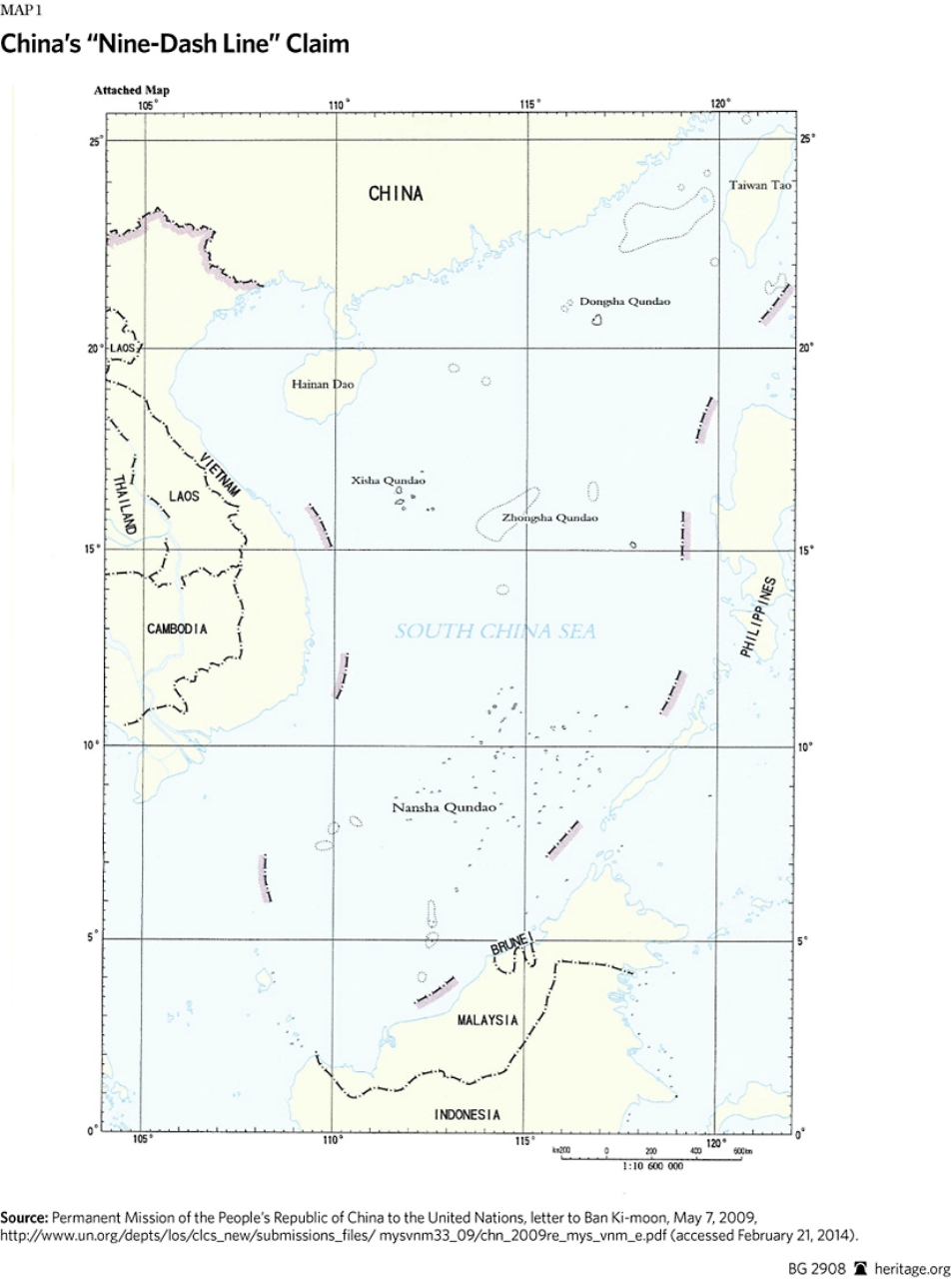
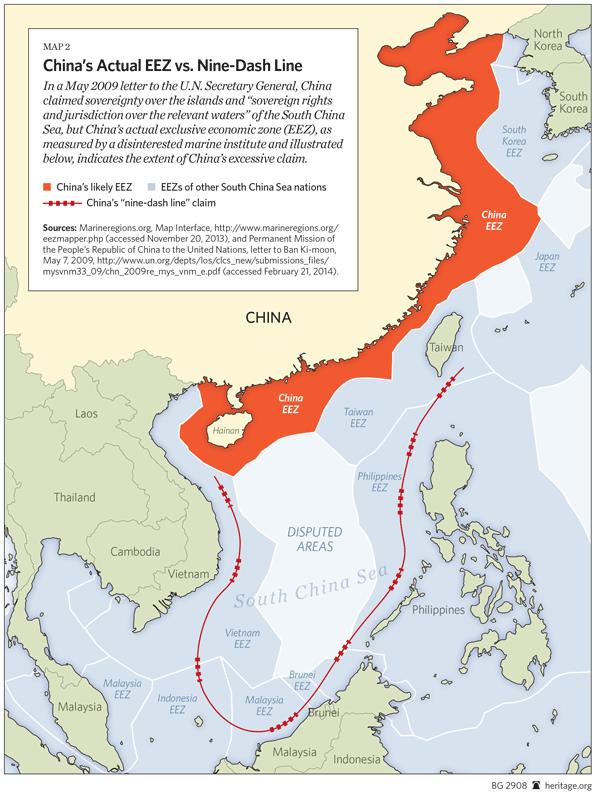
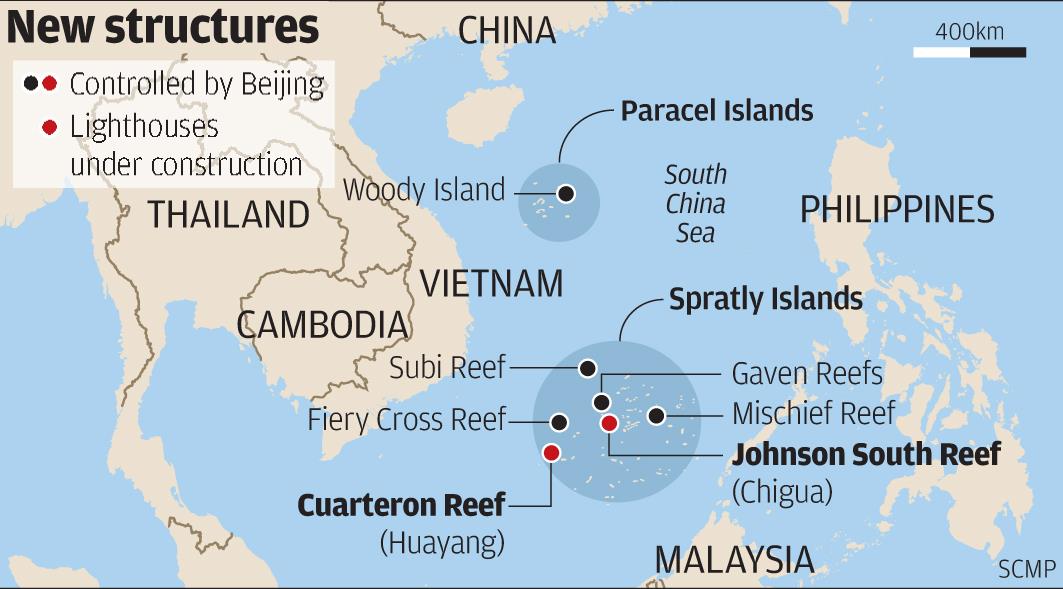
The fact is that in April 2015, Beijing successfully completed the construction of infrastructure on an artificial island in the Spratly Islands, thus virtually designating the previously uninhabitable area its sovereign zone. China declared its right to these islands in an official address to the UN Secretary General back in May 2009 and its intentions are obvious. With its growing economy and increasing energy and raw material exports shipped through the Malacca Strait, Beijing needs to create strongholds in the sea to insure against possible risks. The «string of pearls» strategy, also referred to as the water-based alternative to the Great Silk Road, is meant to solve the problem by repeating the historical experience of many other countries, including Great Britain and the United States.
On the issue of the islands’ ownership, Beijing, along with other regional players, has made use of the ancient law of Terra Incognita in the assimilation of these territories.
On Gaven reef, for example, an island has literally grown up out of the water over the past year and a half or so.
Modern technological infrastructure answering the logistical needs of such a large country as China has also appeared on other reefs.
Nevertheless, it is obvious that the US has no intention of allowing China to strengthen its strongholds and is getting ready to oppose it using military force. This is expected to involve not just the US Navy and Air Force (in accordance with an approved strategy for a possible war with China called «Air-Sea Battle»), but also the US Army. In the guidelines for the US Army’s Strategy in Asia 2030-2040 published in 2014 by the RAND Corporation, it says that America’s military strategy should be aimed at the comprehensive containment of China, including with the involvement of America’s regional partners.
The Pentagon has mapped out a special Southeast Asia Maritime Security Initiative, on which it is planning to spend $425 million. Washington is also encouraging the development of bilateral relations between its satellites for the purposes of opposing China. An example is the joint declaration and a number of other documents signed between the Philippines and Japan on 4 June 2015 reflecting not just the intention of both sides to join forces in the face of new challenges, but also to help the US in every way possible, including providing access to its bases and appropriate security.
Some experts believe that the US is weak and is acting reactively, while China is using a window of opportunity and is allegedly behaving aggressively by carrying out a policy of expansionism. They are calling on the US to recruit Japan, Indonesia, Australia and India to stand against China. Although they have nothing to do with the disputes in the South China Sea, they surround the region from the outside and are major players in their own right. The Pentagon is also increasing its presence on the territories of all its partners in the region – Singapore, Australia, South Korea, Japan, the Philippines, Indonesia, Taiwan and the island of Guam (there is also a British base in Brunei).
Objective facts show, however, that China is merely a scapegoat, a role it has been given with a helping hand from the West and the world’s media. According to a publication specialising in international relations in the Asia-Pacific Region, China is far from the only country that has unilaterally marked its territory among the Spratly Islands.
Vietnam occupies 21 features, five of which are natural islands and the rest rocks or sand banks. Of these, 17 have territorial status. The so-called Southwest Cay was seized from the Philippines in 1975 and the Philippines now own nine, one of which is an underwater reef. There were also plans to upgrade the airstrip on Thitu Island. In 2014, seeing how quickly China was erecting a number of facilities, the Philippines called for a moratorium on construction in the South China Sea. In 1983, Malaysia seized five islands while Taiwan seized just one – Itu Aba – investing $100 million to restore the infrastructure of the port and the airstrip and placing armed forces there. Work was fully completed on the island in February 2015. There is also Brunei, but, according to official data, it is only used as a platform for the extraction of oil and gas on the shelf of the South China Sea.
It is extremely telling that before 2014, when China began to construct a 3 km airstrip on Fiery Cross Reef in the southern part of the Spratly Islands, Beijing did not have an airstrip on the islands at all. Construction also began in 2014 on the southern Johnson South Reef. And so the Chinese are just repeating what other countries have already done, countries whose actions did not arouse the indignation of the US.
Incidentally, the Chinese have always stressed that they have no intention of carrying out any kind of aggressive actions in the South China Sea and hope that Obama is not planning any acts of provocation either.
However, the US is constantly pouring oil on the fire, not just through its military and intelligence-gathering operations, but rhetorically. Thus the US State Department, represented by the State Secretary and other representatives, have repeatedly stated that freedom of navigation in the South China Sea is in the national interest of the US, a statement that is painfully reminiscent of former US president Jimmy Carter’s statement about the Persian Gulf in 1980, when he threatened to use military force if US interests were threatened.
At the same time, and with the cynicism typical of American politicians, the US is declaring that it does not need to ratify the UN Convention on the Law of the Sea to defend its national interests in the South China Sea. Although according to its action plan in the region, Washington will support any lawsuits against China in the arbitration courts.
If you bear in mind that 60 per cent of world trade traffic passes through the region, as well as Washington’s continuing attempts to promote its Trans-Pacific Partnership project, then it is unlikely that the US will stop its acts of provocation and China will be left with no choice but to strengthen its security.
Tags: Asia-Pacific China Malaysia Philippines US Vietnam
Source:http://www.strategic-culture.org/news/2015/07/31/south-china-sea-and-geopolitics-of-islands.html

Thursday, July 30, 2015

70-th Anniversary of «The Bomb's» Use Against Civilians

Wage Peace For A Nuclear Free Future!

Following Article By Wayne MADSEN | 29.07.2015 | 00:00 (Pictures from Californian Peace Activists put in by Blogger)

It has been 70 years since the United States became the only nation in history that deployed two atomic «weapons of mass destruction» against civilian populations. On August 6, 1945, a B-29 known as the Enola Gay took off from Tinian island, north of Guam. After flying six hours to the main Japanese island of Honshu, pilot Paul Tibbets flew his aircraft over the city of Hiroshima released «Little Boy», an atomic bomb with the explosive power of 16 kilotons of TNT.
At 8:15:44, Japan time, the city of Hiroshima was obliterated, with 70,000 people immediately vaporized or charred beyond recognition. The victims included some 16 American prisoners of war that were held in Hiroshima. Soon, another 200,000 people would die after agonizing deaths brought about by the effects of radiation sickness. For only the second time in the history of humankind, a nuclear mushroom cloud appeared in our planet's atmosphere, the first being the earlier test of the atomic bomb in New Mexico.
In Washington, President Harry Truman announced that America had dropped an atomic bomb on Hiroshima and unless Japan immediately surrendered unconditionally to the Allies, the United States was prepared to drop additional bombs on Japanese cities. According to a number of history books, some of which having been unduly influenced by the nascent American military-industrial complex, Japan never responded to Truman's demand.
On August 9, three days later, another B-29 called Bockscar took off from Tinian with a heading toward the industrial city of Kokura. Cloudy weather forced a change in plans to the secondary target, the port city of Nagasaki. At 11:01:47 local time, Bockscar released «Fat Many», carrying an explosive punch greater than «Little Boy», as many as 75,000 people died initially from the blast, many of them workers at the Mitsubishi weapons and other factories in the area. Japanese Emperor Hirohito announced Japan's decision to surrender unconditionally on August 12, 1945. Had Hirohito not surrendered, the United States had plans to drop atomic bombs on Kyoto, Yokohama, and Kokura. If those bombings failed to succeed in forcing Japan's hand, two additional nuclear bombings would be launched against Niigata and Hirohito's own imperial palace in downtown Tokyo.
It is now known that there was, in addition to the Imperial Japanese government, another targeted audience for the U.S. decision to use atomic weapons on civilian populations. That other audience was the Soviet government and its leader Joseph Stalin. This nuclear muscle flexing by the United States would eventually lead to the nuclear arms race of the Cold War. Joining the survivors of the Japan bombings in being subjected to health-damaging nuclear test blasts conducted by the American government were the Pacific islanders of the Marshall Islands and «downwinders», mostly Native Americans and Mormons living in eastern Nevada and Utah.
It can be legitimately argued that the decision by the United States to be the first and only nation to use nuclear weapons in wartime helped trigger off a costly and dangerous arms race that is still with us today. America's monopoly on nuclear weapons was short lived. The Soviet Union was the second nation to develop nuclear weaponry and the club was soon joined, in order, by Britain, France, China, Israel, India, Pakistan, and North Korea. Recalcitrant nations opposed to the Joint Comprehensive Plan of Action hammered out between the P5+1 nations and Iran have made it clear they intend to join the nuclear club. These countries include Saudi Arabia and the United Arab Emirates.
It is also now known that the Japanese emperor did not object to the idea of offering peace terms to the Allies when some members of the Japanese Council of State suggested such a move at a meeting held in Tokyo on January 10, 1945. A White House Memorandum for President Franklin Roosevelt, dated January 17, 1945, cited the meeting of the Japanese body and the emperor's lack of opposition to an olive branch being extended by Tokyo to Washington. That same day, the Japanese representative to the Holy See, Masahide Kanyama, met with the Vatican Secretary of State, Giovani Montini, the future Pope Paul VI, and Pio Rossignani, the private secretary to Pope Pius XII, Kanayama made a direct appeal for papal intervention to mediate between Japan and the Allies: 
«The pacifists in Japan have great faith in the Holy See. An attempt by the Holy See to initiate mediation would greatly encourage our pacifists, even if there should be no immediate concrete results».
In response, the future pontiff, Montini, appeared to side with the Allies:
«It is clear to us that the gap between the viewpoints of the two belligerents is too wide to permit Papal mediation».
But Kanayama had reason to push for negotiations with the Allies. He learned from the Japanese ambassador in Moscow – Russia still maintained a non-aggression pact with Japan – that the Big Three (Roosevelt, Stalin, and Chirchill) were to meet soon, that Japan would be on the agenda. Japan urgently needed Pope Pius's intervention to begin talks before the Allied meeting. The urgency was made even greater since Chinese leader Chiang Kai-shek would not be present at the talks, which would be held in Yalta. Therefore, there would be no Chinese leader present demanding a steep price for talks to begin between Japan and the Allies.
Sensing Katayama's concerns about the Chinese, Montini asked, «Would it not be possible for the Japanese Government to offer terms that would be closer to those of the Anglo-Americans so that the Holy See could begin mediation on more concrete bases?»
Katayama said he would convey Montini's request to Tokyo. The Pope's secretary did not rule out papal intervention as a mediator.
By February 1945, Russia and Japan were on the same page and proposed a Far East peace conference that would include Russia, China, Great Britain, the United States, France, and Japan. Japan wrongly believed that Russia would not enter the Pacific war on the side of the Allies.
However, in February, Myron Taylor, Roosevelt's personal envoy to Pope Pius, met with Japanese ambassador to the Holy See, Harada Ken, at the Vatican. In a February 16, 1945 memo to Roosevelt, it was conveyed by Ken to FDR's envoy that: «Japanese elements desirous of peace are not responsible for the Pacific war, and that those elements might be able to make their will felt if the Anglo-Americans would offer acceptable terms».
Taylor, in response, reminded Harada that:  «American public opinion still remembers the unprovoked attack on Pearl Harbor. He promised, however, to initiate a friendly investigation of the possibilities for negotiation».
On April 6, the Apostolic Delegate in Yokohama, Lorenzo Tatewaki Toda, sent a telegram to the Pope, the contents of which were delivered by the Office of Strategic Services (OSS) to Roosevelt on April 11, the day before FDR's sudden death. Toda, a relative of Hirohito, stated to the Pope, «the present is the most favorable moment to conquer the intransigence of the extreme militarists in the interests of a peaceful solution to the war. He promises as soon as possible to send the Holy See a set of conditions, which it may judge acceptable to the Anglo-Americans, and he beseeches the Pope to pray that Japan's rulers may become convinced of the necessity of an honorable peace».
After Truman became president, Japanese, through their Minister in Switzerland, asked the Anglo-Americans for cease fire talks through the Soviet Union. All Japan asked for was retaining the emperor as head of state to prevent «Japan's conversion to Communism».
OSS chief William Donovan and Undersecretary of State Joseph Grew, America's ambassador to Japan when Pearl Harbor was attacked and who was interned by the Japanese for seven months before repatriation in a diplomat exchange, are said to have favored pursuing negotiations with Japan.
The American militarists had already convinced Truman to use the bomb. There would be no negotiated surrender by Japan. The heirs of the atomic bomb militarists who surrounded Truman are still with us today. They are bow called «neocons» who advance the «new American century» concept. They are as wrong today as they were on the day America launched the first wartime nuclear attacks. August 6 and 9, 1945 were America's «days of infamy».
Tags: Asia-Pacific Japan US
Source: http://www.strategic-culture.org/news/2015/07/29/70-anniversary-bombs-use-against-civilians.html

Syriza schließt Militärpakt mit Israel


Nachdruck aus der Internet-Ausgabe „Linke Zeitung“ vom 29. Juli 2015 Kammenos: „Wenn eine iranische Rakete ihren Weg in die Mittelmeerregion findet, könnte dies das Ende aller Staaten in dieser Region sein“.
Griechenlands herrschende angeblich linke Partei Syriza hat am 19. Juli ein „Truppenstatut“ mit Israel unterzeichnet. Wie die Jerusalem Post erläutert, regelt das Abkommen „Rechtshilfe bei Übungen im jeweils anderen Land.“
Das bedeutet, dass es sich um einen Pakt handelt, in dem Griechenland dem is- raelischen Militär Hilfe zusichert, einem Militär, welches Palästina militärisch erobert hat und illegal seit 5 Jahrzehnten kolonisiert, das in Gaza praktisch alle sechs Monate dessen Infrastruktur zerstört und Massaker unter seiner Bevölke- rung und Journalisten (diese werden bewusst angegriffen, wenn es den Soldaten „langweilig“ wird) anrichtet.
Es gibt nur ein Land auf der Welt, das solch ein Militärabkommen mit Israel ab- geschlossen hat; es handelt sich um die USA, die ihre unkritische Unterstützung Israels „besondere Beziehung“ nennen.
„Wir schätzen Ihren Besuch während einer schwierigen Situation für Griechen- land“ erklärte der israelische Verteidigungsminister Moshe Ya ́alon, der frühere Generalstabschef der IDF (Israelische Verteidigungskräfte) und aggressive Kriegsfalke gegenüber seinem Gegenüber Panos Kammenos bei einem treffen im israelischen Verteidigungsministerium. „Die unterstreicht die Bedeutung der Beziehungen zwischen beiden Ländern“ fügte Ya ́alon hinzu.
Kammenos verteidigte den Deal im Zusammenhang mit „Antiterrorismus“. Er betonte, dass „das griechische Volk sich sehr mit dem Volk in Israel verbunden fühlt“.
(Weiter schreibt die Jerusalem Post: „Ya ́alon hob besonders das gemeinsame militärische Training in Griechenland hervor und fügte hinzu, dass beide Länder gleiche Interessen haben und beide mit den Folgen des Abkommens zum Nukle- arprogramm der Weltmächte mit dem Iran leben müssen. „Wir betrachten Iran als Verursacher und zentralen Förderer der regionalen Unsicherheit wegen sei- ner Unterstützung terroristischer Elemente im mittleren Osten, insbesondere des shiitischen Terrorismus. Und natürlich führt das iranische Bestreben nach regi-
onaler Hegemonie zur Unterminierung der Stabilität anderer Staaten, was eine Bedrohung für uns alle darstell“, sagte Ya ́alon. Der globale Terrorismus ́entwickelt sich auch in unserer Region und beeinflusst auch die Situation in Europa. Terrorismus ist Terrorismus ist Terrorismus. Aktuell richtet dieser sich gegen andere und morgen gegen dich selbst“ fügte er hinzu.
Kammenos sagte....“dass die bilateralen militärischen Beziehungen gut sind und daß beide Länder das gemeinsame Militärtraining fortsetzen werden. Ter- rorismus und Jihad gebe es nicht nur im mittleren Osten, sondern auch auf dem Balkan und damit in Europa. Griechenland befinde sich in Reichweite irani- scher Raketen“, fügte er hinzu. „Wenn eine iranische Rakete ihren weg in die Mittelmeerregion findet, könnte dies das Ende aller Staaten in dieser Region sein ́ sagte der griechische Minister.“ Zitat hinzugefügt vom Übersetzer.)
Kritiker weisen darauf hin, dass Syriza gerade seine grundlegenden wirtschafts- politischen Ziele verraten hat, indem es einem von der Troika diktierten läh- menden Austeritätsdeal zustimmte, auf den bezogen der IWF (der von griechi- schen abscheulichen Schulden profitiert) offen zugab, dass er nicht funktionie- ren könne und von dem ein prominenter Wirtschaftsprofessor erklärt hat, dass es schlicht „unmöglich“ für Griechenland sei, seine immensen Schulden abzuzah- len.
Die Syrizaregierung traf diese Entscheidung im genauen Gegensatz zur Tatsa- che, dass fast zwei Drittel der griechischen Bevölkerung bei einem historischen Referendum Anfang Juli sich gegen eine Austeritätspolitik ausgesprochen hatte. Und jetzt, so die Kritiker, habe Syriza ihre bisherige Unterstützung der Palästi- nenser verraten, indem sie einen Pakt mit genau dem Militär einging, das ihre Besatzungsmacht ist, nicht nur irgendeinen Pakt, sondern einen, den außer dem engsten Verbündeten Israels kein Land unterzeichnet hat.
Vertiefte Beziehungen
Kommt dieser Wechsel überraschend ? Die Antwort auf diese Frage hängt da- von ab, wem man sie stellt.
Im Januar meinte ein Kommentator in der Jerusalem Post, „der Sieg von Syriza in Griechenland ist eine schlechte Nachricht für Israel“. Das Gegenteil hat sich nun als richtig herausgestellt.
Gleich nach den griechischen Wahlen im Januar erklärte der griechische Bot- schafter in Israel Spyridon Lampridis hellseherisch „Ich kann nur positive Dinge sehen für die Zukunft“.
Klarzustellen ist, dass die Syrizaregierung keinesfalls die erste griechische Re- gierung ist, die die Verbindung mit dem israelischen Militär sucht. Professor Aristotle Tziampiris, der Direktor des Center for International and European Af-

fairs an der Universität von Piraeus hat ein ganzes Buch geschrieben über die Entwicklung der israelisch-griechischen Beziehungen.
Es ist auch wichtig festzustellen, dass nicht alle in der Partei Syriza zufrieden sind mit den Entscheidungen der Regierung, mit der Kapitulation betreffs Auste- ritätspakt mit Privatisierungspaket bei Unmöglichkeit einer Rückzahlung und der engen Zusammenarbeit mit dem israelischen Militär.
Der israelisch-griechische Geschäftsmann Sabby Mionis führte in einem Inter- view mit der Times of Israel aus, dass „etliche Mitglieder von Syriza, ein- schließlich solcher in der Regierung, sich 2010 an Bord der Flotte befanden“. Mionis bezog sich auf die „Gaza Freedom Flotilla“, die humanitäre Hilfe und Baumaterialien zum Gazastreifen bringen wollte. Israel hatte ein Embargo für solche Materialien über Gaza verhängt, was die UN seit Jahren als illegal be- zeichnet.
Am 31.5.2010 wurde die Flotte von eben dem israelischen Militär angegriffen, mit dem Syriza jetzt einen historischen Pakt unterzeichnet hat. Neun Menschen- rechtsaktivisten wurden bei diesem Angriff vom israelischen Militär umge- bracht.
Ministerpräsident Alexis Tsipras hingegen hat gezeigt, dass seine bevorzugte Methode des Umgangs mit linken Dissidenten in der Partei darin besteht, Linke aus seiner Regierung zu entfernen.
h t t p : / / w w w . l in k e z e i t u n g . d e / i n d e x . p h p /a u s l a n d / e u r o p a /4 2 5 7 - s y r i z a - s c h l i e s s t - militaerpakt-mit-israel
h t t p : / / w w w . jp o s t . c o m / I s r a e l - N e w s / I s r a e l - G r e e c e - s i g n - s t a t u s - o f - f o r c e s - agreement-409492 http://mondoweiss.net/2015/07/greeces-syriza-military
Anmerkung des BüSGM
Die nicht erwartete Wende des griechischen Ministerpräsidenten lässt die Ver- mutung zu, dass Herr Tsipras sich als „Trojanisches Pferd“ der USA und der imperialistischen Anhängselstaaten erwiesen hat und dass er bezüglich der Wahl seiner Minister über deren politische Leichen geht. Das bekannteste Beispiel ist der ehemalige Finanzminister und Sozialist Yanis Varoufakis.
Die Majorität der Dummen ist unüberwindbar und für alle Zeiten gesi- chert. Der Schrecken ihrer Tyrannei ist indessen gemildert durch Mangel an Konsequenz. (Albert Einstein)
Quelle:

Zehn Jahre BüSGM gegen Krieg, Ausbeutung und Sozialraub
page3image21360 page3image21520 page3image21680 page3image21840Herausgeber: Bündnis für Soziale Gerechtigkeit und Menschenwürde e.V. Domnauer Str. 14, 12105 Berlin, Tel. 030-75652209, Vorstand: Peter Dietrich. Gert Julius (V.i.S.d.P), Lothar Nätebusch, Bernd Cachandt, Email: buesgm@online.de, Website: www.okv-ev.de
Mitglied im Ostdeutschen Kuratorium von Verbänden und im
Antifaschistischen Komitee gegen Krieg und Sozialraub
Spendenkonto BüSGM IBAN DE21100205000001153 400 – BIC BFSWDE33BER (Bank für Sozialwirt-

page3image25800
schaft) 

Wednesday, July 29, 2015

Italian lawmakers to follow their French colleagues’ lead and visit Crimea

News | 29.07.2015 | 09:12
 
TASS - Italian lawmakers have decided to follow the lead of their French colleagues and visit Russia’s Crimea, Manlio di Stefano, a member of the international committee of the Italian Parliament’s Chamber of Deputies, told Russia’s Kommersant daily on Tuesday.
"We have decided to visit Crimea and Moscow in a Five Star Movement delegation. I will get in contact with the Russian embassy in Rome to begin the organization of the visit," Kommersant quoted him as saying.
The delegation will go to Crimea via Russia. Di Stefano said the Italian lawmakers wanted to see for themselves "how people live in Crimea after the 2014 referendum."
Senator Sergio Divina with the Northern League party said he would join the parliamentary delegation.
Earlier, a source in the Russian State Duma lower parliament house told Kommersant that Italian lawmakers were eyeing a visit to Crimea "as part of bilateral parliamentary contacts."

Tuesday, July 28, 2015

Iran Halts Military Aid to Hamas Because of Saudi Rapprochement

for more see:
News | 28.07.2015 | 11:09