Monday, July 13, 2015

Success in Bashkortostan's Capital UFA : BRICS /EEU/ SCO Confident and Strengthened

 Chinese Dragon and Russian Bear Forge Community of Destiny - China Meets  US-Efforts Designed To Crash  China’s Stock Market 

 by Mahdi Darius NAZEMROAYA 

13.07.2015 | 00:00

The tide is changing. The world is no longer dominated by the US, Western Europe, and Japan. The Group of Eight (G8), which reverted to the Group of Seven (G7) in 2014, has been displaced by the BRICS, which is why Russia was not bothered when it was expelled from the G8/G7 talk shop by the US, Germany, Japan, Canada, Britain, France, and Italy.
Across the globe, businesses and governments anticipate the normalization of trade with Iran, with or without a final nuclear agreement between Tehran and the Permanent 5+1 (or the EU3+3). The BRICS has begun to institutionalize itself and move beyond the stage of being a coordinating forum for Brazil, Russia, India, China, and South Africa. China’s New Silk Road has gained traction while the Eurasian Economic Union (EEU) became a reality in January 2015. Plus, after fifteen years, the Shanghai Cooperation Organization (SCO) is expanding.
Eurasia is integrating and forming the nucleus of an alternative and rival world order. This has the policymakers in the Washington Beltway worried. While the prevented Ukraine from joining the EEU, the US and its allies did everything to undermine and mock the EEU when it was launched by Armenia, Belarus, Kazakhstan, and Russia. Despite this, even before the Eurasian Economic Union’s first birthday, the EEU has made headway. It has already started the process of establishing free trade zones with Vietnam, Egypt, India, Iran, and South America’s Southern Common Market (Mercosur / Mercosul). Mercosur consists of Argentina, Brazil, Paraguay, Uruguay and Venezuela.
Nor has the US succeeded in isolating Cuba, Iran, Syria, or Russia. Washington has failed to bring about regime change in Syria and US officials have had to sit down at the negotiating table with both the Iranians and the Cubans. Instead the US has been isolating itself.
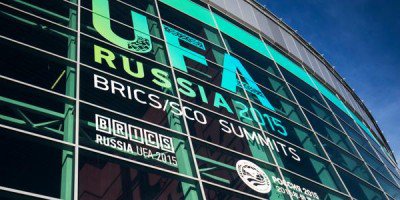
Under Russian chairmanship, both the Seventh BRICS Summit and the Fifteenth SCO Head of States Summit overlapped in Ufa, the capital of Russia’s Bashkortostan. They were held in Bashkortostan respectively from July 8 to 9 and from July 9 to 10, 2015. Not only did Ufa demonstrate the Russia was nowhere near isolated, Bashkortostan’s capital became the launching point of a rival world order.

Shanghai Cooperation Organization Expansion

The SCO initiated the process of expanding by accepting the September 2014 applications of South Asia’s two major powers, India and Pakistan, for full membership. If one considers Uzbekistan a founding member of the SCO in 2001, as the SCO and all its members officially do, this is the SCO’s first round of expansion. If one, however, does not consider 2001 the founding date of the organization and looks at the founding of the Shanghai Five (without Uzbekistan) in 1996 as the birth of the SCO, then this will be the Eurasian organization’s second round of expansion.
While it was agreed at the SCO summit in Ufa that India and Pakistan will become full Shanghai Cooperation Organization members in 2016, the status of Belarus was upgraded in Ufa to an SCO observer member from that of an SCO dialogue partner. Minsk now joins the ranks of Afghanistan, Iran, and Mongolia as an SCO observer member. Belarus will probably eventually become a full member f the Shanghai Cooperation Organization in the future.
Iran’s bid for full membership status was also taken up at the SCO summit in Bashkortostan. Tehran has long requested that its status be upgraded to that of a full member. Once the UN sanctions on Iran are dropped after a final nuclear agreement is reached between the P5+ 1 and the Iranians, Tehran will follow in the footsteps of New Delhi and Islamabad by starting the SCO accession process.
New partners were additionally accepted into the Shanghai Cooperation Organization at the SCO’s summit in Ufa. Armenia, the Republic of Azerbaijan, Cambodia, and Nepal were all accepted as new dialogue partners. They now join the ranks of Turkey and Sri Lanka as SCO dialogue partners.
Membership in the SCO is being widely sought as the Eurasian organization gains more importance and prominence. The Sri Lankans have given notice to the SCO that they wish to upgrade their status in the Eurasian organization. Countries like Bangladesh, Egypt, Syria, and the Maldives have asked to join the SCO in different capacities. Egypt applied to become an SCO dialogue partner on June 2, 2015.

The Chinese Dragon and the Russian Bear Forge a Community of Destiny

What Russia and China are doing is forging an alternative world order through the SCO, Eurasian Economic Union, and BRICS. All three bodies were brought together in Ufa. Russia is the common denominator in all three bodies while China is also a common denominator in the SCO and BRICS.
The appealing Chinese concept of a «community of destiny» that includes the People’s Republic, which was officially adopted by the National Congress of the Communist Party of China in 2007, is budding with the BRICS, SCO, EEU, and New Silk Road. Chinese officials have been promoting this concept for a few years, but it took on new life in Bashkortostan during the Ufa summit(s) hosted by the Russian federal government. «Community of destiny» – no pun intended – is the term that the policy mandarins in Beijing use to imply a special relationship of common prosperity between China and other countries, and it is materializing with the special relationship that China has with Russia and the other countries that gathered in Ufa.
Washington, however, is refusing t accept the rise of Beijing and the «community of destiny» that has shown itself in Ufa. Nor has the US shown any signs that it wants to be a part of the «community of destiny». The policy makers in the Washington Beltway refuse to see the writing on the wall and are standing firm in their refusal to accept the emergence of a new reality that is unraveling the architecture of the global order.
US officials and policy elites will continue to push the wrong policies and approach until their ship sinks. Instead of accepting consensus and a system of global governance, Washington is doing everything it can to destabilize, divide, and destroy the «Silk World Order» that China and Russia are promoting. The US position is leading the world towards conflict.
Washington Attacks the Chinese Stock Market
The financial architecture of the world is being altered too. The US dollar is gradually being neutralized as a US weapon while the monopoly of Washington’s Bretton Woods system formed by the International Monetary Fund (IMF) and World Bank is being directly challenged by the BRICS New Development Bank (NDB) and China’s Asian Infrastructure Investment Bank (AIIB). China, Russia, and a coalition of other countries are de-clawing the US by weakening its ability to manipulate currency values and the world’s financial markets.
The SCO is not only expanding. The SCO and an entire series of countries and international organizations that are primarily located in Eurasia and Latin America are ditching the US dollar in bilateral and multilateral trade. Venezuela, Cuba, Argentina, Uruguay, Sri Lanka, Turkey, Belarus, Armenia, Kazakhstan, the Socialist Republic of Vietnam, and the Democratic People’s Republic of Korea are among these countries. Aside from the SCO, the Bolivarian Alliance for the Peoples of Our America (ALBA), BRICS, Mercosur, and the Eurasian Economic Union (EEC) are the organizations and groups that are replacing the US dollar in trade.
As a response, the economic war that the US has been waging appears to have taken a new turn as well. Using speculation of an economic decline in China as a psychological weapon and market manipulation, Washington’s reaction to the steps taken by Beijing and Moscow to curb US influence and the US dollar appears to have led to the launching of a financial attack on the Chinese stock market. The aim of the attack was to hurt investor confidence in the Chinese economy and to ignite divestment through massive selloffs.
The Chinese have blamed the US while the US Treasury Department has rejected any responsibility whatsoever. Beijing’s reaction to the attempts to crash the Chinese stock market has been to calmly step in with regulations that restrict investor withdrawals. Both the China Securities Regulatory Commission and the Chinese police have launched criminal investigations.
The US wants to obstruct the pivotal role the Chinese play in financing major banking, infrastructure, and development projects that challenge Washington’s global influence. The crashing of the Chinese stock market is aimed at initiating panic among investors. Ultimately, the move is primed to undermine the economic vigor of the People’s Republic with the goal of crippling the New Silk Road and Beijing’s project to create an alternative world order with Russia and their BRICS, SCO, and EEU partners.
Tags: BRICS Eurasian Union China Russia
Source: http://www.strategic-culture.org/news/2015/07/13/fighting-russian-chinese-community-destiny-did-us-try-crash-china-market-because-brics-new-development-bank.html

Russland bietet Griechenland den Beitritt zum BRICS-Zusammenschluss an

... Russland sei .... bereit, Griechenland finanziell unter die Arme zu greifen, aber Athen habe bis dato noch nicht darum ersucht. „Griechenland ist ein EU-Mitglied und führt schwierige Verhandlungen mit seinen Partnern“, so Putin. „In dieser Situation hat Alexis Tsipras nicht bei uns um Hilfe angefragt. Und das ist auch nachvollziehbar, denn die Summe der Außenstände ist hoch.“
Während es keine direkten Finanzhilfen Russlands an Griechenland gegeben habe, wurde jedoch, so Putin, im Juni auf dem Internationalen Wirtschaftsforum in St. Petersburg eine Vereinbarung unterzeichnet, die Griechenland helfen soll, seine Schuldenkrise zu überwinden.
Russland und Griechenland haben dazu ein gemeinsames Konsortium gegründet, das den Bau der Turkish Stream Pipeline über griechischem Territorium übernehmen soll. Die Pipeline soll eine Kapazität von 47 Milliarden Kubikmeter im Jahr aufweisen und die Baukosten bei etwa zwei Milliarden Euro liegen. Die Pipeline war beschlossen worden, nachdem Russland infolge der stetigen Obstruktion seitens der EU das ursprünglich geplante South Stream Projekt verlassen hatte. South Stream sollte ursprünglich 63 Milliarden Kubikmeter an Erdgas nach Europa schaffen und dabei die instabile Ukraine umgehen.
Die Summe der griechischen Staatsschulden beläuft sich im Moment auf 316 Mrd. Euro. Nachdem es Athen nicht geschafft hatte, bis zum 1. Juli eine fällige Zahlung in Höhe von 1,6 Mrd. Euro an den IWF zu leisten, wurde Griechenland zum ersten hoch entwickelten Land, das seine Zahlungsunfähigkeit gegenüber internationalen Geldgebern deklarieren musste.
http://www.rtdeutsch.com/25732/international/putin-europaeische-kommission-hat-offenbar-lange-jahre-die-griechische-schuldenentwicklung-verschlafen/

UN-Nothilfeprogramme für Palästinenser gefährdet

Von Mel Frykberg, Jerusalem (IPS)
Bald nicht mehr finanzierbar: Puppentheater in einer vom UNRWA u
Bald nicht mehr finanzierbar: Puppentheater in einer vom UNRWA unterhaltenen Schule nahe Beirut (14. Mai 2015)
Das Palästina-Hilfswerk der Vereinten Nationen (UNRWA) muss seine Unterstützungsangebote immer weiter einschränken, weil zugesagte Gelder nicht fließen. Sollten bis Ende des Monats keine neuen Finanzierungshilfen eintreffen, werden die Zuwendungen für die palästinensischen Flüchtlinge in Syrien, im Libanon, im Gazastreifen und im Westjordanland weiter reduziert. »Derzeit sind wir mit einem Finanzierungsdefizit in Höhe von 101 Millionen US-Dollar konfrontiert. So wie sich die Lage derzeit darstellt, wird UNRWA ab September schwer zu kämpfen haben, um funktionsfähig bleiben zu können. Uns fehlen sogar die Mittel, um unsere Kernaktivitäten bis Ende des Jahres aufrechtzuerhalten«, warnte UNRWA-Sprecher Chris Gunness im Interview mit IPS. »Aufgrund etlicher vorgenommener Einsparungen werden wir zumindest die lebensrettenden Nothilfemaßnahmen bis Ende des Jahres durchführen können.«
Wegen der Finanzierungskrise sieht sich UNRWA gezwungen, die Verträge von 35 Prozent der 137 Mitarbeiter zu beenden. Auch das ist einer der Schritte, die das Hilfswerk unternommen hat, um Kosten einzusparen und zu verhindern, dass die Basisleistungen für palästinensische Flüchtlinge eingestellt werden müssen.
Wie Gunness betonte, gibt es keinen Bereich, den die Finanzierungskrise nicht tangiert. »Betroffen ist unser Fonds, mit dem wir unsere Kernaufgaben wie Bildung, Gesundheitsversorgung und Sozialleistungen finanzieren. Das gleiche gilt für den Nothilfefonds für die Menschen im Gazastreifen und im Westjordanland, die unter der israelischen Blockade beziehungsweise Besatzung leiden.«
Nach der Zerstörung des Gazastreifens durch israelische Angriffe im Juli und August vergangenen Jahres hat UNRWA im Oktober 2014 in der ägyptischen Hauptstadt Kairo eine Wiederaufbauinitiative in Höhe von 720 Millionen US-Dollar (645 Millionen Euro) angekündigt. Teile der Gelder waren für die Menschen im Gazastreifen bestimmt, deren Häuser zu stark beschädigt waren, um darin leben zu können. »Im zurückliegenden Februar mussten wir jedoch das Programm einstellen, weil uns 585 Millionen US-Dollar fehlten. Aufgrund des Defizits konnte im Gazastreifen kein einziges Wohnhaus wiederaufgebaut werden. Der Wiederaufbau steckt also in einer wirklich tiefen Krise.«
Im vorigen Jahr hatte UNRWA für Syrien Nothilfemittel in Höhe von 417 Millionen Dollar angemahnt, doch nur 52 Prozent des Betrags erhalten. Daraufhin sah sich das Hilfswerk gezwungen, die Zahl seiner Bargeldvergabeprogramme von sechs auf drei zu verringern. Die Verteilung von Bargeld gehört zu den wichtigsten Nothilfemaßnahmen in Syrien, nachdem dort viele UN-Einrichtungen im Zuge des Bürgerkrieges zerstört und die Möglichkeiten der Entwicklungsorganisation, den Flüchtlingen zu helfen, so stark eingeschränkt worden waren. Angesichts der knappen Mittel, die UNRWA erhalten hat, konnten den Flüchtlingen in Syrien gerade einmal 50 US-Cent pro Tag ausgezahlt werden.
Im Libanon sind die Palästinenser auf eine Vielzahl von UNRWA-Hilfen einschließlich Mietzuschüssen angewiesen. Wie Gunness berichtete, hatte er bei einem Libanon-Aufenthalt eine palästinensische Flüchtlingsfamilie im Schatila-Lager in Beirut besucht, die für einen 36 Quadratmeter großen Raum mit einer kleinen Küche und einem winzigen Badezimmer einen monatlichen Mietzins in Höhe von 200 Dollar zahlte. »Wir mussten unsere Mietbeihilfen Ende Juni kürzen, und ich nehme an, die Familie lebt inzwischen auf der Straße.«

Israel hält an der Entrechtung der Palästinenser fest – und Deutschland reicht dazu die Hand

Von Norman Paech

Mafiotische Beziehung

Nach dem neuerlichen Aufbringen einer »Free-Gaza-Flottille« : Israel hält an der Entrechtung der Palästinenser fest – und Deutschland reicht der Besatzungsmacht die Hand

Von Norman Paech
Blockadebruch wieder vereitelt: Fischer in Gaza protestieren geg
Blockadebruch wieder vereitelt: Fischer in Gaza protestieren gegen das Aufbringen der Hilfsflotte durch Israel (29. Juni 2015)
Auch die dritte »Free-Gaza-Flottille« hat ihr Ziel, Hilfslieferungen über den Seeweg zu den Palästinensern im abgeriegelten Gazastreifen zu bringen, nicht erreicht. Das war vorherzusehen. Die israelische Armee hat die Schiffe Ende Juni aufgebracht und in den Hafen von Ashdod entführt. Auch dieser Akt der Piraterie war brutal und rücksichtslos, wie die frühere spanische Europaabgeordnete Ana Miranda Paz (Fraktion der Grünen/Freie Europäische Allianz) berichtete, die mit an Bord war. Zum Glück wurde niemand schwer verletzt oder getötet wie noch im Mai 2010. Aber er geschah wie vor fünf Jahren auf offener See, in internationalen Gewässern. Besatzung und Passagiere der Schiffe waren auch dieses Mal unbewaffnet und hatten es strikt vermieden, in israelische Territorialgewässer zu fahren.
Israel hatte nach dem tödlichen Angriff auf die Flottille vor fünf Jahren beteuert, das internationale Seerecht zu achten. Aber was kann man schon von einem Regime erwarten, welches sich bisher über alle Regeln des internationalen Rechts hinweggesetzt hat? Es hat weder die völkerrechtswidrige Blockade des Gazastreifens aufgehoben, noch die Kriegsverbrechen im jüngsten Krieg gegen Gaza eingestanden, die vielfältig dokumentiert und jetzt von einer Kommission des UN-Menschenrechtsausschusses mit Beweisen belegt werden. Es hat jede Zusammenarbeit mit dem Menschenrechtsausschuss wie mit dem Internationalen Strafgerichtshof in Den Haag zur Aufklärung der Verbrechen abgelehnt. Während es die seit 2006 in demokratischen Wahlen legitimierte Hamas als Terrororganisation nun schon zum zweiten Mal mit einem blutigen Krieg zu vernichten versuchte, pflegt es verwundete Kämpfer einer wirklichen Terrororganisation, des »Islamischen Staats« (IS), in seinen Krankenhäusern gesund, damit sie ihren Terror im Nachbarstaat Syrien weiterführen können.
Man fragt sich immer wieder, in welche Niederungen Politik und Rechtsbewusstsein abgesunken sein müssen, um eine derart perverse Kriegsmoral auch noch öffentlich der internationalen Kritik entgegenhalten zu können. Man wird vielleicht noch über die stereotype Behauptung von Regierungschef Benjamin Netanjahu, dass die israelische Armee die moralischste Armee der Welt sei, lächeln. Aber es stockt einem der Atem, wenn der Kriegsminister Moshe Yaalon droht: »In gewissen Fällen, wenn chirurgische Operationen nicht ausreichen, könnte Israel Maßnahmen ergreifen, wie sie die Amerikaner in Nagasaki und Hiroshima unternommen hatten.« Ist er von Sinnen oder schlicht ein internationales Sicherheitsrisiko, dem man die gleiche klinische Aufmerksamkeit zuwenden sollte wie Flugpiloten? Auf jeden Fall vermag seine deutsche Kollegin Ursula von der Leyen nicht zu beruhigen, wenn sie ein Gespräch mit ihm anlässlich der Feierlichkeiten zur Aufnahme diplomatischer Beziehungen vor 50 Jahren in angenehmstem Einverständnis und voller Übereinstimmung geführt haben will. Auch scheint sie den Abstieg in die Abwässer des Geschmacks nicht zu scheuen, wenn sie Yaalon versichert, dass sie die Übernahme eines Teils der Kosten für die vier zugesagten Kriegsschiffe als eine Art Wiedergutmachung für die Verbrechen des Holocausts betrachte. Sie wird ihren Fehlgriff nicht einmal bemerkt haben, da die Instrumentalisierung des Holocausts offensichtlich der Strategie Israels entspricht. Dies hatte die Sprecherin der israelischen Botschaft in Berlin, Adi Farjon, dieser Tage einigen Journalisten in Berlin zu verstehen gegeben, als sie erklärte, dass es im Interesse Israels liege, die deutschen Holocaust-Schuldgefühle aufrechtzuerhalten und dass deswegen Israel keine völlige Normalisierung der Beziehungen mit Deutschland anstrebe.
Was nützt es dann, ein Regime auf die UN-Seerechtskonvention (United Nations Convention on the Law of the Sea – UNCLOS) hinzuweisen, dessen stellvertretende Außenministerin Tzipi Hotovely die vollständige Auslöschung Palästinas und der Palästinenser fordert und den Angriff auf die »Free Gaza Flottille« mit dem Schutz israelischer Territorialgewässer begründet? Diese erstrecken sich laut Seerechtskonvention auf 22 Kilometer von der Küste aus. Allerdings haben die Schiffe nie in diese Gewässer Israels eindringen wollen. Die Küstengewässer des Gazastreifens gehören nicht zum Territorium Israels. Die Behauptung der Regierung in Tel Aviv entbehrt bereits jeder tatsächlichen Grundlage bevor sie juristisch relevant werden könnte.
2008 hatte die Europäische Union Israel aufgefordert, die Blockade des Gazastreifens umgehend aufzuheben. Zwei Jahre später, am 30. Juni 2010, haben alle fünf Fraktionen des Bundestags gemeinsam die Bundesregierung aufgefordert, »die Forderung der Europäischen Union nach einer sofortigen Aufhebung der Gazablockade mit Nachdruck zu unterstützen«. Dabei ist es geblieben. Gaza wird nach wie vor wie ein Gefängnis von der Welt abgeschnitten und in seinen Trümmern nach dem letzten Überfall dem mühseligen Überlebenskampf überlassen.
Die Bundesregierung wird nicht müde, bei jeder Gelegenheit die hervorragenden und ungetrübten Beziehungen zu Israel zu rühmen. Sie erkauft sie mit der ungebremsten Lieferung von Kriegsmaterial und mag sich nicht eingestehen, dass diese Beziehungen vollkommen verkrampft, erzwungen und verlogen sind – geradezu von mafiotischer Struktur. Wie anders kann man Beziehungen werten, in denen der eine Partner mit dem Stiefel auf dem Nacken eines Volkes dessen Vertreibung aus seiner Heimat betreibt, ohne sich um die einfachsten Regeln des Völkerrechts zu kümmern – und der andere Staat ihm die Hand reicht und die angerichteten Schäden zu beheben sucht? Das sind keine normalen Beziehungen, die sich allein aus den Verbrechen der Vergangenheit rechtfertigen lassen. Sie nehmen die wachsende Kriminalität der Staatsführung und ihre Isolierung in der Staatenwelt in Kauf. Normal werden diese Beziehungen erst dann, wenn es Frieden mit dem palästinensischen Volk gibt, in dem es ungehindert und ohne Lebensgefahr auf dem Landweg, aus der Luft und über die See erreicht werden kann. Doch wird dies nach all den Jahrzehnten des Scheiterns nur mit dem Druck der Staaten und eines von der Zivilgesellschaft unterstützten Boykotts möglich sein.
Junge Welt: Aus: Ausgabe vom 13.07.2015, Seite 3 / Schwerpunkt
 Der Völkerrechtler Norman Paech war von 2005 bis 2009 Mitglied des Deutschen Bundestages und außenpolitischer Sprecher der Fraktion Die Linke. Zusammen mit den Linke-Abgeordneten Annette Groth und Inge Höger beteiligte er sich im Mai 2010 am Versuch, die Seeblockade des Gazastreifens zu durchbrechen. Beim Entern der »Mavi Marmara« in internationalen Gewässern wurden von israelischen Marinesoldaten neun Menschen getötet.

Sunday, July 12, 2015

Happy Birthday, BDS!

Heute vor genau 10 Jahren begann BDS mit einem Aufruf von weit über 100 palästinensischen Organisationen an die Weltöffentlichkeit:
Palästinensische Zivilgesellschaft ruft zu Boykott, Investitionsentzug und Sanktionen gegen Israel auf, bis es internationalem Recht und den universellen Prinzipien der Menschenrechte nachkommt.
9. Juli 2005     - See more at: http://www.bdsmovement.net/call#German
 
Es begann eine große Erfolgsgeschichte, die in den verschiedenen Web-Sites der BDS-Bewegung dokumentiert ist, z.B. unter:
 
BDS zeigt Wirkung!  Der nervöse Aktionismus israelischer und US-amerikanischer Politiker bezeugt das. (Recht gut beschrieben ist dies in Haaretz vom 7.7.15  www.haaretz.com/news/middle-east/1.664833)
So wird der US-Senator Portman (Republikaner aus Ohio) in der THE TIMES OF ISRAEL vom 23. 4. 2015 zitiert in einem Artikel unter dem Titel Congress moves to pressure Europe against BDS Steps (http://www.palaestina-heute.de/Thema_des_Monats/Juli_2015__BDS/Artikel_in_der_TIMES_OF_ISRAEL/artikel_in_der_times_of_israel.html :
From the time it was founded Israel has been target of a lot of attacks from militaries and terrorist groups but now there’s also this other attack. …(BDS) is in some ways more pernicious because it is economic warfare.
 
Die ehemalige Fürst-Lady Hillary Clinton setzt vor genau einer Woche die Verteufelung der ach so gefährlichen BDS-Bewegung fort in einem Brief an den israelisch-amerikanischen Medienmogul und Erz-Zionisten Haim Saban, in dem sie geradezu peinlich unterwürfig um Rat (und damit sicher um Geld) nachfragt, wie man gemeinsam den Feind BDS bekämpfen könne.  Sie geht so weit, rührselig an ihren Besuch in der Altstadt von Jerusalem "with Bill" zu erinnern und zu behaupten, dass sie damals "fell in love with the country and its people" -- Meinen Sie das wirklich, Hillary Clinton? Wissen Sie denn nicht, dass Sie damals in besetztem Gebiet umherspazierten und dass "the people" Palästinenser waren. Oder wissen Sie es und signalisieren Sie hier, dass Sie in Wirklichkeit auf der Seite der Unterdrückten, der Palästinenser stehen...? 
 
Ha’aretz veröffentlichte am 6.7.2015 diesen Brief (http://www.haaretz.com/news/diplomacy-defense/1.664694?utm_content=%2Fdiplomacy-defense%2F1.664694&utm_medium=EMAIL&utm_source=SMARTFOCUS&utm_campaign=hdc+Haaretzcom+Daily&utm_term=20150706-20%3A07), der von uns teilweise übersetzt wurde und mit Kommentaren zu finden ist unter
http://www.palaestina-heute.de/Thema_des_Monats/Juli_2015__BDS/Hillary_Clinton_an_Haim_Saban/hillary_clinton_an_haim_saban.html

Liebe BDS-Aktivisten, Ihr seid auf dem richtigen Weg!  Sonst würden solche Großkopfeten sich nicht Euretwegen Sorgen machen. Dank an Euch!!!
Und wir werden unverdrossen den Geschäftsführer unseres Bio-Supermarktes nerven (und nicht nur ihn), indem wir immer dann, wenn wieder Gemüse oder Obst aus Israel im Angebot erscheinen, zu ihm gehen und (wieder) fragen, ob er denn sicher sein könnte, dass diese Waren nicht aus den besetzten Gebieten stammten und damit widerrechtlich eingeführt seien.   
 
Happy Birthday!!!
sagen
Renate und Frank
die allerdings bei der Freude über die BDS-Erfolge nicht vergessen können, dass genau vor einem Jahr der letzte große Überfall auf Gaza begann und dass das Land immer noch in Trümmern liegt und dass die Welt es schweigend geschehen läasst, dass Israel die gequälten Menschen dort weiterhin aushungert!

Saturday, July 11, 2015

"US Geopolitical Concerns as Athens Rekindles Ties with Western Foe Russia" Finian CUNNINGHAM

US Fears Euro Crisis Unravelling Anti-Russia Project

Finian CUNNINGHAM | 11.07.2015 | 00:00

As leaders of the European Union meet this weekend to decide on whether Greece is to be ejected from the eurozone, Washington is pulling out the stops to prevent such an outcome.
What is alarming Washington is not the technical, financial arguments over Greece’s eligibility to remain inside the EU’s monetary system. Nor, we can aver, are the pressing human concerns about the poverty-stricken Greek people from the collapse of their country’s economy. What has the US rattled is that the monetary crisis in Europe could lead to much bigger geopolitical consequences: in particular, the EU’s bickering threatens to unravel Washington’s carefully constructed anti-Russian agenda in which, for the US, a coherent Europe plays a vital role.
If the Greek financial crisis spreads to other EU member states the result could see the 28-member bloc become riven with acrimonious splits; splits that will crack wide open to undermine the American strategy of trying to isolate Russia through a US-imposed cleavage between Moscow and the rest of Europe. Even the future of the US-led NATO military alliance could be at risk if the EU financial crisis gets out of control.
The main target for US diplomatic efforts at keeping the 19-member single-currency system together is Germany. Berlin’s insistence, led by Chancellor Angela Merkel, that no debt write-off can be afforded to Greece is raising the stakes that Athens will be forced into a»Grexit» from the eurozone. Germany, along with Latvia and Lithuania, has been strident in its demands that Greece must pay off its debts in full through a mixture of austerity and «fiscal consolidation».
The Greek government of Alexis Tsipras, on the other hand, says that there must be a substantial measure of debt write-off for its continued membership. Tsipras seems prepared to cave in on the question of exacting more austerity from the Greek population. Nevertheless, his avowedly anti-austerity Syriza government will not survive the Greek electorate if it doesn’t also deliver on a major debt write-off for the nation in order to mitigate the next round of austerity cuts – a debt write-off that would perhaps amount to one-third of the total, or around €100 billion.
To that end, Washington is pushing Berlin to relinquish its hardline creditor position, and to make concessions on the Greek debt that would involve at least a partial cancellation of its €320 billion total arrears.
This week, ahead of the EU «deadline summit» scheduled for Sunday, the Obama administration and the Washington-dominated International Monetary Fund (IMF) issued strenuous statements urging Germany to give way on debt relief.
The Financial Times reported: «US Treasury Secretary Jack Lew and the IMF’s Christine Lagarde on Wednesday sought to increase pressure on European [German] leaders to grant debt relief to Greece and help the country avoid an exit from the eurozone. In separate interventions in Washington both said it was clear that Greece was in need of a ‘debt restructuring’ in an implicit call for Germany and others to drop their opposition to any forgiveness of Greek debts».
Noting that «the US has become an important advocate for granting Greece debt relief», the FT added: «Warning that a Greek meltdown would cause hundreds of billions of dollars of economic damage around the world, Jack Lew issued the Obama administration’s loudest call yet for compromise».
For several weeks now, Washington has been urging EU leaders and Athens to come up with a financial solution to the crisis, and one that keeps Greece within the eurozone.
In another report this week, the Wall Street Journal  headlined: ‘Obama Urges Germany, Greece to Compromise on Emergency Financing’.
«President Barack Obama on Tuesday urged German Chancellor Angela Merkel and Greek Prime Minister Alexis Tsipras to compromise on an emergency financing deal that could keep Greece in the eurozone,»reported the WSJ.
According to the WSJ: «White House spokesman Josh Earnest said the president was encouraged by assurances from both leaders in separate phone calls that ‘it’s in their collective and mutual interest for Greece to remain part of the eurozone’».
Obama reportedly stressed in the phone call to Merkel «that the only way that we’ll succeed in achieving that goal is for all of the parties to agree to a package of reforms and financing that puts Greece back on a path toward economic growth and debt sustainability’».
The phrase «debt sustainability» entails cancellation.
In the Financial Times’ report cited above, the US Treasury Secretary Jack Lew is quoted as saying: «There’s a lot of unknowns if this goes to a place that completely melts down in Greece. I think that is a risk that the Europeans and global economy don’t need. I think geopolitically it would be a mistake».
Alluding to the bigger, underlying concerns, the Wall Street Journal warned about the consequences of a Greek exit from the EU currency:»That prospect worries the US. Not only could the Greek crisis weigh on US exports and fuel market turmoil but also a Greek exit could raise geopolitical concerns as Athens rekindles ties with Western foe Russia and risks turning into a failed state».
So, reading between the lines here, it soon becomes clear that it is the «geopolitics» of the EU crisis that is most animating Washington, and how that relates to Russia in particular.
The real US perspective was spelled out in a Voice of America  report dated on June 29, when the current crisis came to a head between the Berlin-led EU creditors and Greece. VoA quotes Gary Hufbauer, from the hawkish Washington-based Peterson Institute for International Economics, who said the US government is alarmed over the potential wider implications of the Greek financial crisis.
Hufbauer said: »The US is concerned that the chaos in Greece could be infectious and will lead to doubts about Portugal and Spain and Italy and cause trouble, and will cause disunity in Europe’s resolve with respect to Russia over the Ukraine situation».
Such disunity in Europe, which the US fears, would inevitably unravel the anti-Russian economic sanctions that the EU has implemented, primarily at Washington’s beckoning since the Ukraine crisis erupted last year. The disunity would also undermine the US-led policy of NATO hostility toward Russia that Brussels has adopted and to large extent has imposed on the European bloc despite the misgivings of several EU member states.
The tensions over the EU financial crisis are driving a fundamental contradiction between Washington and Berlin. Germany is concerned that if any debt write-off is afforded to Athens, then other equally indebted countries in the EU will also want similar massive debt cancellation. As the biggest creditor in the EU bloc, Germany stands to lose heavily from any such serial write-offs. Chancellor Merkel has put the credibility of her government on the line with the German electorate, promising that the resolution of the crisis will not impinge on their nation’s economy. But taking a $100 billion haircut, if Germany is forced to do so, is going to make a lot of Germans angry as hell.
However, if Germany refuses to yield to debt restructuring then Greece will in all likelihood be forced into an exit from the monetary system. That will in turn lead to Greece having to seek financial help from other international creditors to shore up its crippled economy. Cut off from the European Central Bank and the IMF, Greece will have to turn to Russia, China and other BRICS nations to save itself from disintegration. That is the very thing that Washington is loathe to contemplate, and that is why the Obama administration is pushing Berlin to relent on its hardline debt stance towards Athens.
If Greece were to exit the eurozone, there will be recriminations across the EU, from countries such as France, Italy and Spain, which have also been urging Berlin to take a more accommodating line on Athens. Even Britain has been cajoling Berlin to make a deal with Greece, no doubt for the same unspoken ulterior geopolitical reasons as Washington.
The contradiction in Europe over the financial crisis is thus putting Washington on a head-on confrontation with Berlin. Washington needs Berlin to take a severe creditor hit in order to keep the EU coherent for its geopolitical objective of isolating Russia. But Berlin’s subservience to Washington is going to be severely strained if it is eventually forced to take such a hit to its economy. Berlin has talked itself into a political corner with its hardline creditor rhetoric towards Athens. How will Merkel explain a capitulation to her people?
One thing is sure, however. The American NSA phone-tappers at the German Chancellery are working overtime these days.

UFA and Beyond: “Gone are the days of unchallenged US domination”


Ufa-Summit-for-Nazemroaya-article-400x200 
The BRICS/SCO Summit(s) in Ufa Marks the Start of a Silk World Order
Mahdi Darius NAZEMROAYA | 10.07.2015 | 00:00
Get ready for ground shattering geopolitical changes. At the crossroads of Asia and Europe, it has been decided that the Russian city of Ufa will be the point of convergence for all the initiatives and projects of the Silk World Order of trade and integration that China and Russia are spearheading. Ufa, which is the capital of Russia’s Bashkortostan, is being used to simultaneously host an extraordinary summit for both the BRICS—which has increasing become an alternative forum to that of the G7—and the Shanghai Cooperation Organization (SCO) respectively from July 8 to 9 and from July 9 to 10, 2015.
The Coming Together of Eurasia and Beyond
The joint BRICS and SCO summit in Ufa has been organized by Moscow as the simultaneous holder of both the rotating chairmanships of the BRICS and the SCO. It is no coincidence, however, that the Seventh BRICS and Fifteenth SCO summits have been amalgamated as one large international summit. The Kremlin has used has used the opportunity to bring Russia’s partners together. This is part of the integration process of the Silk World Order. There will be joint BRICS and SCO sessions and many important exchanges and discussions about a new archetype for the world.
One informal session at Ufa will not only include all the members of the BRICS and the SCO, but will also include all the members of the Eurasian Economic Union (EEU), according to information disclosed by Russian President Putin’s aide Yury Ushakov to the Russia media days before the summit in Ufa. Aside from Brazil and South Africa, since all the members of the BRICS and the SCO are located in Eurasia, the Kremlin saw it as pertinent that the EEU be involved in some type of discussion about the development of the Eurasian space. In essence this means that Armenia will be attending the joint BRICS and SCO summit in Bashkortostan, since all the other members of the Eurasian Economic Space are either full SCO members or, in the case of Belarus, an SCO dialogue partner. According to the Mercator Institute for China Studies (MERICS) in Berlin, which asserts that the BRICS-SCO-EEU talks are «a sign that Russia is aiming for political block-building», the Republic of Azerbaijan and Turkmenistan will also take part in informal meeting of the BRICS, SCO, and EEU. [1]
The Eurasian and global convergences in Ufa are clear. Using the links that already exist between the two, China’s New Silk Road and the Russian-led Eurasian Economic Union will begin a roadmap to fuse together in Bashkortostan as pivotal axis of rotation in the Eurasian space. This is a continuation of the high-level discussions that were announced by both Chinese President Xi Jinping and Putin on May 8 on the Xi Jinping’s arrival to Moscow, ahead of the Victory Day celebrations on May 9, 2015.
After failed attempts at different venues, Indian Prime Minister Narendra Modi and Iranian President Hassan Rohani will finally meet in Ufa. India and Iran are rekindling their strategic bonds that had been neglected by the government of Modi’s predecessor, Prime Minister Manmohan Singh. The use of the Iranian port Chabahar by India for gaining access to Russia and Central Asia through the North-South Corridor will definitely be discussed by Indian and Iranian officials at Ufa.
The Coming Silk World Order Being Unveiled in Ufa
While the New Silk Road and the EEC come together in Ufa, the BRICS will put together a development map while the SCO will outline its expansion plans for new full members. The applications of India, Iran, and Pakistan for full membership will be addressed. Moreover, Egypt and several other countries have applied to join the SCO in come context.
Ufa is being used to stamp out a roadmap for the «Eurasian Century» and a Silk World Order that goes beyond Eurasia, which includes everything from a transcontinental mega railroad network connecting the Iberian Peninsula to the South China Sea and to what has been dubbed as the «modern city of the Eurasian continent» in Belarus.
The US is clearly worried about the Silk World Order that is emerging. It has begun to pull out all the stops, from courting Brazil on the eve of the summit in Ufa to call for the European Union to not join China’s banking project. The Pentagon’s 2015 Military Strategy that addresses the possibility of confrontation with an updated «Axis of Evil» composed of China, Russia, Iran, and North Korea is catered to Washington’s proclivity to confront the countries that are challenging a US-dominated international order.
While Washington and NATO are making a general call to arms, the Chinese are busy building trade infrastructure and transport networks. In Belarus, the Chinese are building the first «modern city of the Eurasian continent» in the forests next to the Minsk National Airport as part of what Bloomberg calls «a manufacturing springboard between the European Union and Russia.» [2] Upon completion, the new export-oriented city in Belarus, which is being built on the route of the European highway that links Berlin, Warsaw, Minsk, and Moscow, will be the largest manufacturing and industrial park in Europe.
The US Dollar and Bretton Woods are Finished
The Silk World Order that is being shaped in Ufa will see the existing Bretton Woods financial architecture of the world unraveled and replaced by one that is no longer dominated by the trilateral grouping of the United States, Western Europe, and Japan. The monopoly of the World Bank and the International Monetary Fund, which has benefited Washington, is at its end. The US dollar as a currency in bilateral and multilateral trade is being scraped by the BRICS, SCO, and EEU— Washington’s flooding of oil markets was partially aimed at derailing this by forcing renewed dependence n the US dollar for energy trade.
The BRICS New Development Bank (NDB), the first institution of the BRICS, is being launched by Brazil, China, India, Russia, and South Africa. It is joined by the SCO Development Bank and by the recently launched Asian Infrastructure Investment Bank (AIIB) in the assault on Bretton Woods.
Gone are the days of unchallenged US domination. The architecture of the post-Second World War or post-1945 global order is now in its death bed and finished. With or without Washington, a Silk World is emerging and its coming is being trumpeted from Ufa as the SCO strengthens and the BRICS institutionalizes itself as the cornerstone of a new multi-polar world order.
NOTES
[1] Gabriel Domínguez, «What to expect from the SCO, BRICS summits in Russia», Deutsche Welle, July 6, 2015.
[2] Aliaksandr Kudrytski, «China Builds EU Beachhead With $5 Billion City in Belarus», Bloomberg, May 26, 2013.