‘ISIS and Al Qaeda – working in tune with Western strategic designs’
|
Sunday, June 28, 2015


Good News on The Horizon: Imperial Forces Being Put Pushed Aside Graudally
You Can't Win Them All: This Time US May Lose New Arms Race
| News | 28.06.2015 | 00:26 |
Sputnik - The United States may lose a new arms race in today's multi-polar world, prominent US writer and publicist David A. Andelman says, stating that Washington is currently facing new multinational, multidimensional threats.
According to prominent American writer and publicist David A. Andelman, Washington is facing a new arms race, potentially far more threatening than during the Cold War.
"All that is history. But not the arms race. It's still going on, though in a vastly different, expanded and far more expensive format that's potentially even more threatening. And this time we may be losing," the writer stressed.
Mr. Andelman pointed out that this year Moscow demonstrated "three new, utterly modern armored vehicles" during its May 9 Victory Day parade. Russia is seeking to replenish its military arsenal that now includes new MIG-35 multirole fighters, advanced Pantsir mobile artillery weapon systems, Bora-class guided missile hovercrafts and stealth submarines.
"In all, we are looking at a potent 845,000 troops, 22,550 tanks, and 1,399 combat aircraft, with 70% of Russian equipment defined as "modern" in the next five years," the publicist underscored.
Meanwhile, China is modernizing its People's Liberation Army at a steady pace. China's defense expenditures now amount "for more than a third" of all military spending in Asia. Furthermore, Beijing has already launched its first aircraft carrier Liaoning, a renovated 302-meter former Soviet vessel, and is currently building a second one, which is expected to be far more advanced.
According to the writer, China's military spending last year amounted to $216 billion, while Russia had spent only $84.5 billion. In contrast, the United States annually pours more than $600 billion in its military sector.
However, Mr. Andelman remarked that "such numbers don't tell the full story."
"Today's new arms race is not just with Russia, but an integral part of today's multipolar world. And certainly it's more expensive, in part because of the multinational, multidimensional threats… At the same time, we must not be distracted from our greatest, potentially existential, threats: terrorism and its special warfare requirements, and the cyber arms race," he stressed, insisting that China and Russia are matching the US here "step for step."
The author believes that Washington should spend more if it wants to come out on top, slamming the Senate for voting down an essential appropriations bill, after it approved a $600 billion defense budget.
At the same time Mr. Andelman pointed to the Pentagon's decision to supply heavy offensive weapons to the Baltic states and Poland, "all NATO members directly on Russia's frontiers."
"None of this should suggest that any armed conflict is imminent. But it's quite clear that on multiple fronts this time, we're in a new arms race, with no clear winner," he highlighted.
|
| Tags: Missile defense Russia |
Saturday, June 27, 2015
Wo ist der Autor Alexander Dorin?
 Am 11. Juli jährt sich Srebrenica zum 20.Mal. Auf Hochtouren läuft die Srebrenica Gedenkindustrie, Großbritannien bereitete eine UNO-Resolution zur Verurteilung des Völkermords von Srebrenica vor.
Das Hauptziel dieser geschichtsverfälschenden Bemühungen des Westens besteht natürlich darin, die überragende Rolle Serbiens oder Griechenlands und vor allem der Sowjetunion bei der Zerschlagung des Nazi-Reiches zu relativieren und umzudeuten, und umgekehrt sollen die nazifreundlichen Bevölkerungsgruppen in Kroatien, Kosovo, Bosnien usw. moralisch aufgerüstet und rehabilitiert werden.
In diesem Zusammenhang beunruhigt insbesondere das Schicksal des Srebrenica Buchautors Alexander Dorin, dessen Aufenthaltsort seit 10 Tagen noch immer unbekannt ist:


Friday, June 26, 2015
Palestinians submit Israeli war crimes files to ICC
| News | 27.06.2015 | 00:01 |
middle-east-online.com - The Palestinian Authority on Thursday submitted a first dossier of evidence to the International Criminal Court (ICC) in support of its campaign to have Israel investigated for alleged war crimes.
"The state of Palestine has pledged to cooperate with the court including by providing it with relevant information and it is fulfilling its pledge today," Palestinian Foreign Minister Riad al-Malki told journalists after leaving the court.
"The information provided by the state of Palestine make a compelling case for the prompt opening of an investigation," Malki added.
ICC chief prosecutor Fatou Bensouda in January launched a preliminary probe to see whether there was enough evidence for a full-blown war crimes investigation into last year's conflict in the Gaza Strip between Israel and the Palestinian Islamist movement Hamas.
The documents handed over on Thursday consist of two files: one about alleged Israeli crimes committed in Gaza during the 50-day war in July and August last year that killed 2,200 Palestinians, mostly civilians, and 73 Israelis, mostly soldiers.
The other file deals with Israel's occupation of the West Bank and East Jerusalem, including "information about the issue of Palestinian prisoners," the Palestinian mission in The Hague said.
"Achieving justice is essential for the Palestinian victims, dead and alive," said Malki. "Palestine has chosen to seek justice not vengeance, this is why we are here today."
- 'Counterproductive' -
Israel, which has not signed up to the ICC, has vehemently opposed the Palestinians attempt to trigger an investigation.
Reacting to Thursday's move by the Palestinian Authority, Israeli foreign ministry spokesman Emmanuel Nahshon said it was "nothing more than an attempt to manipulate the ICC", adding "we hope that the prosecutor will not fall into the trap."
The United States, which is also not a signatory to the ICC, also condemned the Palestinian initiative.
The US has "made clear that we oppose actions against Israel at the ICC as counterproductive," National Security Council spokesman Alistair Baskey said.
Thursday's submission is part of an increased focus on diplomatic manoeuvring by the Palestinians, who have been frustrated with the lack of progress in ending the Israeli occupation and creating their own independent state.
The Palestinian Authority ratified the statute creating the International Criminal Court in January.
Its submission of evidence comes three days after the release of a UN report that said both Israel and Palestinian militants may have committed war crimes during the 2014 Gaza conflict.
Bensouda has warned that both sides to the Gaza war could face war crimes charges in the case.
Among the more controversial events of the conflict was Israel's bombing of UN schools being used as shelters for the displaced.
Israel said it was forced to carry out the strikes, claiming Hamas used them to store weapons or fire rockets at Israel.
The ICC was set up in 2002 to investigate and try those responsible for genocide, war crimes and crimes against humanity, where national authorities cannot or will not prosecute.
|
White House opposes Palestine’s bid to sue Israel
| News | 26.06.2015 | 14:02 |
PressTV - The White House has expressed opposition to a bid by the Palestinian Authority to prosecute Israel for war crimes in Gaza.
Palestinian Authority Foreign Minister Riyad al-Maliki has submitted a dossier to the International Criminal Court (ICC). The files detailed Israeli war crimes in Gaza and its illegal construction in the West Bank and East Jerusalem.
The files were prepared by a 45-member committee, appointed by President Mahmoud Abbas in February, and chaired by Palestinian Liberation Organization (PLO) negotiator Saeb Erekat.
They complement a preliminary investigation done by ICC prosecutor Fatou Bensouda into probable crimes on Palestinian territory.
The United States has “made clear that we oppose actions against Israel at the ICC as counterproductive,” National Security Council spokesman Alistair Baskey said on Thursday.
"We do not believe the Palestinians are eligible to accede to the Rome Statute and join the International Criminal Court," added Baskey.
In addition, two US lawmakers warned on Thursday that the US would suspend its economic assistance to the Palestinian Authority.
“By formally submitting allegations against Israeli forces to the ICC Chief Prosecutor, President [Mahmoud] Abbas has triggered a provision in US law that suspends all economic assistance to the PA,” said Rep. Nita Lowey (D-N.Y.), the top Democrat on the House Appropriations Committee.
Also, Rep. Kay Granger (R-Texas) put forward a bill that would include instructions for the assistance in the next fiscal year, which begins Oct. 1.
On Thursday, she sent out a reminder that the directive includes possible limitations on the US financial support to the Palestinian Authority.
Israel also criticized the move, calling it an “attempt to manipulate and politicize the judicial mechanisms of the ICC.”
A separate investigation by the United Nations Human Rights Council has accused Israel of committing war crimes in Gaza War last summer.
The Tel Aviv regime started its latest aggression against the Gaza Strip in early July 2014. The war, which lasted for 50 days, claimed the lives of over 2,130 Palestinians, including many children and women, and injured some 11,000 others.
|
Lybia, Another Example of Unlawful Horror Created by The Empire That Needs to Be Confronted
Libya: Situation is Unpredictable
| Alexander MEZYAEV | 27.06.2015 | 00:00 |

The situation in Libya is continuing to develop alarmingly. The current situation in the country is characterised by a complete lack of any signs of a state system. Libya is being devoured by civil war, disintegration, and the seizure of its territory by a huge variety of forces, most notably the Islamic State. Despite the fact that Prime Minister al-Thani took part in the recently concluded African Union summit in Johannesburg as the head of Libya, suggesting that he is actually the one ruling the country would be a sad joke. And although al-Thani’s government is actually recognised by the African Union (and the majority of other countries) as ‘legitimate’, this is more out of despair.
At present, the ‘legitimate’ government is located in Tobruk, about a thousand miles from the country’s capital, Tripoli. But even there, neither Prime Minister Abdullah al-Thani nor his government are in control of anything. In February, the residence of the head of parliament, Saleh Issa, was bombed by Islamic State militants and in May, Prime Minister al-Thani was lucky to survive an assassination attempt.
Parallel government bodies are operating in Tripoli that also have no control over the situation in the country, just individual parts of the former Libyan Jamahiriya. There is a total of five competing ‘governments’ in Libya, not counting those that have not proclaimed themselves to be a government, but are simply taking power into their own hands. Not a single one of the Libyan ‘governments’ has managed to resolve the country’s main problem – putting an end to the mass violence and establishing at least some kind of control over the situation – and the number of armed groups is only increasing.
The situation was triggered back in 2012 when the latest in a series of favourites in the rank of ‘government’ officially decided to form armed brigades and provide them with law enforcement functions and the right to detention, establishing relatively high rates of pay for those working in them. This immediately led to the emergence of not one, but several parallel armies, police forces and other ‘gendarmes’. Since then, many armed groups have become more efficient, improved their weapons and begun to outperform the national army and police force, while remaining on the payroll of the government. The weapons that once belonged to Muammar Gaddafi’s army have been looted and there is now a powerful uninterrupted flow of weapons into the country from abroad, including heavy artillery and ammunition. Despite efforts to tighten up the arms embargo, weapons continue to flow into the country (1).

Since 90 per cent of Libya’s economy depends on the sale of oil, there is an ongoing bloody struggle for the possession of oilfields, pipelines and ports. In the western parts of the country, the Libya Dawn coalition, which seized the capital of Tripoli and its environs, announced the appointment of a «Government of National Salvation» (after which Prime Minister al-Thani and his government fled to the east of the country). After taking control of Tripoli, Libya Dawn began a large-scale military operation in the area inhabited by the Warshefana tribe to strengthen its control over the city’s surrounding areas. Several weeks of intensive shelling of areas of Aziziya and Swani led to the exodus of more than 120,000 inhabitants. A counter-offensive by Zintani forces launched to prevent the possible advance of Libya Dawn also led to a huge number of deaths and a massive displacement of the population.
Armed clashes in the oil-producing region resulted in the closure of oil loading ports in al-Sidra and Ra’s Lanuf and the destruction of seven of the country’s nineteen oil-storage facilities. There are ongoing armed conflicts in eastern Libya between Operation Dignity forces, mostly made up of Libyan army soldiers and other forces faithful to General Khalifa Haftar, and the Shura Revolutionary Council in Benghazi, a coalition of Islamist militias. The military clashes taking place in Libya are not just about sorting out the armed groups. The situation has long since grown into a civil war. Civilians are increasingly taking part in fighting on both sides and tensions are being stirred up between families.
A particular factor of the current situation in Libya is the creation of the Islamic State in part of its territory. The Shura Council of Islamic Youth in Derna has already sworn allegiance to IS (2). Although not all Islamic organisations in Libya have supported IS, its positions are gradually becoming stronger. So strong, in fact, that in February, Egypt carried out a massive strike on IS positions.
And what has been the UN’s reaction? After all, it was the UN Security Council that passed Resolutions 1970 and 1973, which served as a justification for NATO aggression. So far, the response to what has been taking place has been two new UN Security Council resolutions that will obviously not be able to solve the Libyan crisis. Resolution 2214 on the extension of sanctions against a number of terrorist organisation members, for example, was adopted at the same time as a report was published by a panel of exports from the UN Security Council on Libya, which openly said that the regime of sanctions was ineffectual and virtually did nothing to prevent the illegal trade of oil and the trade of weapons (3). The provisions of another resolution, Resolution 2215, simply come across as clueless: «The UN Security Council reminds the Libyan government that «arms and related materiel, including related ammunition and spare parts, that are supplied, sold or transferred as security or disarmament assistance to the Libyan Government should not be resold to, transferred to, or made available for use by parties other than the designated end user».

Of special note is the role of the International Criminal Court (ICC). During the preparation and carrying out of NATO operations against Libya in March 2011, this institution openly came out as an instrument of war. The arrest warrant issued by the ICC against Muammar Gaddafi was a legal justification for war. Several days ago, the UN Security Council held its regular review of ICC activities in Libya. It became known that the International Criminal Court had launched a new investigation into the Islamic State. However, the proceedings already underway are in limbo. Neither Muammar Gaddafi’s son, Saif Gaddafi, nor al-Senussi (former state security minister in Gaddafi’s government) have as yet been handed over to the ICC, while the ICC itself is acting as if nothing special is going on. While feigning attempts to call for Saif Gaddafi to be handed over to The Hague, the court has abandoned any further demands regarding al-Senussi. And this is with the complete annihilation of the state system, including the legal system!
Essentially, the Security Council is just pretending that something is required of the Libyan authorities, without actually taking any kind of action that would force the Libyan government to comply with its demand. As we saw earlier, the UN Security Council was perfectly capable of achieving its demands when it came to the previous Libyan government. Hence the unavoidable conclusion: neither the ICC nor the UN Security Council really wants Saif Gaddafi’s case to be transferred to the Hague. Why? The answer is perfectly obvious. The case against Saif Gaddafi does not have any kind of real evidence. Transferring the case to The Hague would just give Saif the opportunity to tell the whole world about the crimes the West has perpetrated against Libya. Thus it is perfectly clear that neither the ICC, nor the Western majority in the UN Security Council, want to hold real and, in fact, public hearings against Libya’s leaders. On the contrary, they have a vital interest in the courts either not being held at all or being carried out by Libya’s current authorities without providing any kind of guarantees of justice.
The only country that has criticised the activities of the ICC in Libya has been Russia. The Russian representative on the UN Security Council said: «Following the destruction of its State institutions in 2011, the situation in Libya continues to be a source of multifaceted threats. It is enough to mention the vivid spectre of terrorism, arms trafficking and the unprecedented growth of the criminal business of smuggling migrants across the Mediterranean Sea. The breakup of the State has reached the point at which the Libyan conflict has become a constant, roaring hotspot on the global map of political instability». (4) Only the Russian representative paid any attention to the fact that instead of real reports, the ICC’s prosecutor was providing artistic descriptions more akin «to the materials issued by monitoring missions» than the reports of a judicial authority. The Russian diplomat noted that «the experience of using the ICC to address the situation in Libya in terms of ensuring justice, encouraging prevention and contributing to national reconciliation cannot for the time being serve as an argument in support of proposals to refer other cases to the Court».
And this is where the International Criminal Court has started to show some real activity, hence the investigations into the crimes committed by IS militants. This is a completely new twist in the Libyan case at the ICC. It has absolutely nothing to do with achieving justice, however, it is just that the ICC (and its bosses) wants to use the situation in Libya to penetrate the whole of North Africa. After all, the Islamic State is not just occupying Libyan territory...
(1) «Special report of the Secretary-General on the strategic assessment of the United Nations presence in Libya». UN Document: S/2015/113.
(2) «Report of the Secretary-General on the United Nations Support Mission in Libya», S/2015/144.
(3) Final report from the panel of experts established pursuant to Resolution 1973 (2011), S/2015/128. [The group believes that the requesting mechanism for the designation of vessels is ineffective and should be revised. The Panel further found that not only crude oil was subject to illicit export, but also its derivatives, which is likely to provide funding to the ongoing conflict.]
(4) See the transcript for the UN Security Council meeting on 12 may 2015. UN Document: S/PV.7441.
http://www.strategic-culture.org/news/2015/06/27/libya-situation-is-unpredictable.html |
"Help Defending the Latin American Revolutionary Process - Latinos Are Struggling For Survival of The Planet" Andre Vltchek
The World is Turning, Don't Let it Turn Away
Latin American Revolutions Under Attack
Do not take the Latin American revolutions for granted.
They inspired the entire Planet. They brought hope to every corner of our scarred Earth. But now they are themselves in need of our support.
If left alone, they would thrive for decades and centuries. But the Empire is once again on the offensive. It is shaking with fury. It is ready to invade, to smash, burn to ashes all the hopes, all that which had been achieved.
Don’t believe in the “common wisdom” which proclaims that the rulers of the world simply “closed their eyes” more than a decade ago; that George W. Bush was “too busy” ravishing the Middle East, therefore “allowing” most of the Latin American countries to “sneak away” from the iron grip of the Empire.
Such “analyses” are as patronizing as they are false. The Empire never sleeps! What Latin America now has was built on its daring, its sweat, its genius and its blood – it fought against the Empire, courageously, for decades, losing its best sons and daughters. It fought for freedom, for justice and socialism.
The Empire was not “looking the other way”. It was looking straight south, in fury, but for some time it was too confused, too astounded, too shocked at what it was witnessing. Its “slaves” had risen and taken power back into their own hands. They showed to the entire world what freedom really is.
For some time, the Empire was paralyzed by rage and unable to act.
The Empire’s undeniable property, Latin America, inhabited by “un-people” born only in order to supply cheap labor and raw materials to the rich part of the world, was suddenly, proudly and publicly, breaking its shackles, declaring itself free, demanding respect. Its natural resources were now used to feed its own people, to build social housing, create public transportation systems, construct hospitals, schools and public parks.
But after the first wave of panic, the Empire began to do what it does the best – it began the killings.
It attempted to overthrow Venezuelan government in 2002, but it failed. The Venezuelan people rose, and so did the Venezuelan military, defending then President Hugo Chavez. The Empire tried again and again, and it is trying until now. Trying and failing!
“We are at war”, I was told by one of the editors of Caracas-based television network, TeleSUR, for which I made several documentary films. “We are literally working under the barrel of cannon”.
***
Ms. Tamara Pearson, an Australian revolutionary journalist and activist, who recently moved from Venezuela to Ecuador, explained the difficult situation in Venezuela, a country that is under constant attack from both the US, and the local comprador elites:
“People are suffering a lot. Basic food prices are high, much medicine is unavailable, and various services aren’t working. On one level, people are used to this – the business owners would cause shortages and blame the government before each of the many elections. But usually it’s less intense and lasts just a few months. But this has been going on and getting worse, since Chavez died – over two years now. There is no doubt that the US, and more so, Venezuelan and Colombian elites and business owners are a huge or even the main factor…”
All of revolutionary Latin America is “screaming”.
As I described in two of my recent books, “Exposing Lies Of The Empire” and “Fighting Against Western Imperialism”, the Empire is using similar destabilization strategy against all countries that are resisting its deadly embrace.
Its propaganda is mighty and omnipresent. CNN and FOX TV are beamed into almost all major hotels and airports of Latin America, even in some revolutionary countries like Ecuador. Almost all major newspapers of the continent, including those in Venezuela, Ecuador, Chile and Argentina, are controlled by the right wing business elites. Almost all of the foreign news coverage comes from European and North American sources, making the Latin American public totally confused about Islam, China, Russia, South Africa, Iran, even about their own neighbors.
The local elites continue to serve foreign interests, their loyalties firmly with North America and Europe.
Every left wing Latin American government has been facing bizarre protests and subversion actions conducted by the elites. Destabilization tactics have been clearly designed in far away capitals. They were mass-produced and therefore almost identical to those the West has been using against China, Russia, South Africa, and other “rebellious” nations.
Propaganda, disinformation and spreading of confusion have been some of the mightiest tools of the fascist right wing.
“Economic uncertainty” is an extremely powerful weapon. It was used first in Chile, in the 1973 coup against socialist President Salvador Allende. Pro-Western Chilean elites and businessmen created food shortages, and then blamed it on the socialist government, using El Mercurio and other daily newspapers as their propaganda tools.
Peter Koenig, former World Bank economist and now prominent dissident and critic of the world neoliberal regime, wrote for this essay:
“Today Madame Bachelet, the socialist President of Chile has a hard time fighting against the Mercurio inspired Chilean oligarchs. They will not let go. Recently they invited the World Bank to assess the school reform package proposed by Bachelet, basically to return universities to the public sector. Of course, the ‘upper class’ of Chileans knew that the World Bank would come up with nothing less than predicting an economic disaster if the reform is approved. As a result, Bachelet made concessions – which on the other hand are not accepted by professors and teachers. It’s the first step towards chaos – and chaos is what the empire attempts to implant in every country where they strive for ‘regime change’.”
But one of the “dirtiest” of their weapons is the accusation of corruption. Corrupt pro-Western politicians and individuals who misused tens, even hundreds of millions of dollars of the peoples money and destroyed the economies of their countries by taking unserviceable loans that kept disappearing into their deep pockets, are now pointing their soiled fingers at relatively clean governments, in countries like Chile and Argentina. Everything in “Southern Cone” and in Brazil is now under scrutiny.
Peter Koenig (who co-authored a book “The World Order and Revolution!: Essays from the Resistance” with leading Canadian international lawyer Christopher Black and me) shows how important is, for the Empire, destabilization of Brazil, one of the key members of BRICS:
“Brazil being a member of the BRICS is particularly in the crosshairs of the empire – as the BRICS have to be destabilized, divided – they are becoming an economic threat to Washington. Brazil is key for the non-Asian part of the BRICS. A fall of Brazil would be a major blow to the cohesion of the BRICS.”
There are totally different standards for pro-Western fascist politicians and for those from the Left. The Left can get away with nothing, while the Right has been getting away literally with mass murder and with the disappearance of tens of billions of dollars.
It is, of course, the common strategy in all the client states of the West. For instance, one of the most corrupt countries on earth, Indonesia, tolerates absolute sleaze and graft from former generals, but when progressive socialist Muslim leader, Abdurrahman Wahid, became the President, he was smeared and removed in a short time, on “corruption” charges.
After centuries of the Monroe Doctrine, after mass murder committed in “Latin” America first by Europeans and then by North Americans and their rich local butlers, it will take long decades to fully eradicate the corruption, because corruption comes with the moral collapse of the colonial powers and the local elites. Financial greed is only its byproduct.
The great pre-colonial cultures of what are now Peru, Ecuador and Bolivia did not have corruption. Corruption was injected by Western colonialism.
And now, corruption under left wing, revolutionary governments still exists, since it is difficult to root out all the rats at once, but it is incomparably smaller than under the previous fascist right wing cliques!
***
The rich in Latin America are heartless, servile (to the Empire) and greedy in the extreme. Latin America has still the most unequal distribution of wealth on earth. True, it is much richer (and even its poor are richer, with some exceptions of Central America, Peru or Paraguay) than Africa or even in Southeast Asia, but this cannot be used as an excuse.
Even the most progressive socialist governments now in power would ever dare to touch, to slap the private enterprises too hard. From this angle, China with its central planning and controlled economy is much more socialist than Ecuador or Bolivia.
A few days ago, as I was flying from Ecuador to Peru, I read that the number of multimillionaires in Latin America was actually increasing, and so is the social gap between the rich and the rest of the societies. The article was using some anecdotal evidence, saying that, for instance, in Chile alone, now, more Porsche sports cars are sold than in entirety of Latin America few years ago. As if confirming it, I noticed a Porsche auto dealership next to my hotel in Asuncion, the capital of the second poorest country in South America. I asked for numbers, but Porsche manager refused to supply them, still proudly claiming that his company was “doing very well”.
So what do they – the elites” – really want? They have money, plenty of money. They have luxury cars, estates in their own countries, and condominiums abroad. What more?
As in Thailand, Philippines, Indonesia or Kenya, and all over the West, they want power. They want to feel unique. They want to be admired.
The Socialist governments allow them to stay rich. But they force them to share their wealth and above all, they shame them. They are also trying to minimize the gap – through education, free medical care and countless social projects.
That is, of course, unacceptable to the elites. They want it all, as they always had it. And to have it all, they are ready to murder, to side with the darkest foreign interests, even to commit treason.
***
Increasingly, the interests of the local elites are very closely linked to foreign interests – those of the Empire and those of the private sector.
As I was told in Ecuador, by Ms. Paola Pabón, Assembly Member representing Pichincha area:
“Behind the involvement of the US, are some ex-bankers such as Isaiah brothers, who lost power here, escaped courts and went to live in the United States, but there are also huge economic powers such as Chevron. It means that there are not only political interests of the US, but also private, economic ones.”
Predominantly, the local elites are using their countries as milking cows, with very little or zero interest in the well being of their people.
That is why their protests against Latin American revolutions are thoroughly hypocritical. They are not fighting for improvements in their countries, but for their own, selfish personal interests. Those shouts and the pathetic hunger strikes of the “opposition” in Venezuela may appear patriotic, but only thanks to propaganda abilities to the Western mass media.
The elites would do anything to make all revolutions, all over Latin America, fail and collapse. They are even spending their own money to make it happen.
They know that if they manage to remove progressive forces from power, they could rule once again, totally unopposed, as their counterparts do in all other client states of the West – in the Middle East, Africa, South and Southeast Asia, and Oceania.
The temptation is tremendous. Most of the elites in Latin America still remember well, how it feels, how it tastes – to control their countries unopposed, and with full support from the West.
***
Eduardo Galeano, the great Uruguayan writer and revolutionary thinker, once told me: “I keep repeating to all those new leaders of Latin America: “Comrades, do not play with poor people’s hopes! Hope is all they have.”
It appears that hope has finally been takes seriously, in Bolivia, Uruguay, Venezuela, Ecuador, Chile, Argentina, Brazil, Nicaragua and elsewhere.
It was also taken seriously in Honduras, but hope was crushed by the US-orchestrated coup. In Paraguay, under a semi-progressive priest who preached liberation theology, hope was taken semi-seriously, but even that was too much in the country that had been ruled, for decades, by fascist cliques. In 2002, a constitutional coup followed by an appalling massacre of predominantly indigenous people, and fascism returned.
After these two setbacks, Latin America shook, but kept moving forward. Hugo Chavez died, or was murdered by the North, depending which theory you subscribe to. His demise was a tremendous blow to the entire continent, but still, the continent kept moving. “Here, nobody surrenders!” Chavez shouted, dying, but proud.
“President Correa of Ecuador is one of very few leaders of the “original project””, said Paola Pabón. “Lula in Brazil will not be able to stand for reelection, anymore, mainly due to corruption scandals. Mujica is not in power, anymore, and Cristina Fernandez will be retiring. Evo Morales does not have regional influence, and even Maduro does not have… For this reason, Ecuador is so important, strategically. If ‘they’ hit us, if there is a successful coup, it would be tremendous victory for them, to destroy a President with regional importance; who speaks for the region… and also, because Ecuador is one country where the government actually functions well.”
Walter Bustos, who used to work for this government, is alarmed by developments in Ecuador and the entirety of Latin America. Both he and Paula Pabón realize how fragile the Latin American revolutions are. While driving with me to an indigenous area of Riobamba, Walter lamented:
“In case there is a military coup in Ecuador, the difference between here and Venezuela would be enormous: while in Venezuela, Chavez incorporated the military into his revolution, in case of citizens revolution in Ecuador, we have no security; we cannot count on support of the military in case there is some armed, political or economic attack against us.”
Hugo Chavez was not only a great revolutionary, but also a tremendous strategist. He knew that any great revolution has to be fought, won, and then defended. Winning the battle is never enough. One has to consolidate forces, and uphold the victory. Chavez was first thinker, and then soldier.
Correa, Morales, Fernandez go forward, brave, proud but unprotected. Under their governments, the lives of ordinary people improve tremendously. That is what matters to them. They are decent and honest beings, unwilling to dirty themselves with intrigues, speculations and conspiracy theories.
But their great success will not gain them any recognition from the Empire, or from their own elites. The success of socialism is the worst nightmare for rulers of the world and their local butlers.
This is how President Salvador Allende died in 1973. He dismissed all rumors, and then all warnings that the coup was coming. “I am not going to arrest people just because of some suspicion that they may do something”, he used to say. After the coup took place, he died proudly, a true hero, committing suicide by marching towards the helicopter gunships and fighter jets that were bombarding the Presidential Palace of La Moneda. But he was not the only victim. As a result of the coup, thousands of Chilean people died, and tens of thousands were savagely tortured and raped. Chile did not die, but went to horrific coma, from which it only recently manages to recover.
Henry Kissinger summarized the moral corruption/collapse of his country’s regime when he uttered his memorable phrase:
“I don’t see why we need to stand by and watch a country go communist due to the irresponsibility of its people. The issues are much too important for the Chilean voters to be left to decide for themselves.”
Despite his great intentions, President Salvador Allende failed his people. He underestimated the bestiality of the Empire, and the result were millions of broken lives.
Since then, the Empire’s selfishness and brutality only evolved. The more successful leaders like Correa become, the more real is the danger of a coup – of a devastating, deadly attack from the North, and subversion from within.
The fragility of Latin American revolutions is obvious. The elites cannot be trusted. They showed on many occasions how far they are willing to go, committing treason, collaborating with the West against their own nations: in Chile, Peru, Colombia, Mexico, Honduras, Venezuela, Paraguay and Bolivia, to name just a few cases.
Appeasing both the elites and the Empire, while fighting for social justice and true independence, is impossible. The elites want to have full control of their countries, while the Empire demands full submission. No compromise could be reached. The history speaks clearly about that. And the Empire demonstrated on countless occasions that Latin American democracy would be respected only if the people vote the way that suits Washington.
Latin America has to learn how to defend itself, for the sake of its people.
Its closer and closer cooperation with China and Russia is essential. Coherent regional defense agreement should follow.
The next few years will be crucial. The revolutions have to be institutionalized; they cannot depend only on charisma of its leaders.
Constant sabotages and coup attempts, like those in Venezuela, should not be tolerated. They lead to chaos and to uncertainty. They break countries economically and socially.
It is clear what the Empire and its serves are doing: they are trying to push Latin American revolutionary countries against the wall, as they pushed, in the past, North Korea. They are trying to make them “react”, so they could say: “You see, this is true socialism, this defensive, hermitic and paranoid system.”
The path will not be easy. It will be dangerous and long.
Latin America can only survive through international cooperation and solidarity. It would also have to fight legally, at home and abroad. Those who are committing treason and those who are interrupting development of the country should face justice.
The left wing governments that are ruling South American countries won democratic elections: much more democratic than those in Europe and the United States. If the individuals and groups act against the expressed will of their own people, they should be taken to courts.
If a powerful country tortures other countries and shows total spite for their people, it should face an international legal system. The United States demonstrated, countless times, that it considers itself well above the law. It even forced several government in Latin America and elsewhere, to give its military personnel immunity. One of these countries is Paraguay, historically flooded with CIA, DEA and FBI agents.
In order to legally restrain the Empire, huge international pressure would have to be built. Like in the case of Managua, which legally sued the US for many acts of terror committed against Nicaragua. The Empire will most likely refuse to accept any guilty verdict. But the pressure has to be on!
All this would be meaningless without dedicated, constant coverage of the events by independent or opposition media, be they huge new state-funded networks like RT, TeleSur, CCTV or Press TV, of progressive independent media like Counterpunch, VNN, or ICH. It is essential that Latin Americans demand information from these sources, instead of consuming the toxic lies spread through CNN en Español, FOX, EFE and other right wing Western sources.
The battle for the Latin American people and for their freedom is on. Do not get fooled, it has been on for quite some time, and it is very tough fight.
Latin America is one of the fronts of the integrated fight for the survival of our Planet.
People who admire this part of the world, all those who have been inspired by Latin American revolutions, should participate in the struggle.
The best sons and daughters of this continent are now fighting in their own, quixotic way, as they always did: frontally, with exposed heart, totally unprotected. But their fight is just, and they are in this battle in order to defend the people.
Their opponents are rich, deceitful and brutal. But they are also selfish and they fight only for their own interests. They are not loved by their nations. If they lose, Latin America will win!
Those countries defending themselves against the Empire should unite, before it’s too late. Now as Latin America is rising from its knees, it becomes clear who are its foes and who are real friends, real brothers and sisters!
This scarred but stunning continent of courageous poets, of dreamers and revolutionaries should not be allowed to fall. In Caracas, Quito and La Paz, they are fighting for entire humanity.


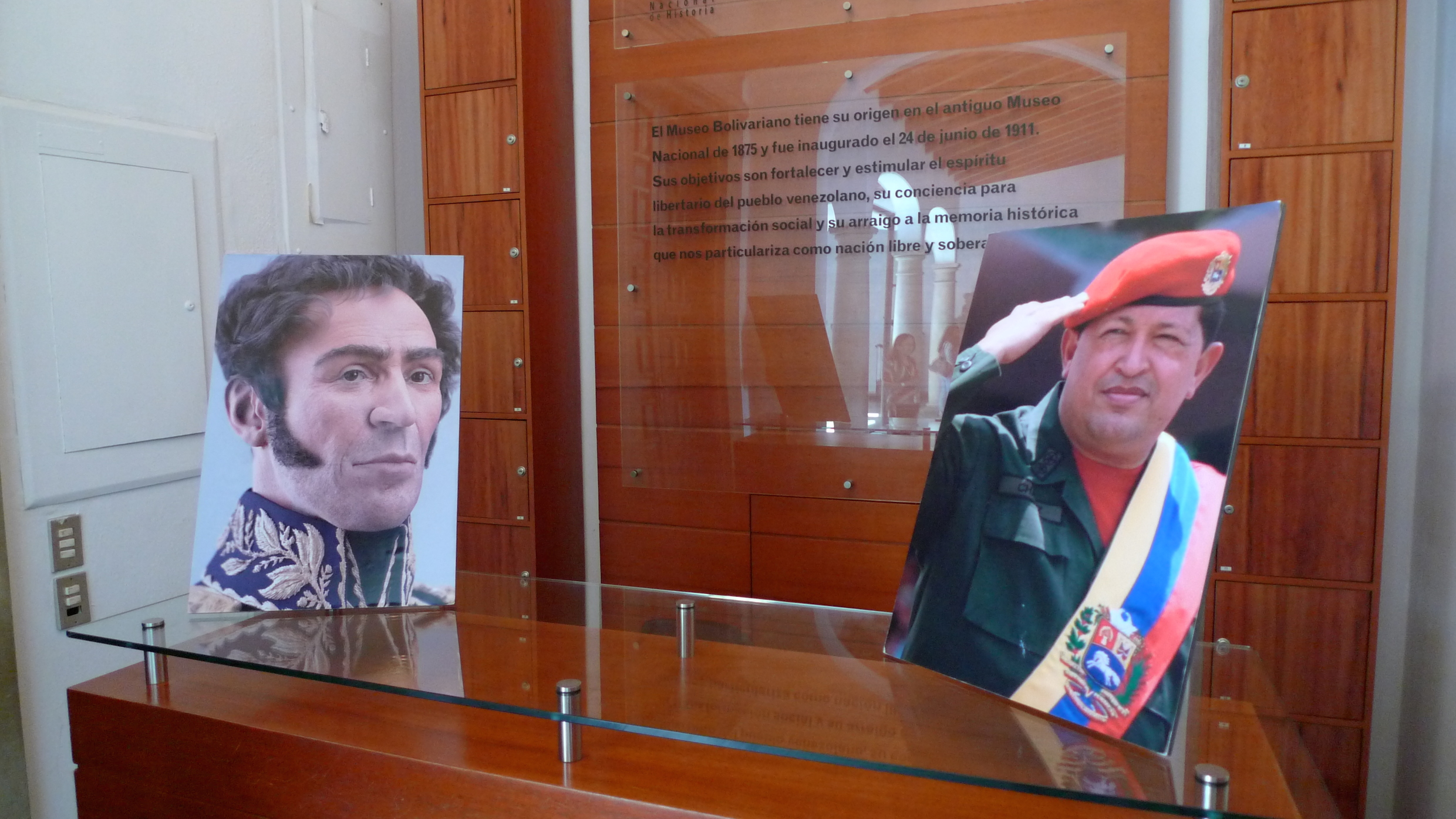
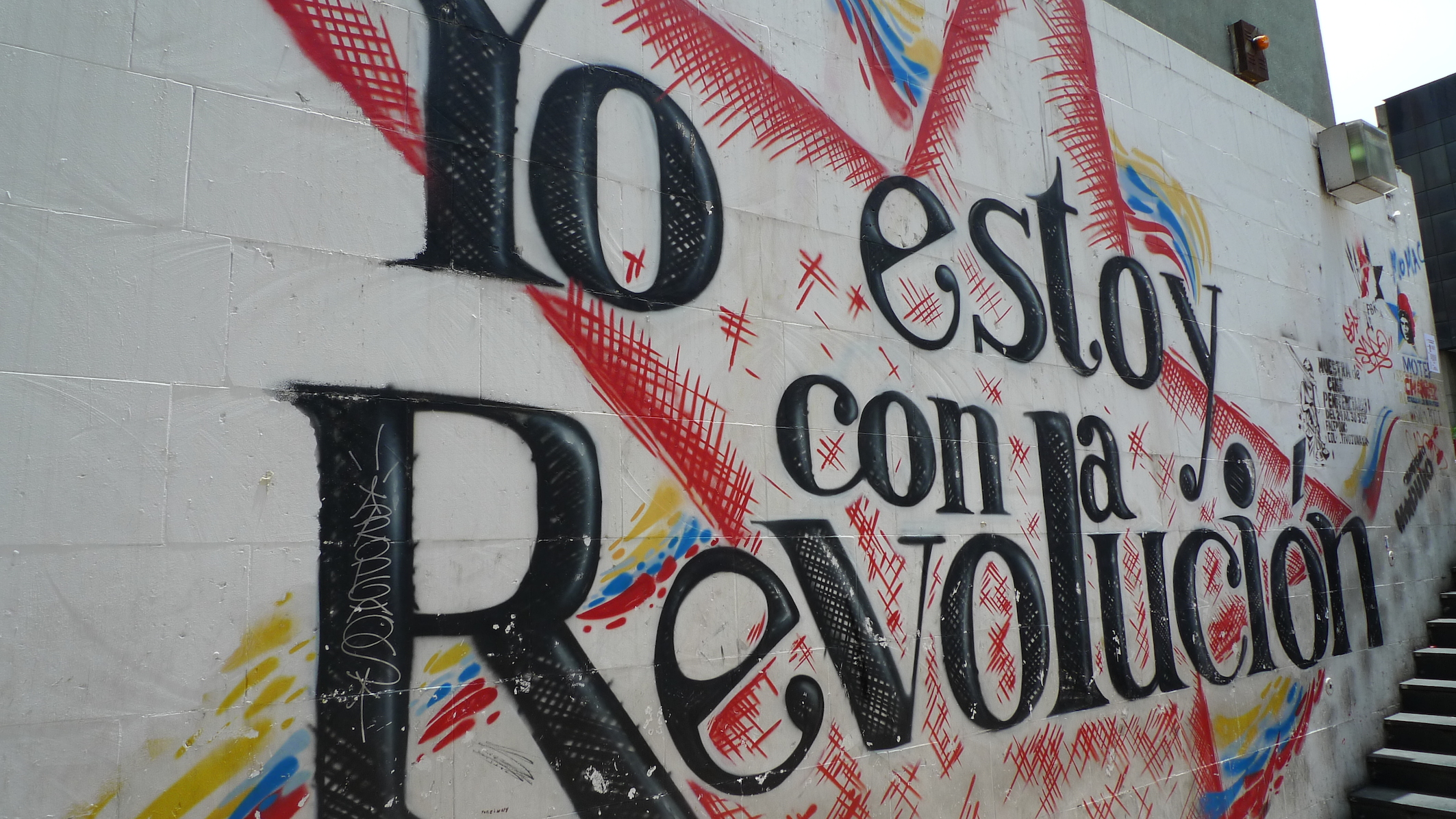
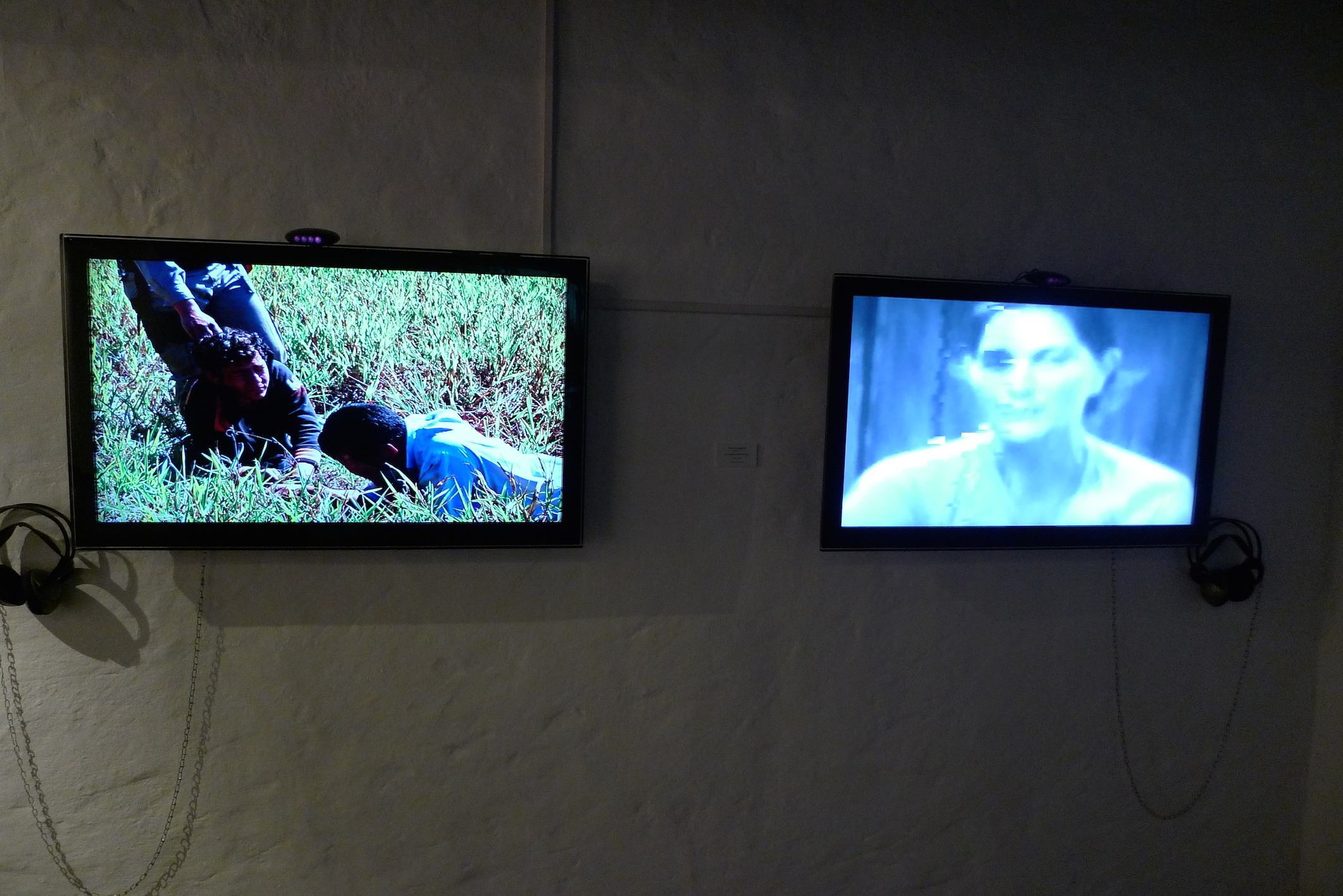
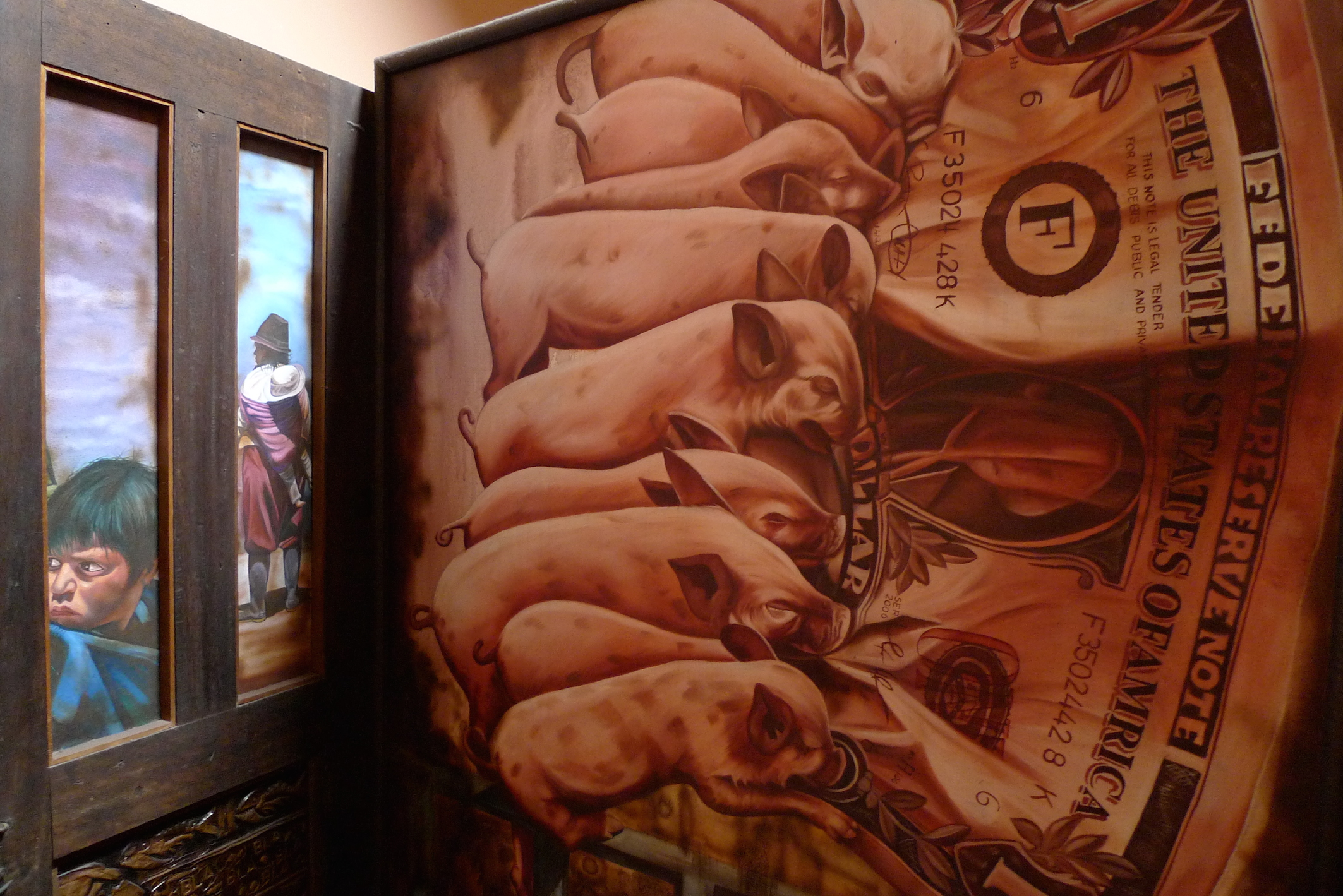

Andre Vltchek is a philosopher, novelist, filmmaker and investigative journalist. He covered wars and conflicts in dozens of countries. His latest books are: “Exposing Lies Of The Empire” and “Fighting Against Western Imperialism”.Discussion with Noam Chomsky: On Western Terrorism. Point of No Return is his critically acclaimed political novel. Oceania – a book on Western imperialism in the South Pacific. His provocative book about Indonesia: “Indonesia – The Archipelago of Fear”. Andre is making films for teleSUR and Press TV. After living for many years in Latin America and Oceania, Vltchek presently resides and works in East Asia and the Middle East. He can be reached through his website or his Twitter.
Subscribe to:
Posts (Atom)